This post contains affiliate links. As an Amazon Associate we earn from qualifying purchases, at no extra cost to you. Read our disclosure.
Key takeaways
- Clean out in five sessions of 30 to 45 minutes, not one long weekend.
- Judge every piece by how it fits and feels today.
- Sort into keep, alter, repair, maybe and let go.
- Date the maybe box and decide in 90 days.
- Finish by writing five outfits from what stays, then shop only for the gaps.
In this post14 sections
- What You Need Before You Start
- Closet Clean-Out in 5 Sessions
- The Keep, Alter or Let Go Table
- Where Each Pile Goes
- 5 Outfits to Build From What You Keep
- 1. Straight Jeans, White Shirt and Navy Blazer
- 2. Black Pull-On Trousers, Gray Knit and Ankle Boots
- 3. Pleated Midi Skirt, Rust Sweater and Block-Heel Boots
- 4. Wrap Dress, Oatmeal Cardigan and Flats
- 5. Wide-Leg Trousers, White Tee and Long Cardigan
- Clean-Out Mistakes and Easy Swaps
- After the Clean-Out: What to Buy and What to Skip
- Your Closet Clean-Out Checklist
- FAQ
Closet clean-out for women over 40 goes faster when you split it into five short sessions instead of one exhausting weekend. This plan gives you the sessions, a keep, alter or let-go table, and five outfits to rebuild from what stays, so the closet fits the body and the life you have now.
Affiliate note: some product links below are Amazon links, and we may earn a small commission if you buy, at no extra cost to you. Prices are typical ranges, not quotes.
What You Need Before You Start
You can finish the whole clean-out with a few bags and a mirror. Published organizer guides repeat the same method: take everything out of one section, sort it into piles, and put back only what you keep. The items below make that faster, and none of them is required.
Closet clean-out kit
- Start here
Slim non-slip velvet hangers
Typically $20 to $35
One hanger type makes a rail look calmer and frees up space.
Check price on Amazon for Slim non-slip velvet hangers -
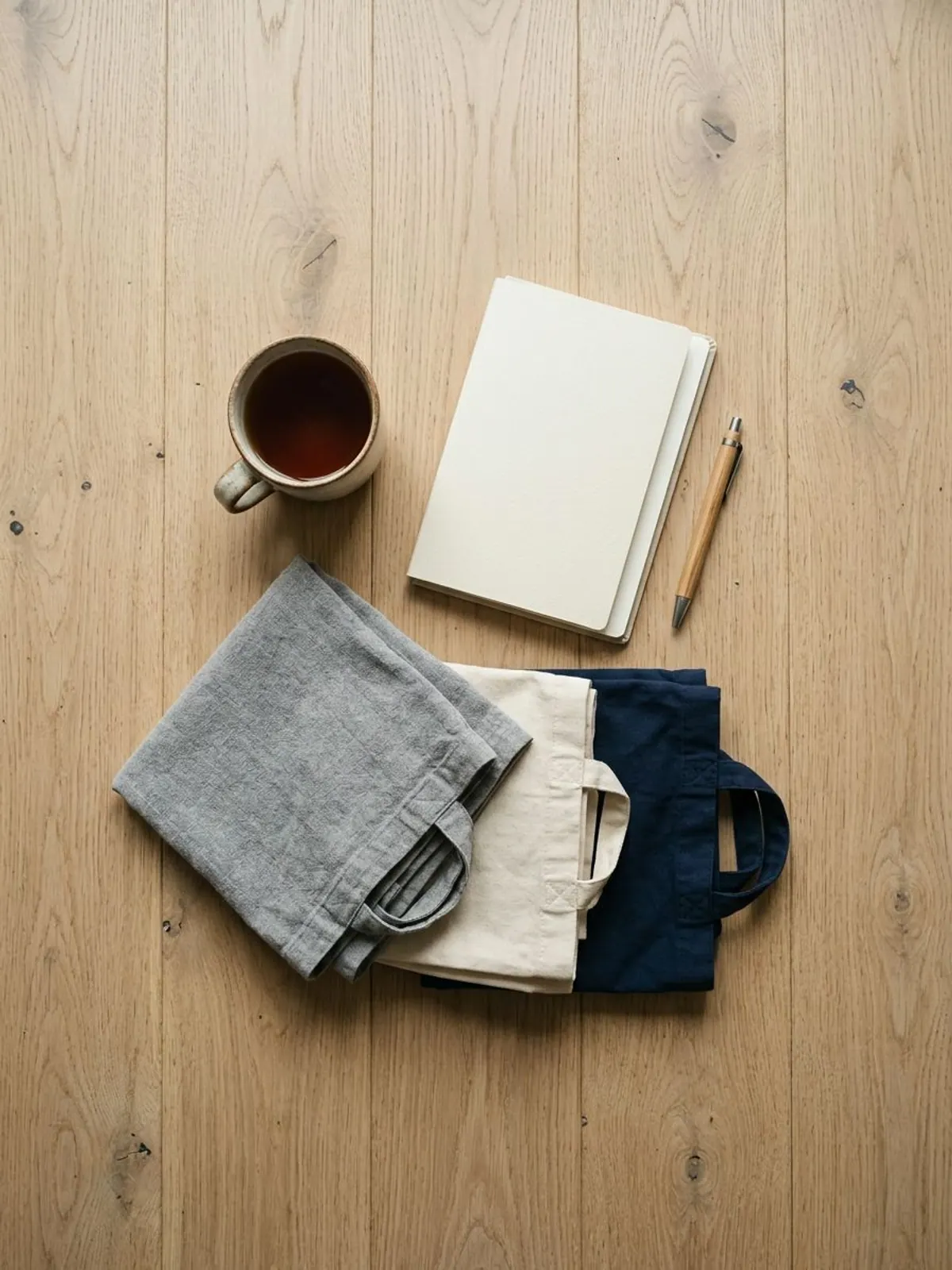
Collapsible fabric bins or large tote bags
Typically $15 to $30
One for each pile, so sorted clothes never drift back.
Check price on Amazon for Collapsible fabric bins or large tote bags -
Full-length over-the-door mirror
Typically $25 to $60
Lets you judge fit and proportion in the same minute.
Check price on Amazon for Full-length over-the-door mirror -
Handheld garment steamer
Typically $20 to $45
Refreshes the pieces you keep so they are ready to wear.
Check price on Amazon for Handheld garment steamer -
Fabric shaver for sweaters
Typically $10 to $20
Revives pilled knits that are worth keeping.
Check price on Amazon for Fabric shaver for sweaters
Closet Clean-Out in 5 Sessions
Set a timer for 30 to 45 minutes per session and stop when it rings. Short sessions leave you with the energy to make good decisions, and a half-sorted closet is easier to face than a full one. Do them on five different days, or two per weekend.
-
Step 1: Session 1: Name your week and set up four piles (30 minutes)
Write down what a normal week asks of your clothes: work or volunteering, errands, time with family, church or evenings out, and any travel. Most closets hold clothes for a life you no longer lead and miss clothes for the life you do.
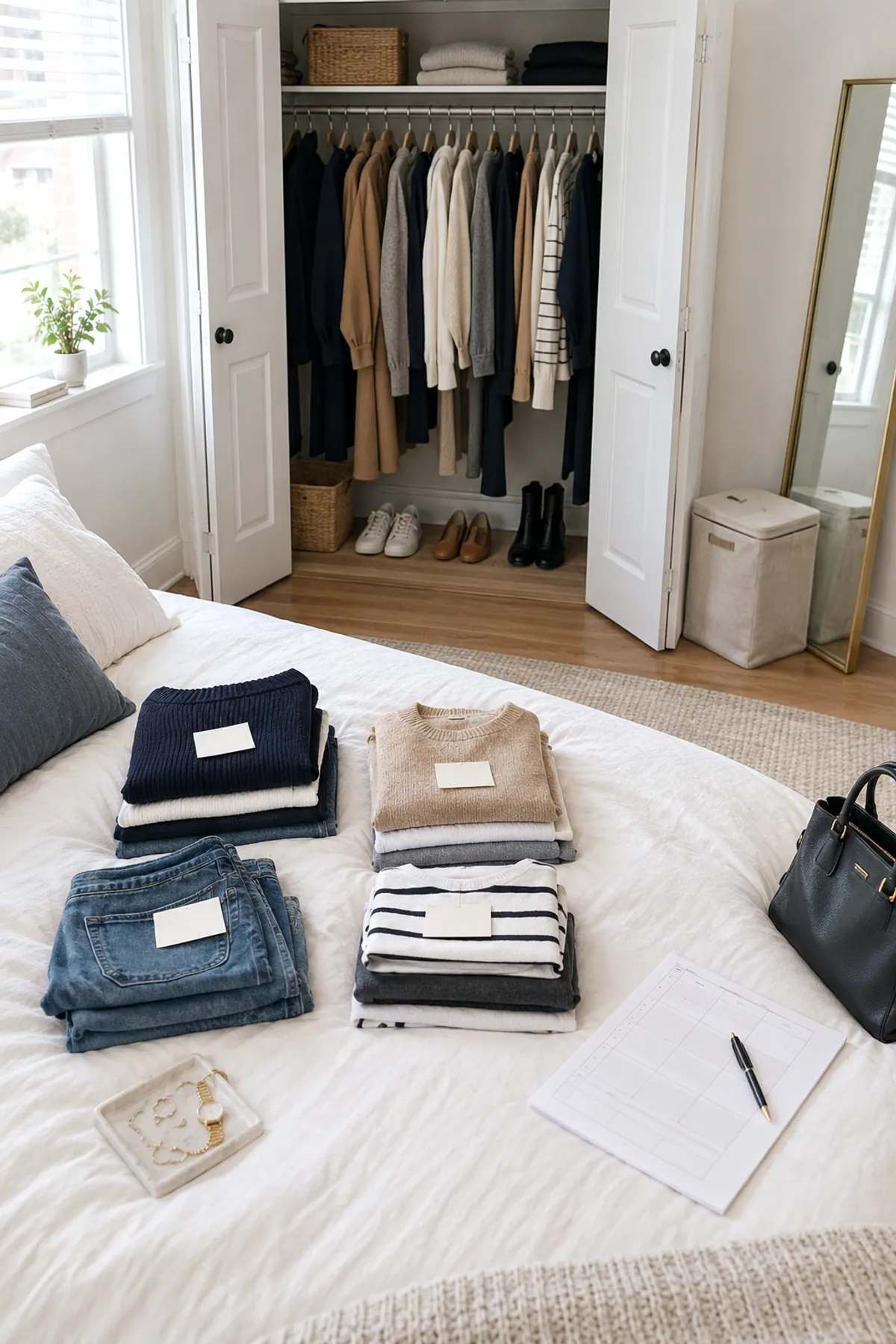
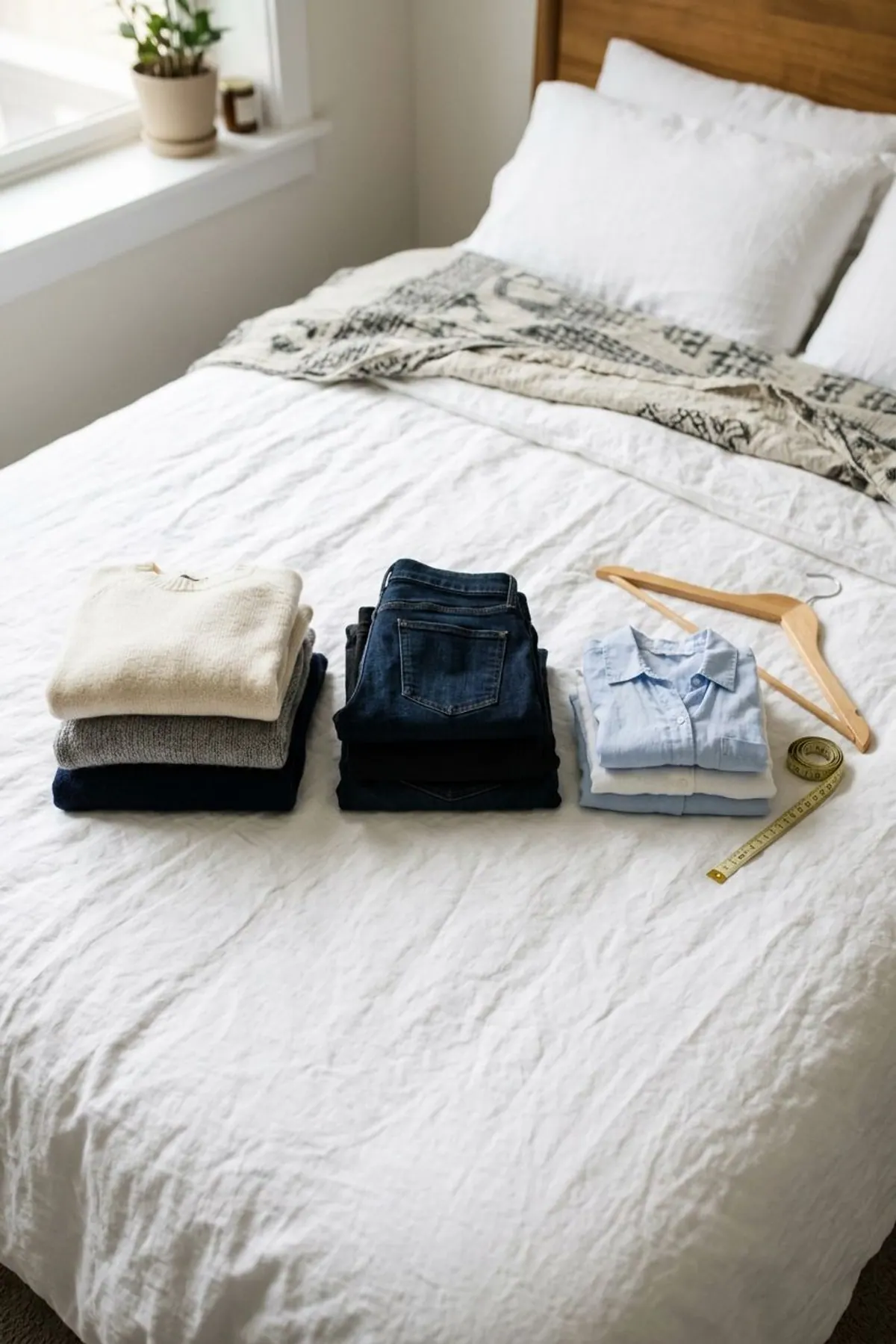
Then set out four spots: Keep, Alter or repair, Maybe and Let go. Put a bag or bin at each, and decide now that nothing in the Let go bag gets a second look.
-
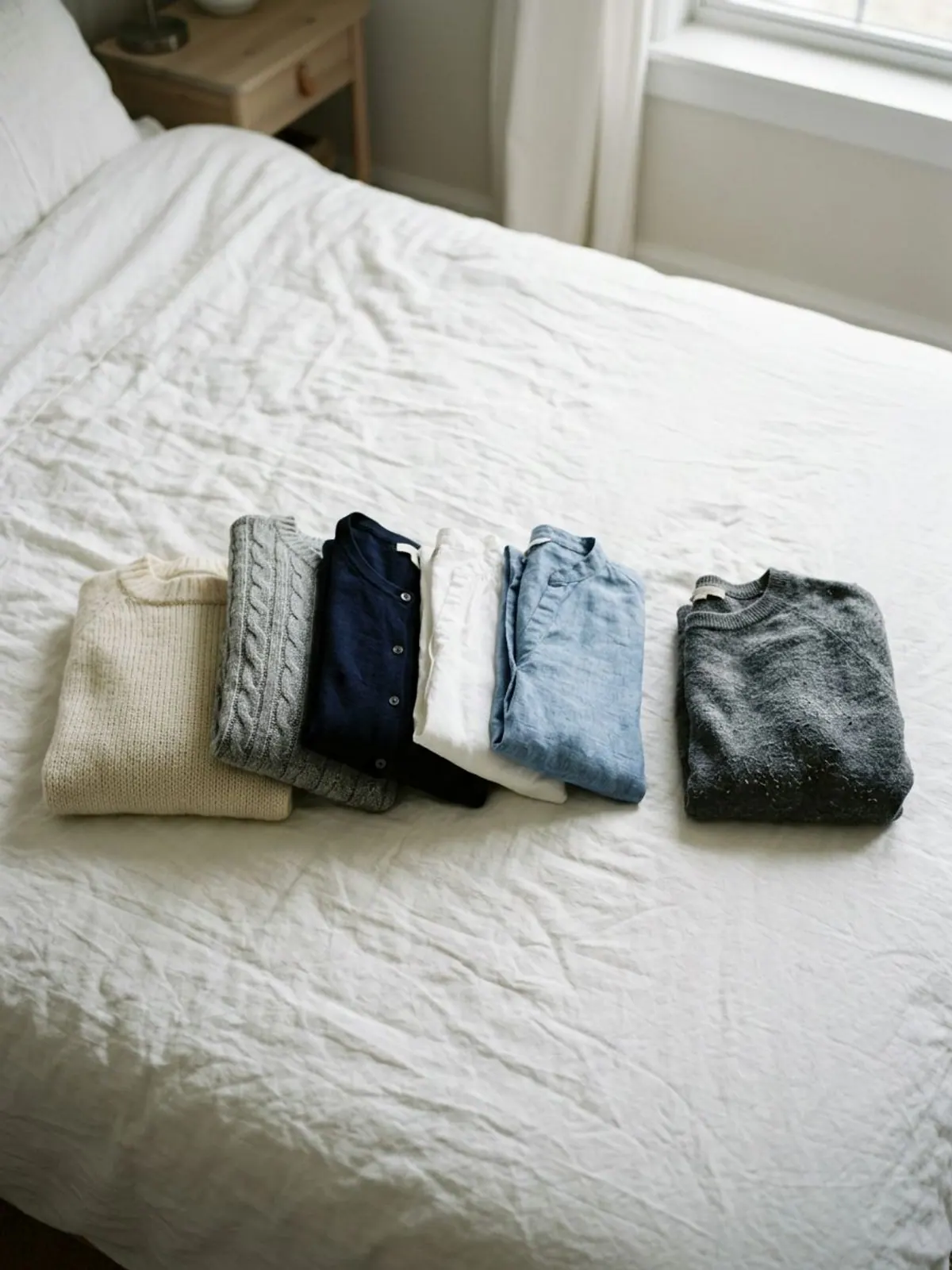
Step 2: Session 2: Tops, knits and layers (40 minutes)
Take every top, sweater and cardigan out of the drawer or off the rail and lay them on the bed. Try on anything you are unsure about, wearing the bra and layers you wear most.
Check three things: the shoulders sit flat, the sleeves move without pulling, and you can reach and sit without tugging. Stained or stretched pieces go straight to Let go, and pilled knits that are worth saving go to Repair.
-
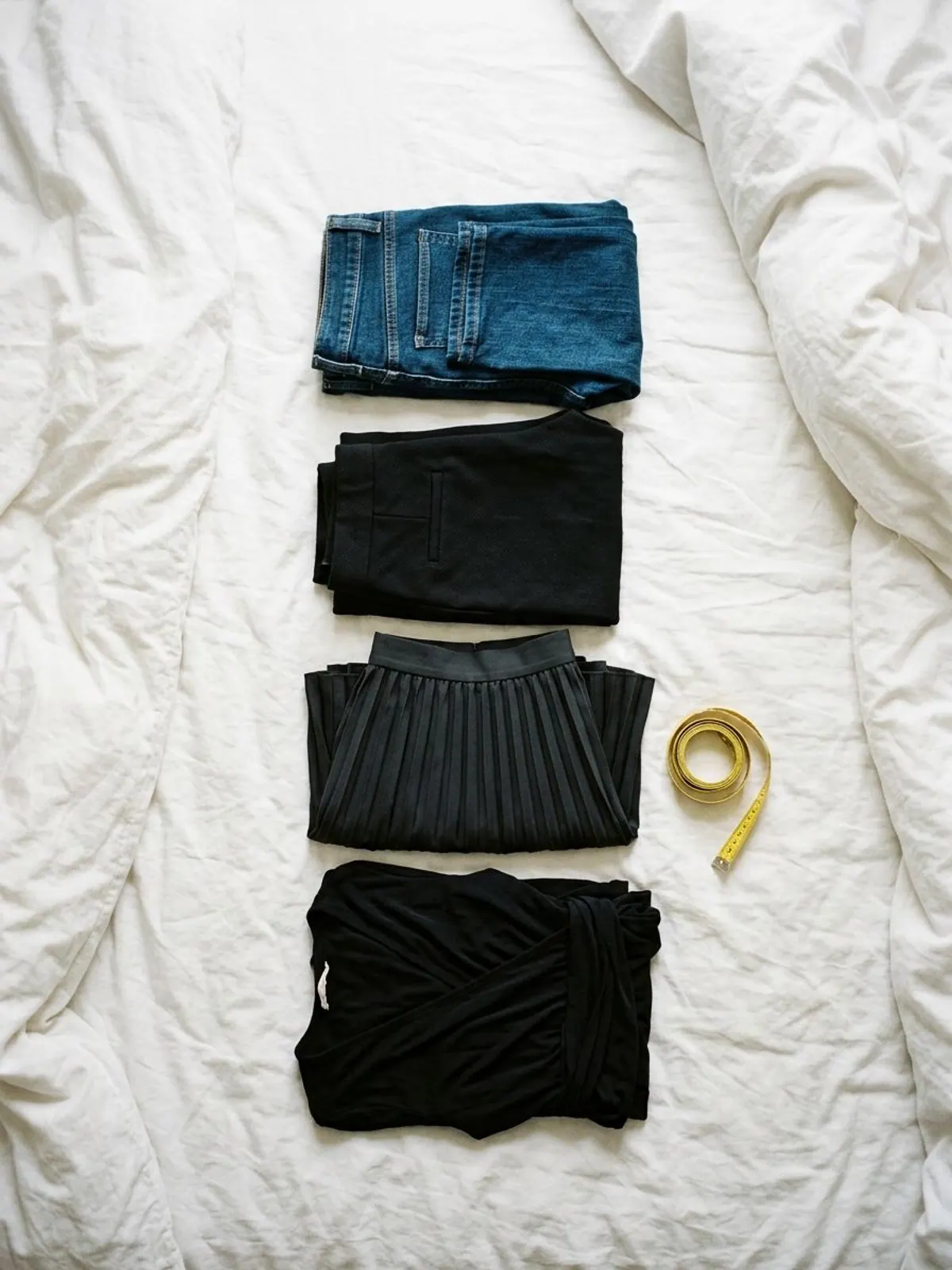
Step 3: Session 3: Pants, skirts and dresses (40 minutes)
Do the sit test. Sit down, bend over and climb one stair in the piece. Waistbands that dig, hems that ride up and seams that strain fail the test.
A piece that fits except for the hem, waist or sleeve goes to Alter, with a one-month deadline. If a piece fails because your body has changed, let it go without guilt. Clothes exist to serve the body you have now.
-
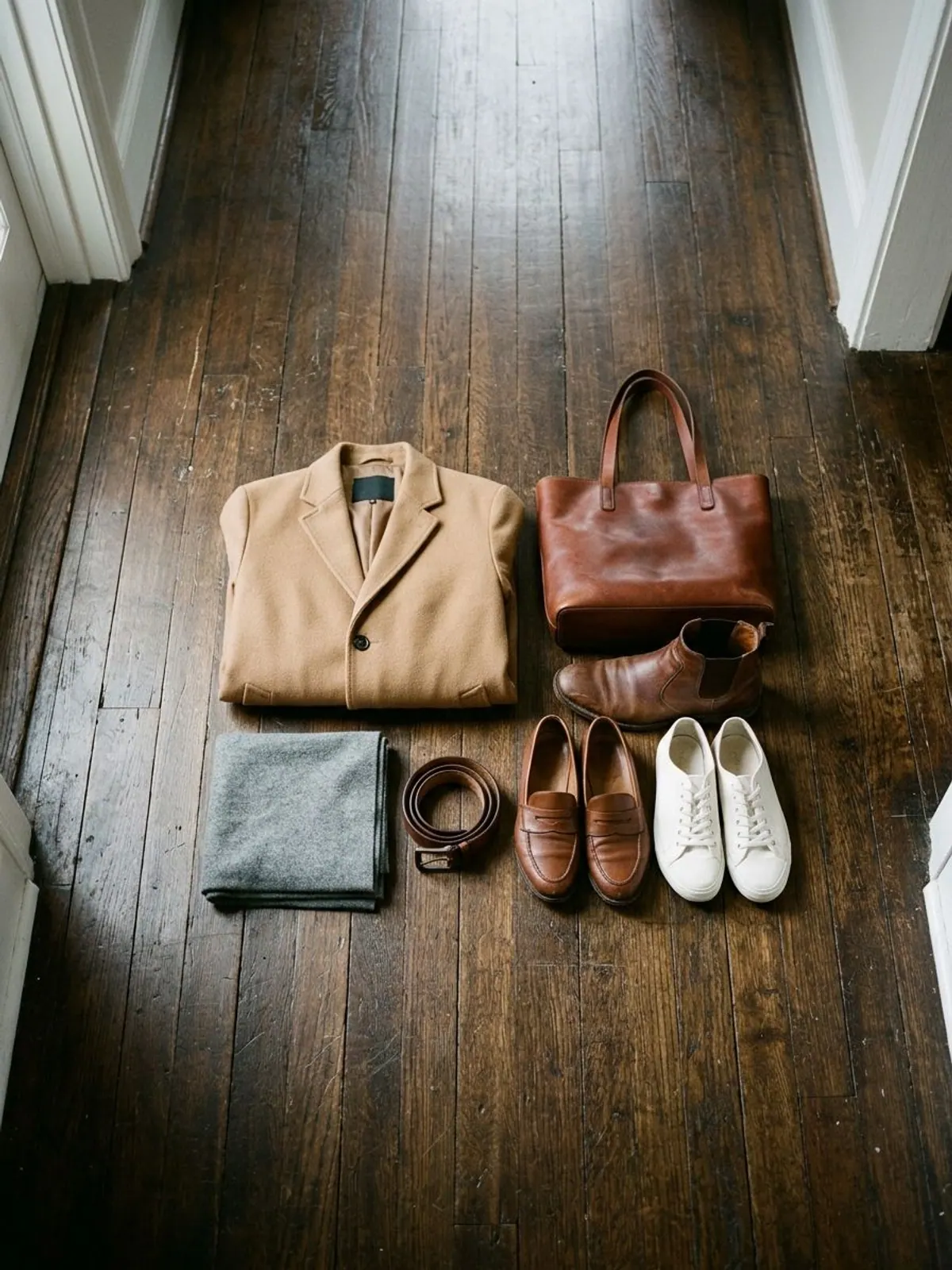
Step 4: Session 4: Coats, shoes and accessories (30 minutes)
Check coat linings and cuffs, shoe heels and soles, and bag straps. Keep the shoes you can stand in for an evening and walk in for an errand.
Scarves, belts and jewelry get one question: did I use this in the last year, counting the season it belongs to? If not, it goes in the Maybe box.
-
Step 5: Session 5: Put back what stays and write five outfits (45 minutes)
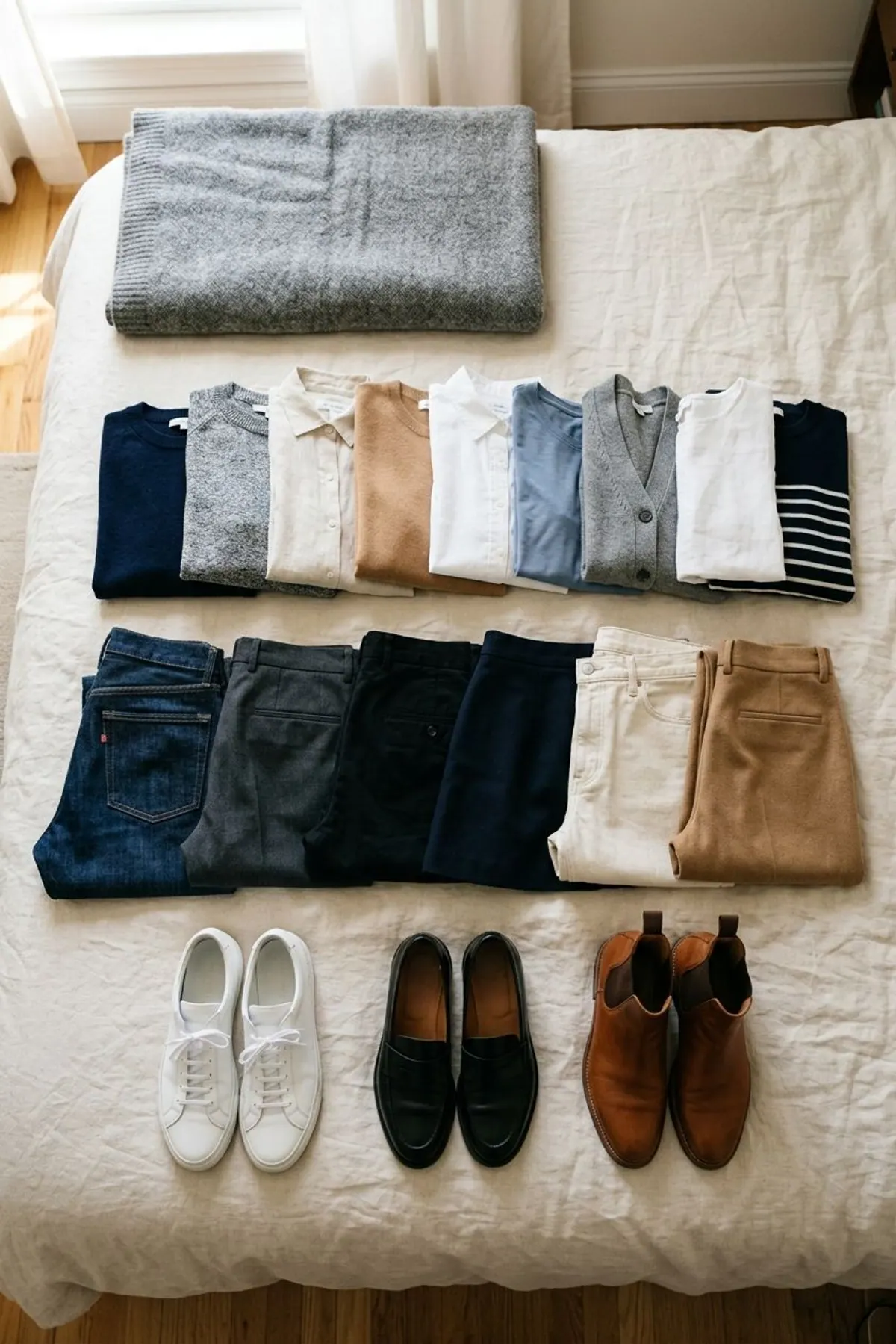
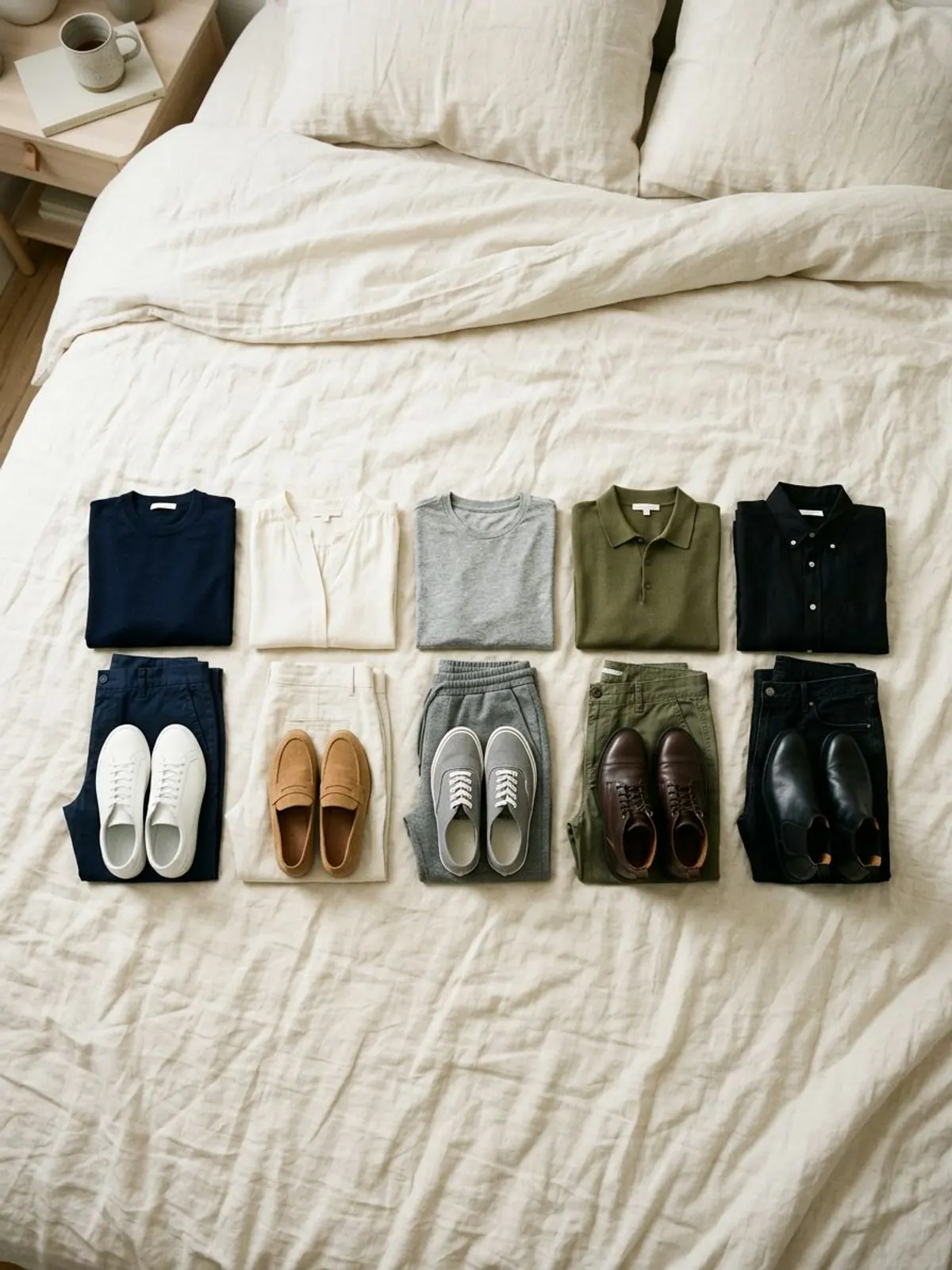
Hang the Keep pile by type and then by color, with the pieces you wear weekly at the front. Then build five outfits from the Keep pile and write each as a formula, for example straight jeans, a white shirt, a navy blazer and loafers.
If you cannot make five outfits, you now know exactly which gap to fill. Take the Let go bags out of the house within two days, and write a date 90 days ahead on the Maybe box.
The Keep, Alter or Let Go Table
Use this table when you are stuck on a piece. Find what you notice, then follow the decision. It asks about fit and use, not about whether you should keep something.
| What you notice | Decision | Next step |
|---|---|---|
| Fits today and you reach for it | Keep | Hang it at the front of the rail |
| Fits, but you have not worn it this year | Maybe | Box it, date it 90 days ahead and decide then |
| Fits except for the hem, sleeves or waist | Alter | Add it to the tailor list with a one-month deadline |
| Missing a button, loose seam or worn heel | Repair | Fix it within two weeks or move it to Let go |
| Does not fit the body you have now | Let go | Donate, sell or swap it so someone can wear it |
| Stained, faded or beyond repair | Let go | Recycle it as a cloth or at a textile recycling bin where accepted |
| A sentimental piece you never wear | Memory box | Photograph it and keep it in a labeled box outside your daily closet |
A piece that passes the table should also work with at least three other pieces you plan to keep. That is the quickest test of whether something is useful or just loved from a distance.
Where Each Pile Goes
Take the Let go bags to the car the same day. Donation centers set their own rules on what they accept, so check the list on their website before you drive. Good pieces can go to a consignment shop or an online resale app, and worn-out textiles can go to a textile recycling bin if your town has one.
Keep the Alter pile by the door with your tailor's hours on a sticky note, and book one visit for everything at once. One trip with five pieces is easier to keep than five separate errands.
5 Outfits to Build From What You Keep
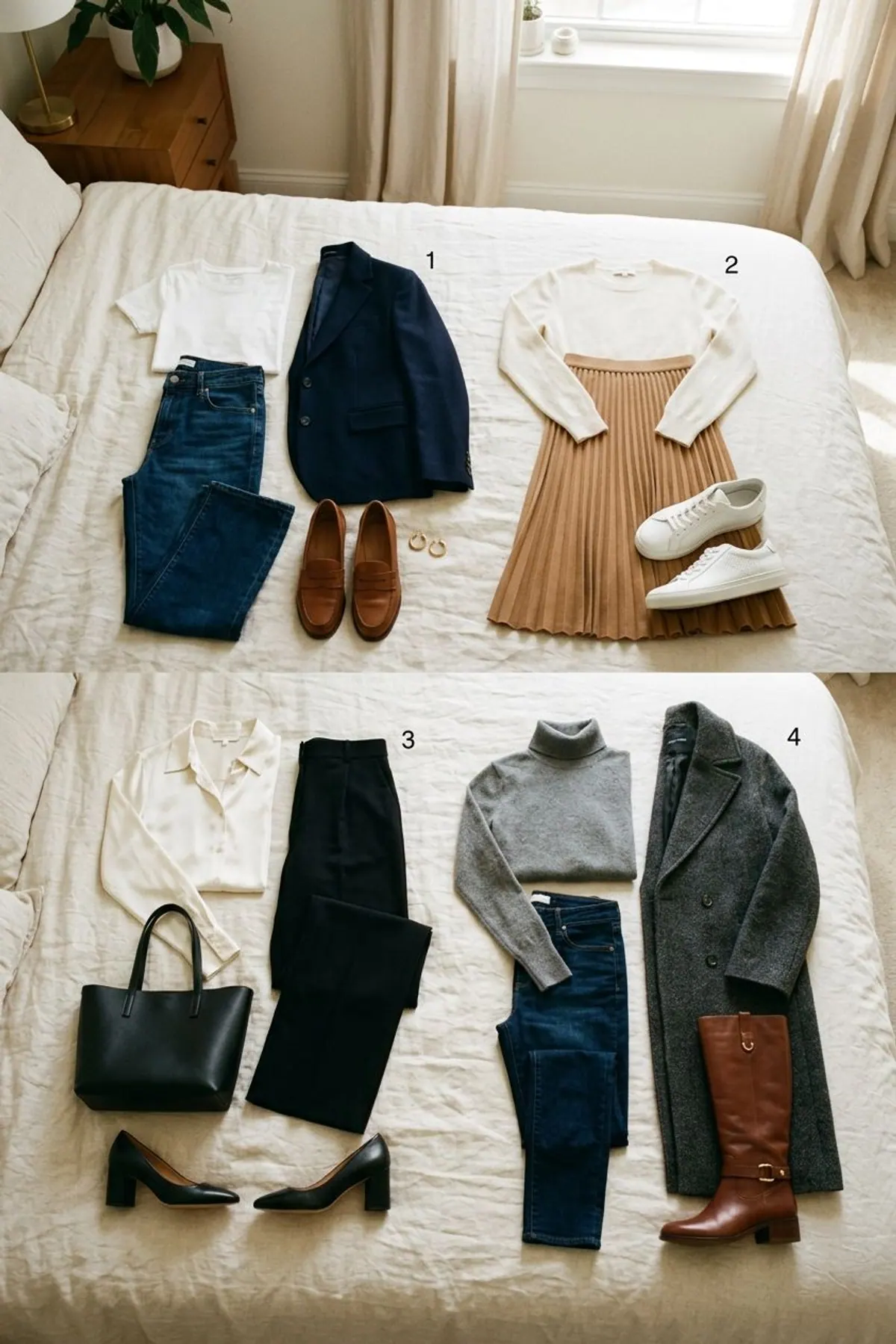
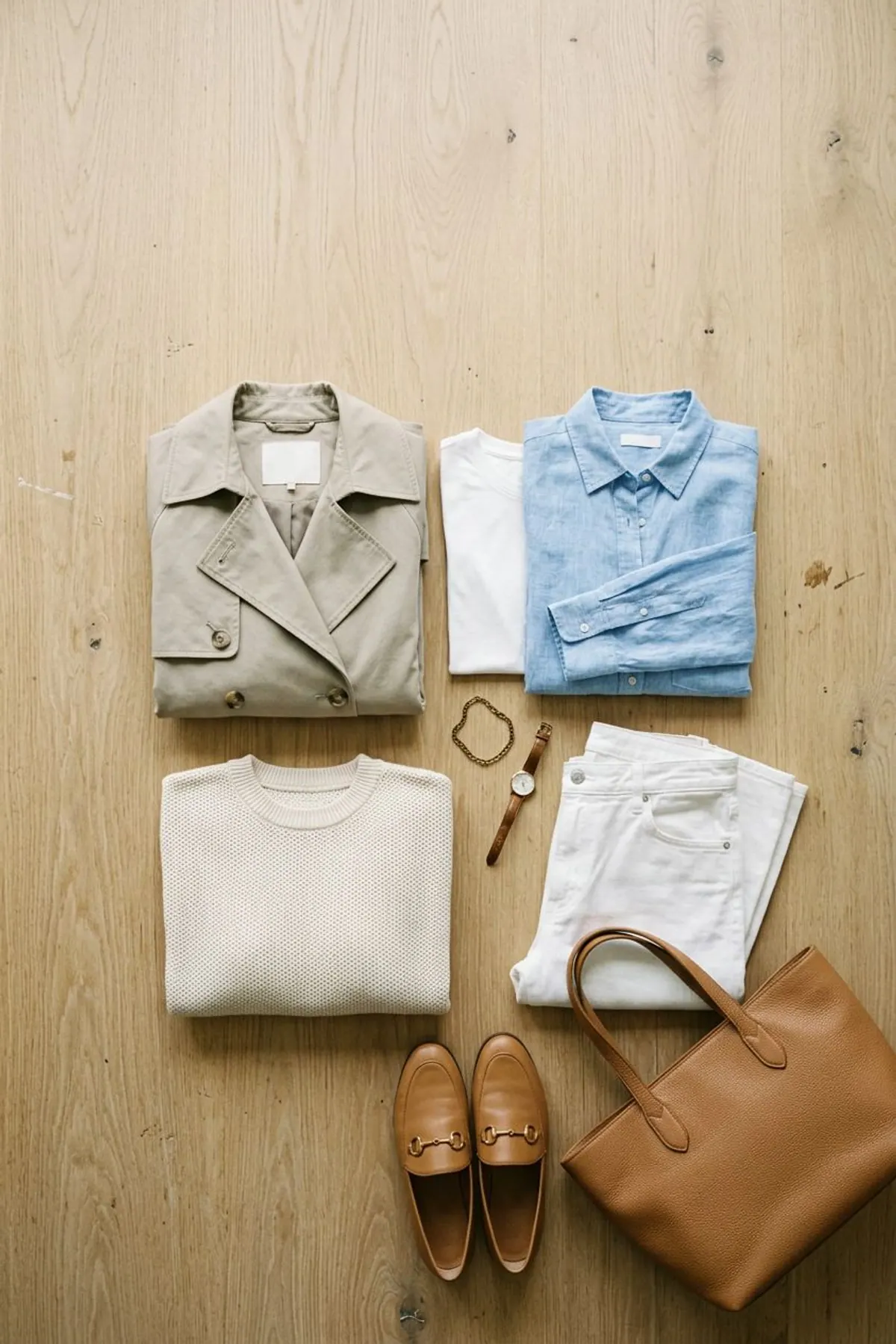
These formulas use basics that most closets already hold. Match each one to your own Keep pile and swap colors freely. For a longer list, see our guide to outfit formulas for women over 40.
1Straight Jeans, White Shirt and Navy Blazer
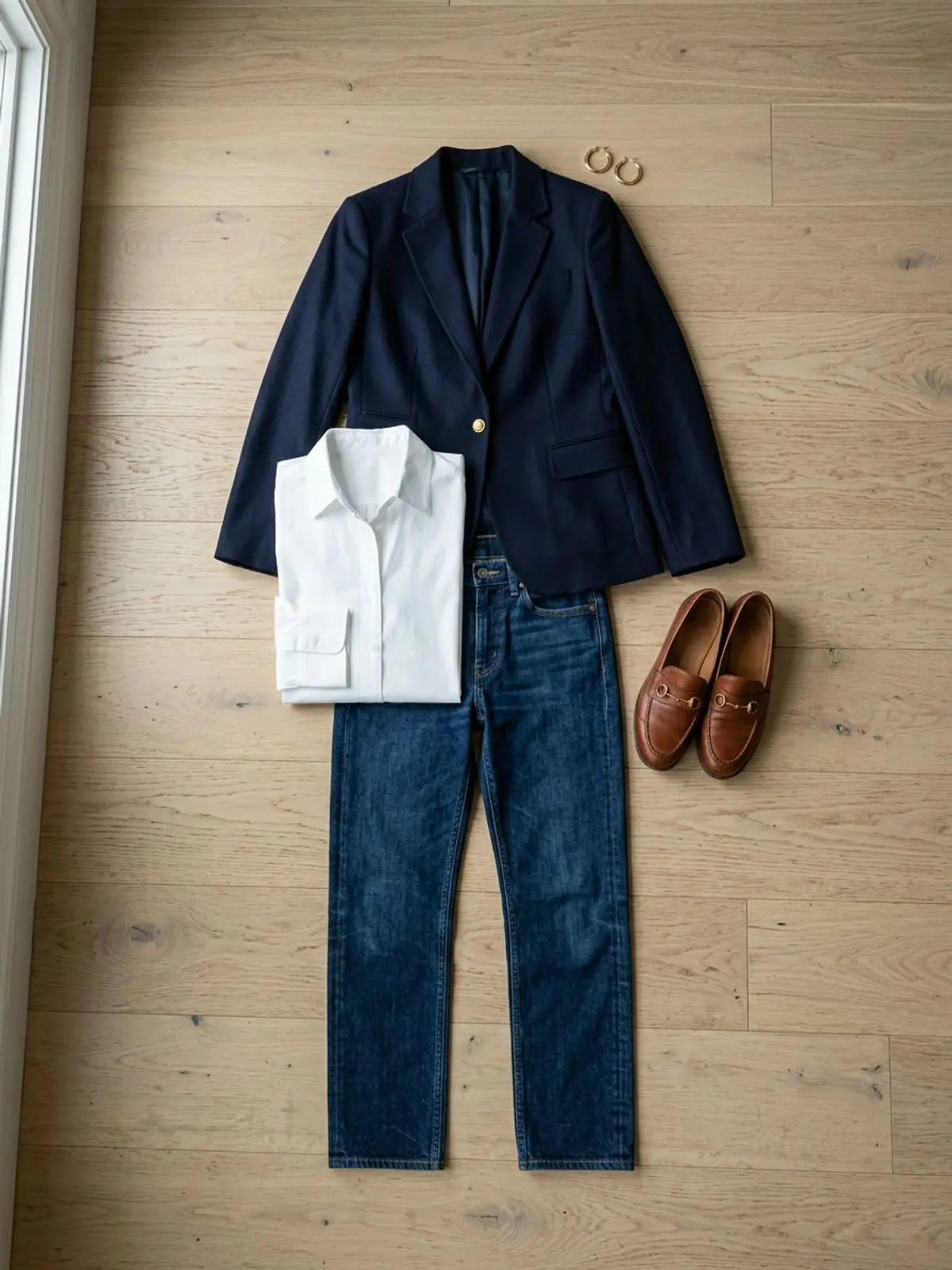
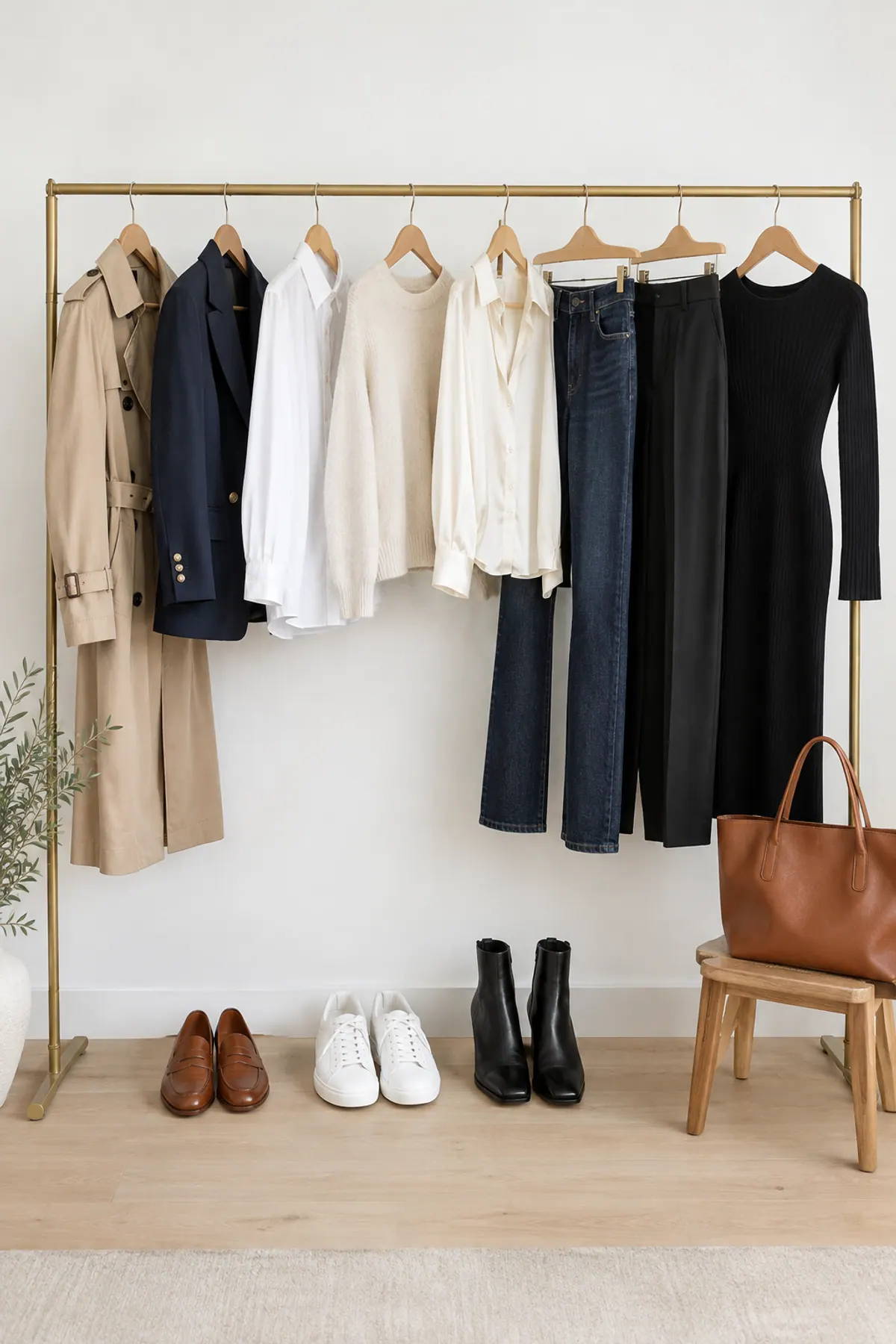
The formula: dark straight jeans + white button-up + navy blazer + brown loafers.
Why it works: Three pieces most closets already hold, and each one earns repeat wear in other outfits.
Fit note: The blazer shoulder seam should sit at the edge of your shoulder. Roll the sleeves once if they run long.
The anchor layer for the outfit.
2Black Pull-On Trousers, Gray Knit and Ankle Boots
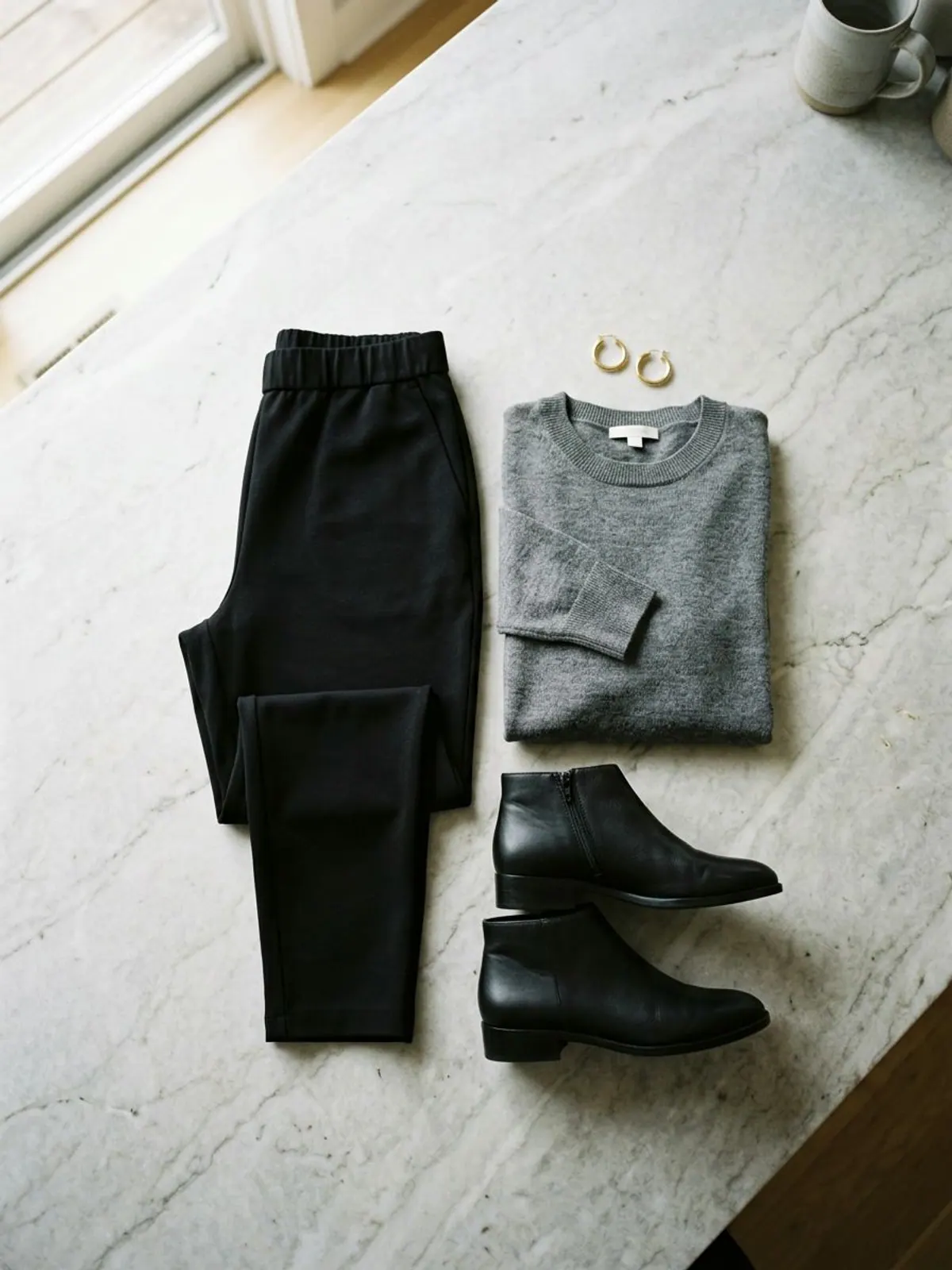
The formula: black ponte pull-on trousers + grey merino-blend crew sweater + black ankle boots + gold hoops.
Why it works: Pull-on trousers make a Keep pile that is comfortable on an ordinary Tuesday, and a fine knit keeps the line smooth.
Fit note: Choose a sweater that ends at the hip so the waistband stays tidy.
A work and weekend staple that takes a wash well.
3Pleated Midi Skirt, Rust Sweater and Block-Heel Boots
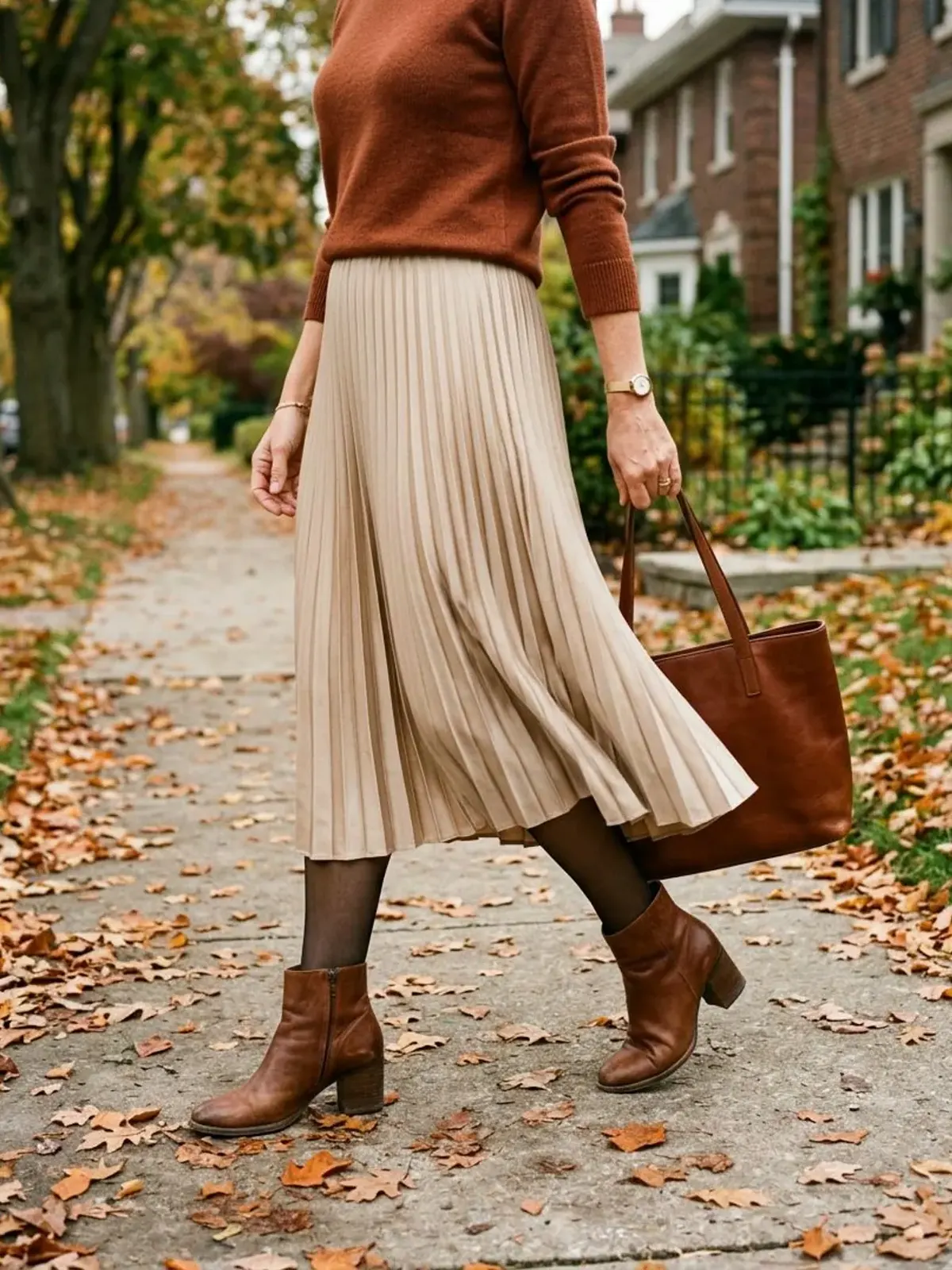
The formula: champagne pleated midi skirt + fitted rust crewneck + sheer tights + block-heel ankle boots.
Why it works: A skirt you kept because it fits well becomes a dressier outfit with one good knit.
Fit note: Tuck the front of the sweater only, and check that the skirt waistband does not roll when you sit.
Easy to dress up or down.
4Wrap Dress, Oatmeal Cardigan and Flats
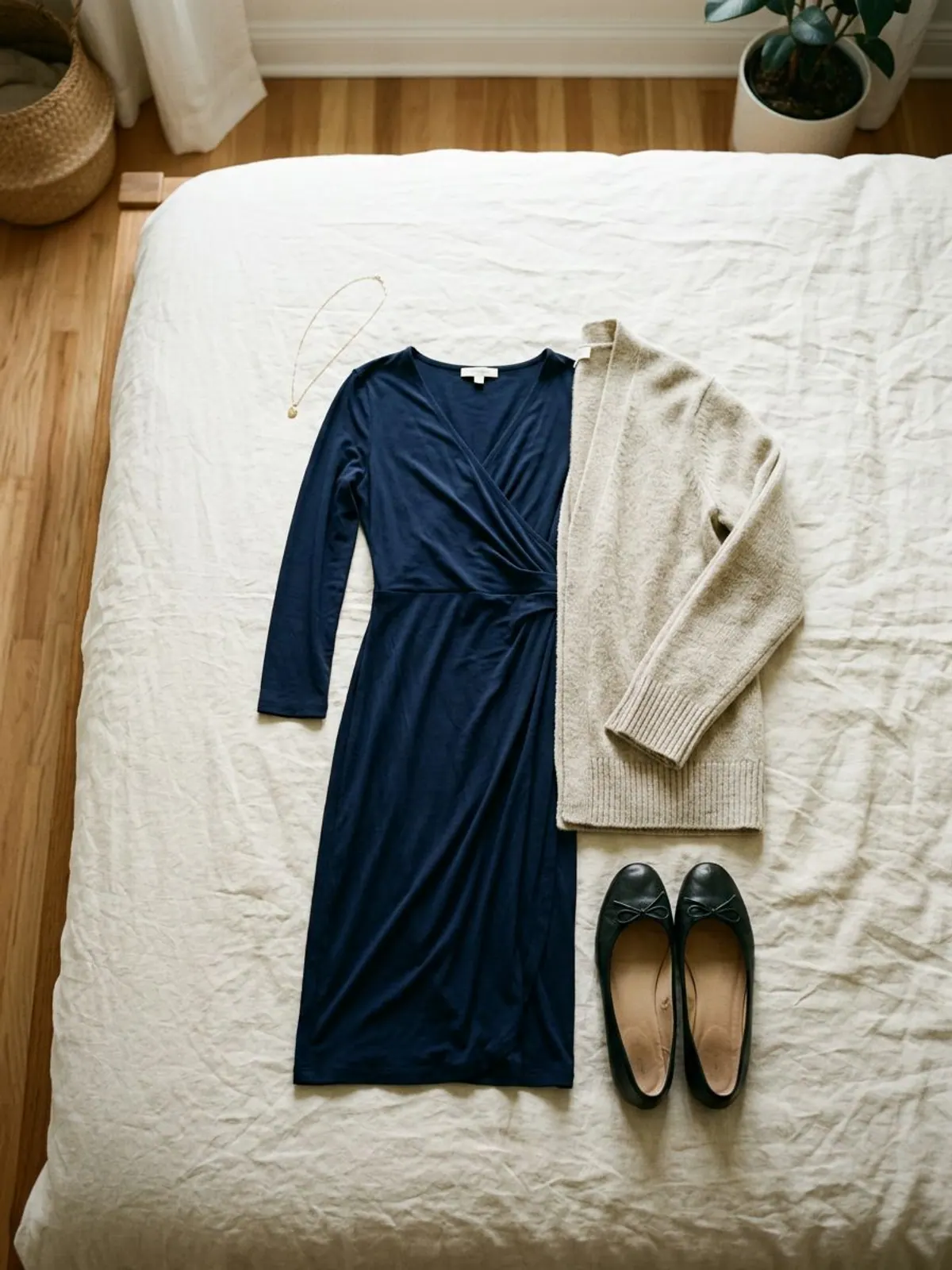
The formula: navy jersey wrap midi dress + oatmeal cardigan + black ballet flats + thin gold necklace.
Why it works: One piece plus one layer, so getting dressed takes two decisions.
Fit note: A wrap closes at the natural waist, which suits many shapes. Sew a small snap at the neckline if it gaps.
A single piece that carries an outfit.
5Wide-Leg Trousers, White Tee and Long Cardigan

The formula: grey wide-leg trousers + white tee + long camel open cardigan + white leather sneakers.
Why it works: A relaxed outfit that keeps a vertical line, built from three easy basics.
Fit note: Choose trousers that skim the top of your sneakers so the hem does not drag.
Adds length and covers the hip line.
Clean-Out Mistakes and Easy Swaps
Do this
- Work in short sessions with a timer.
- Try pieces on instead of judging them on the hanger.
- Keep a dated Maybe box and decide in 90 days.
- Take the Let go bags out of the house within two days.
- Write five outfits before you buy anything.
Not this
- Emptying the whole closet in one long, exhausting weekend.
- Keeping clothes for a past life or a different body.
- Keeping a piece only because it was expensive.
- Leaving the donation bag in the trunk for months.
- Shopping before the gaps are clear.
After the Clean-Out: What to Buy and What to Skip
Do not shop on the day you finish. Wear your five outfits for a week and note what felt missing. Most gaps are small: a layer, a shoe, a basic in a better color. Then shop from a list instead of the sale rack.
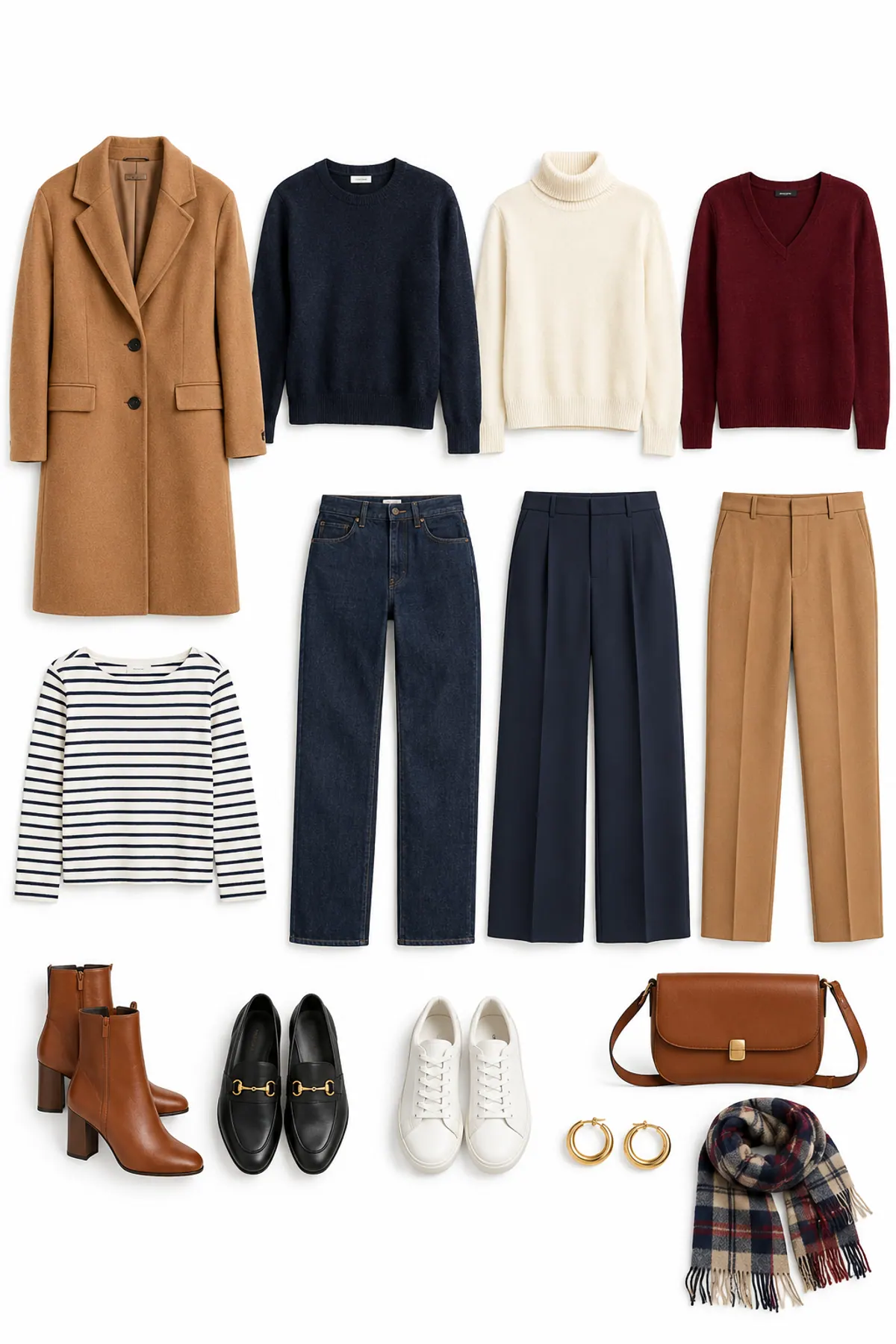
Our capsule wardrobe step-by-step guide shows how to turn a Keep pile into a small working wardrobe, and the wardrobe essentials list names the pieces worth buying. Unsure how many pieces to keep? See how many pieces a capsule wardrobe should have.
The Outfit Formula Cards turn your Keep pile into a month of outfits already written down, so the sorting you did keeps paying off.
Your Closet Clean-Out Checklist
Closet clean-out checklist
A smaller closet you can see is worth more than a fuller one you cannot.
Want a printable to go with this plan? The free capsule wardrobe planner helps you turn what you kept into a small, working set of outfits.
Frequently asked questions
How do I start a closet clean-out over 40?
Start with one section, such as tops, and set a 30 to 45 minute timer. Use four piles: keep, alter or repair, maybe and let go.
How often should I clean out my closet?
Many organizers suggest a light edit each season and a full clean-out about once a year. Once the first pass is done, a seasonal edit takes much less time.
What should I do with clothes that no longer fit?
Donate, sell or swap them so someone can wear them. Bodies change with age, health and life stages, and clothes should fit the body you have now.
How many clothes should I keep?
There is no right number. A useful test is whether you can build five complete outfits from what you keep. If you cannot, note the gap before you shop.
Should I get rid of everything I have not worn in a year?
Use the year as a prompt, not a rule. If a piece fits and suits your life, put it in the Maybe box and review it in 90 days. Occasion wear such as a formal dress can be kept longer.
Save it for later
Pin this to your Capsule Wardrobe board so it's there when you need it.
Save to Pinterest