This post contains affiliate links. As an Amazon Associate we earn from qualifying purchases, at no extra cost to you. Read our disclosure.
Key takeaways
- Four layers: base to wick, mid to hold heat, a vest or fleece for extra warmth, and an outer layer to block wind and wet.
- Merino, silk and synthetic thermals beat cotton next to the skin.
- Several thin layers are warmer and slimmer than one thick sweater.
- Mittens snug at the wrist, a hat, a scarf and wool socks finish the outfit.
- Change out of damp layers as soon as you can.
In this post10 sections
- What You Need: The Cold Weather Layering Kit
- Step 1: Start With a Thin Base Layer That Wicks
- Step 2: Add a Mid Layer You Would Wear Alone
- Step 3: Add Warmth Without Bulk
- Step 4: Finish With a Wind and Water Resistant Outer Layer
- Step 5: Cover Your Head, Hands and Feet
- 4 Cold Weather Outfits for Women Over 40, Layered
- Layering Mistakes That Make You Cold (or Bulky)
- Variations for Your Day
- FAQ
Cold weather outfits for women over 40 stay warm and still look like you when you build them in four thin layers instead of one thick one. This guide walks through each layer in order, what fabric to choose and why, then puts it together into four ready outfits for work, weekends, dinner and errands.
The method follows the base, mid and outer layer system outdoor experts use, as explained in REI's layering basics, adapted for real life in town rather than on a trail.
What You Need: The Cold Weather Layering Kit
You do not need all of this at once. Start with the base layer and socks, since they make the biggest difference for the least money, then add the rest as the season goes on.
Cold weather layering kit
- Start here
Merino long-sleeve base top
Typically $45 to $140
Thin enough to hide under a blouse or sweater, and it keeps working when you get warm and damp.
Check price on Amazon for Merino long-sleeve base top - Best value
Fleece-lined leggings
Typically $15 to $40
Warm under jeans on very cold days or worn alone under a long sweater.
Check price on Amazon for Fleece-lined leggings -
Merino crew socks
Typically $20 to $30 a pair
Wool socks stay warmer than cotton when feet sweat in boots.
Check price on Amazon for Merino crew socks -
Merino turtleneck
Typically $70 to $220
A mid layer you would happily wear alone, so it works indoors too.
Check price on Amazon for Merino turtleneck -
Packable down vest
Typically $30 to $100
Warms the core with no bulk at the arms, and folds into a tote.
Check price on Amazon for Packable down vest -
Zip fleece jacket
Typically $30 to $100
A warmth layer that stays warm when damp and opens fast if you overheat.
Check price on Amazon for Zip fleece jacket -
Wind-resistant long coat
Typically $90 to $250
A tightly woven wool or a puffer with a shell blocks the wind that cuts through knits.
Check price on Amazon for Wind-resistant long coat -
Knit mittens with snug cuffs
Typically $15 to $40
Mittens keep fingers together, which is warmer than gloves on the coldest days.
Check price on Amazon for Knit mittens with snug cuffs
Step 1: Start With a Thin Base Layer That Wicks
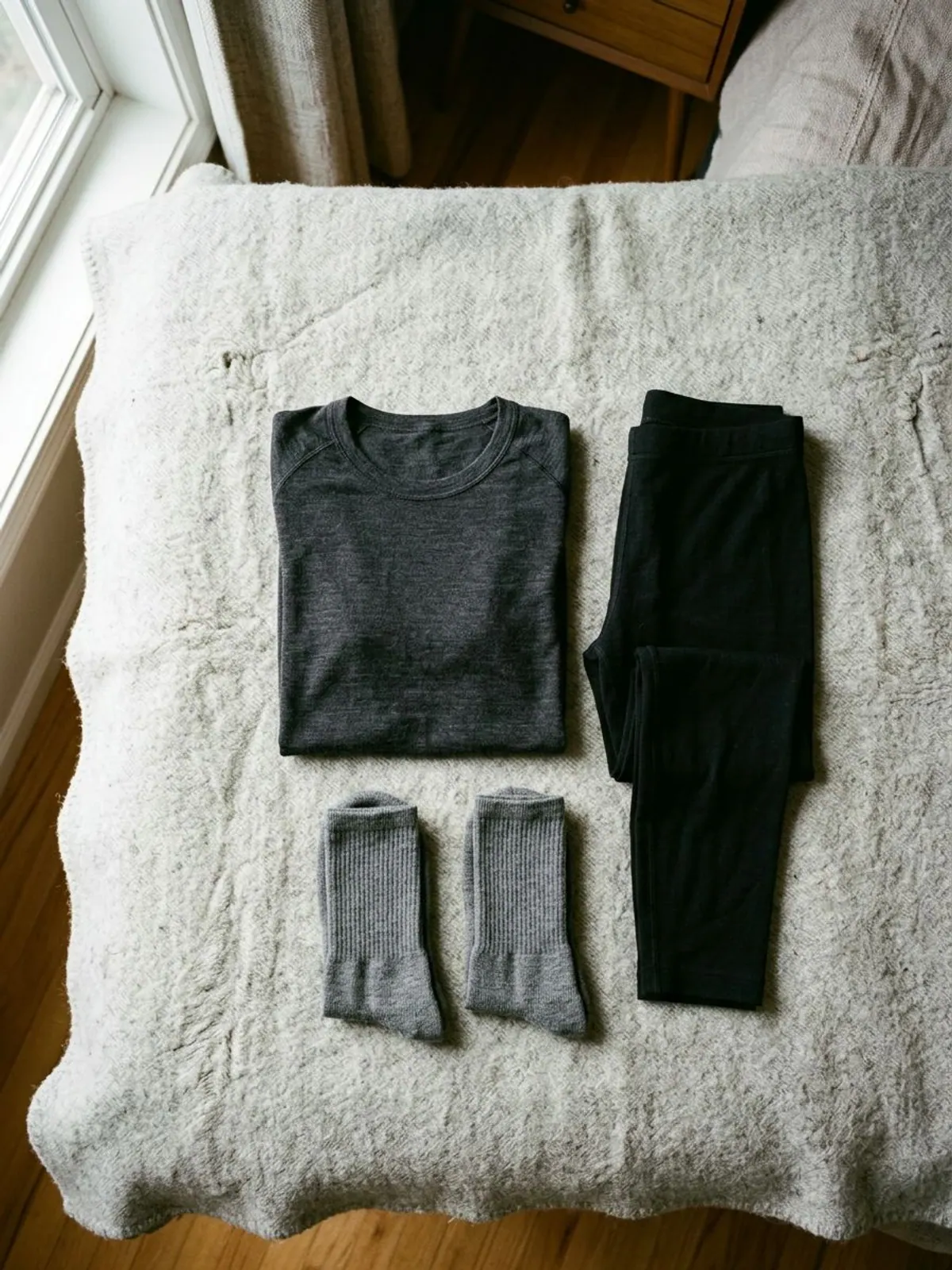
The base layer sits against your skin and moves moisture away from it. Dry skin stays warm; damp skin gets cold fast, even under a thick coat.
Choose merino wool, silk or a synthetic thermal. The University of Kentucky extension notes that wool, silk and polypropylene inner layers hold more body heat than cotton.
REI's base layer guide suggests lightweight base layers when you are moving a lot and midweight or heavyweight ones when you will be still in the cold, like at a parade or a game. For a normal day in town, lightweight is usually enough.
Step 2: Add a Mid Layer You Would Wear Alone
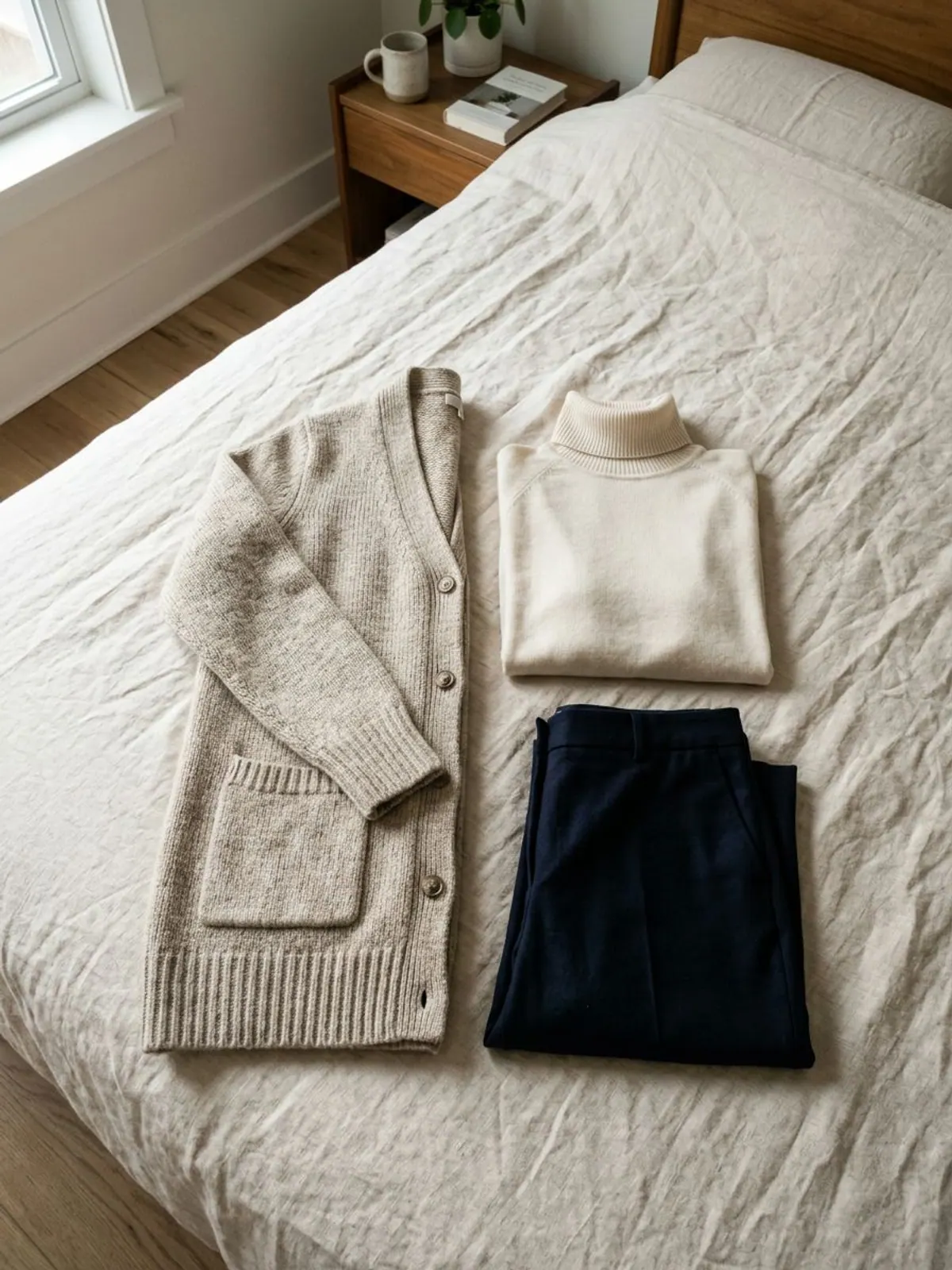
The mid layer holds heat. It is also the layer people see indoors, so choose something you like: a fine merino turtleneck, a cashmere crewneck, a long cardigan or a wool blazer.
Thin and fine beats thick and chunky. Two fine layers trap more warm air than one bulky sweater, and they fit under a tailored coat.
Step 3: Add Warmth Without Bulk
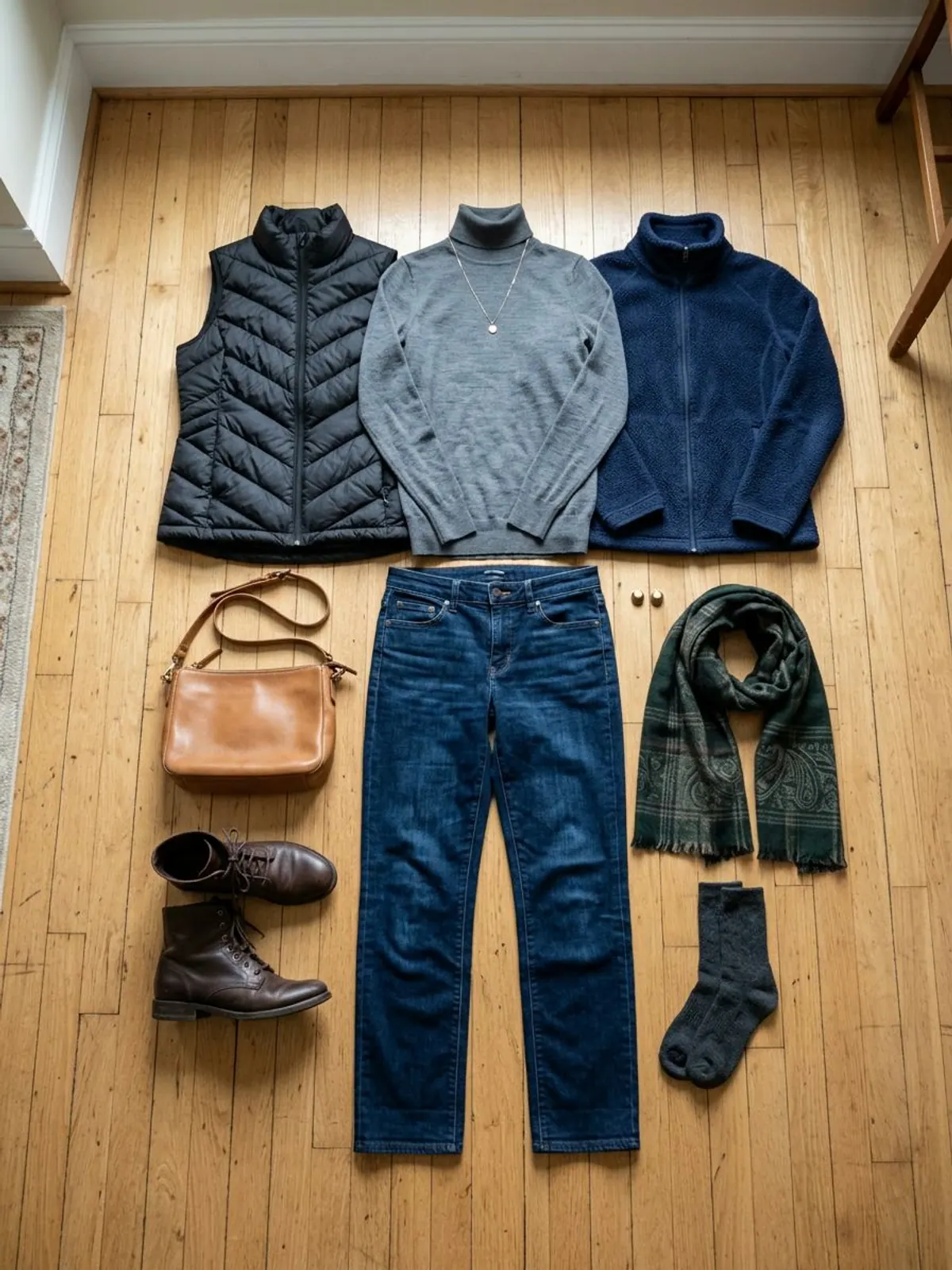
On truly cold days, add a third layer between your sweater and coat. A packable down vest warms your core with nothing at the arms, so sleeves stay slim and coats still fit.
A zip fleece works the same way and is easier to open if you warm up on a walk. Either one comes off in seconds when you step inside.
Step 4: Finish With a Wind and Water Resistant Outer Layer
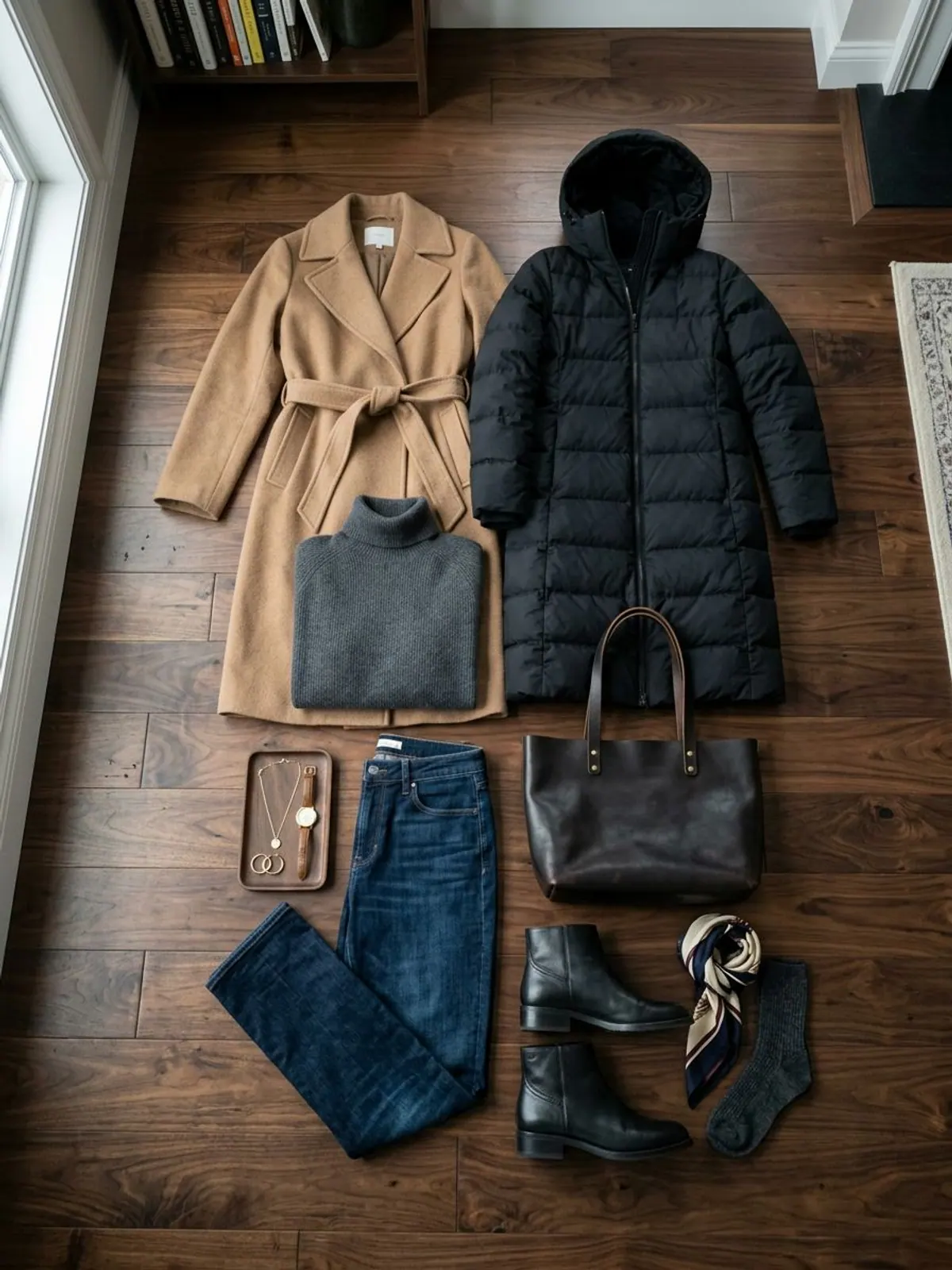
The outer layer blocks wind and wet. REI describes it as the layer that shields you from wind and rain, and the Kentucky extension recommends a tightly woven, wind-resistant outer layer.
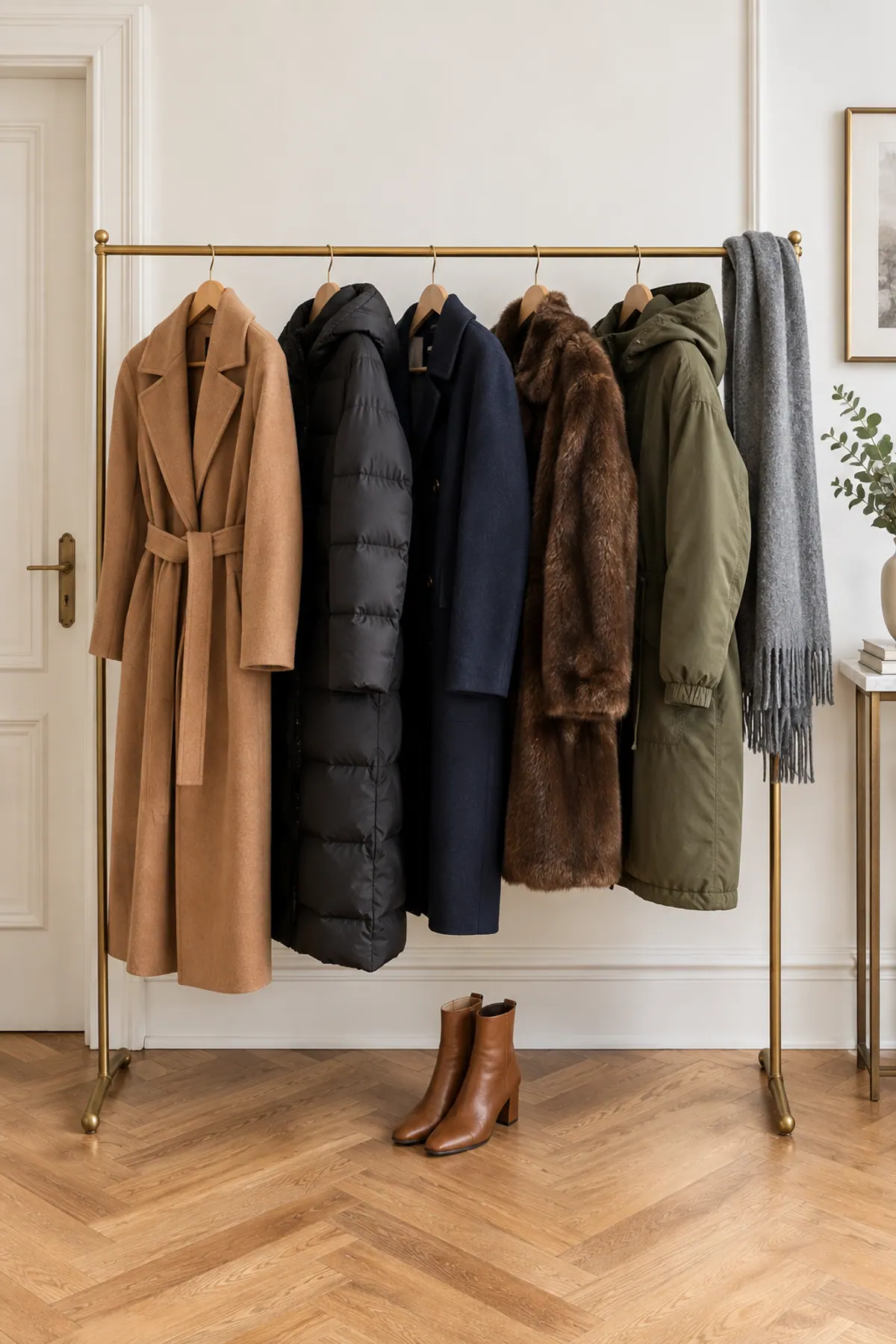
For town, that means a dense wool coat for dry cold days and a long puffer with a shell for wet snow or wind. Longer is warmer: a coat that covers your seat keeps the cold off your legs too. For style picks, see our winter coats that look expensive.
Step 5: Cover Your Head, Hands and Feet
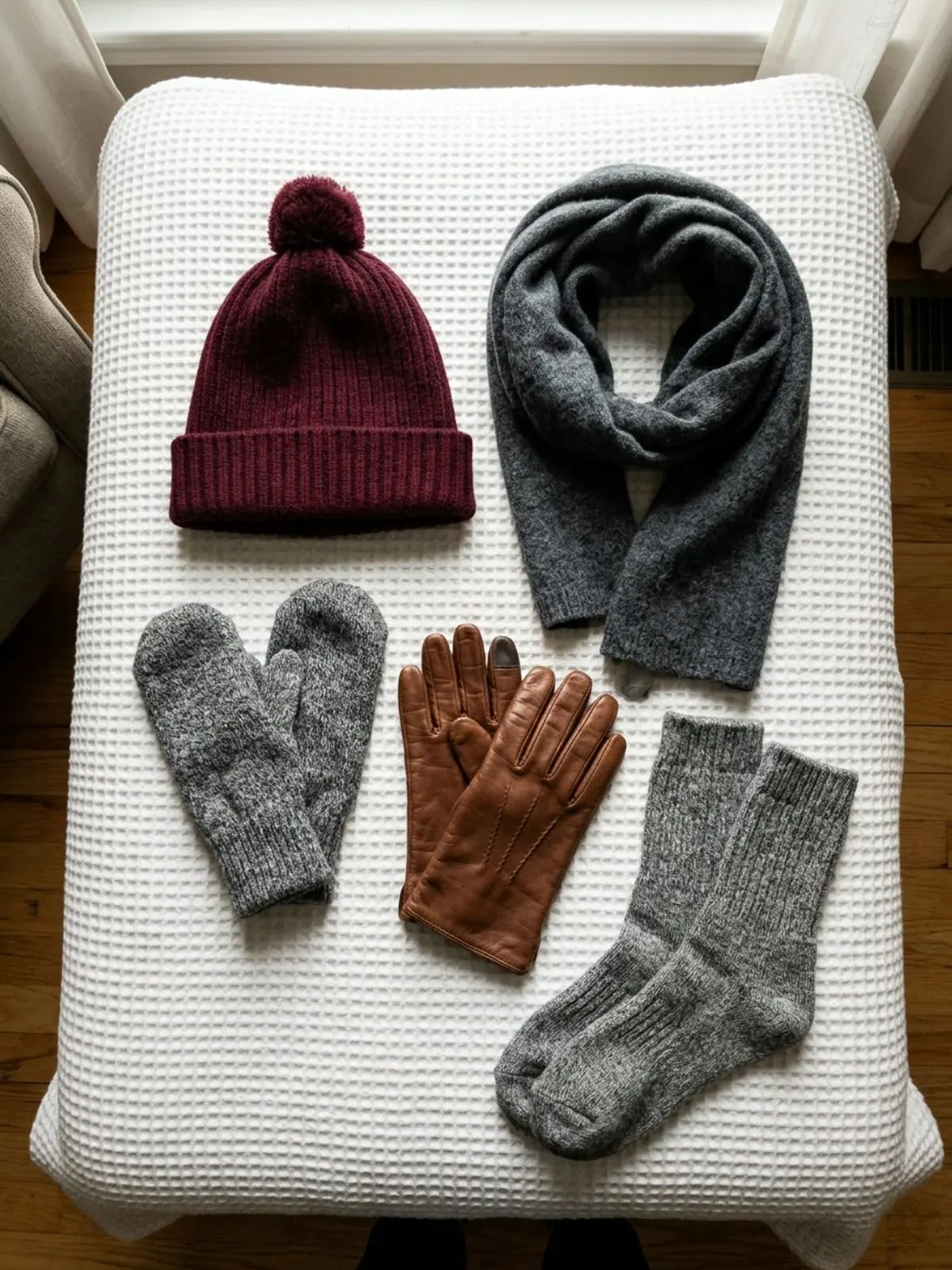
The CDC's winter weather advice lists a hat, a scarf or knit mask, mittens and water-resistant boots alongside several layers of loose-fitting clothing. The National Weather Service adds that mittens should be snug at the wrist.
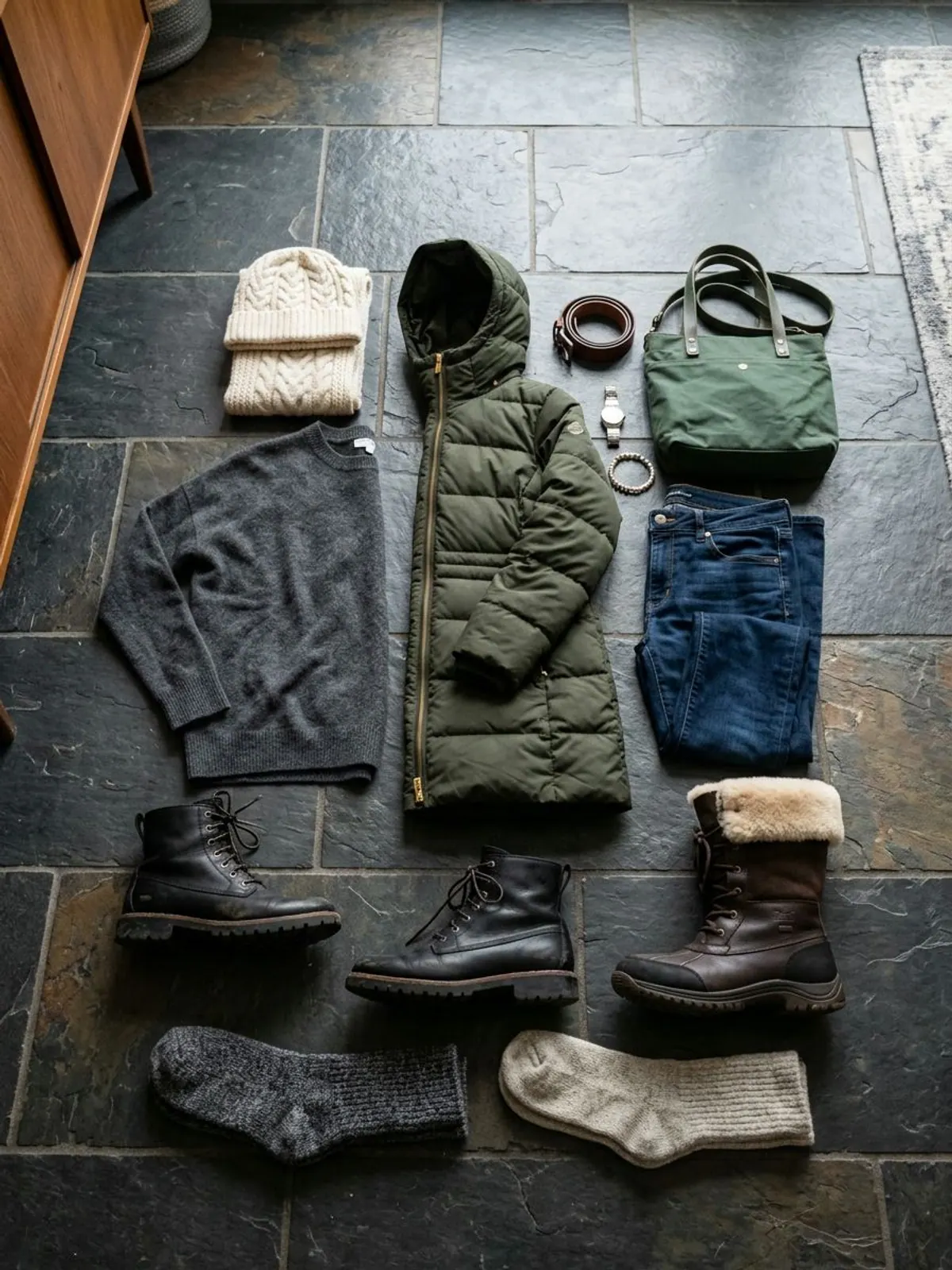
Choose boots with a waterproof upper and a thick, grippy sole, and leave room for a wool sock. A boot that squeezes your foot is a cold boot, because tight fit cuts off the warm air around your toes.
| Layer | Its job | Best fabrics | Skip |
|---|---|---|---|
| Base | Moves moisture off your skin | Merino, silk, synthetic thermal | Cotton tees and camis |
| Mid | Holds heat, looks good indoors | Fine merino, cashmere, wool | Thick chunky knits under a fitted coat |
| Warmth | Extra core heat on the coldest days | Down or synthetic vest, fleece | Heavy sweatshirts |
| Outer | Blocks wind and wet | Dense wool, puffer with a shell | Loose open knits as the top layer |
4 Cold Weather Outfits for Women Over 40, Layered
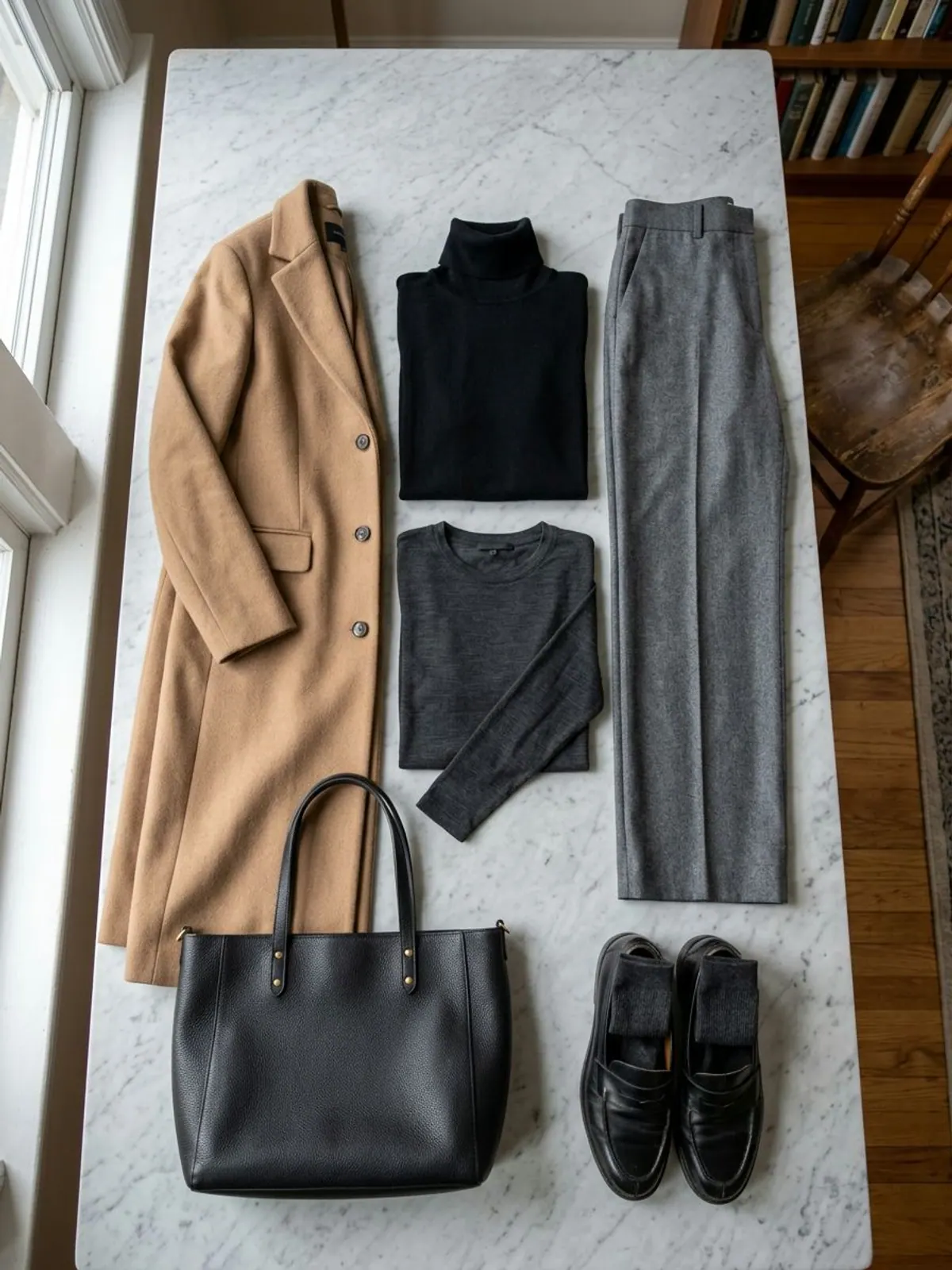
-
Step 1: For the office
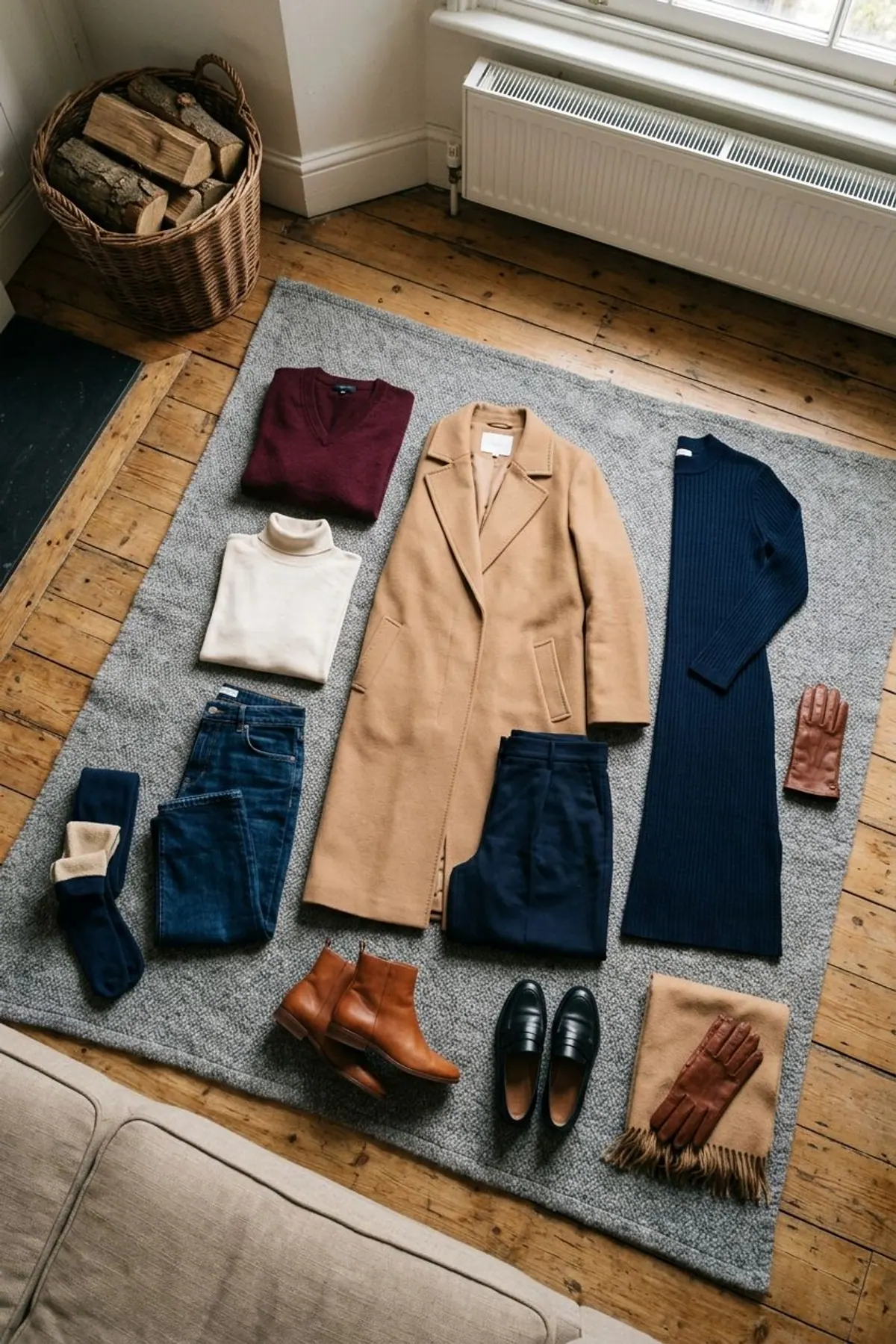
Charcoal merino base top + black merino turtleneck + grey wool wide-leg trousers + long camel coat + loafers with thin wool socks. Take the coat off and you look ready for a meeting.
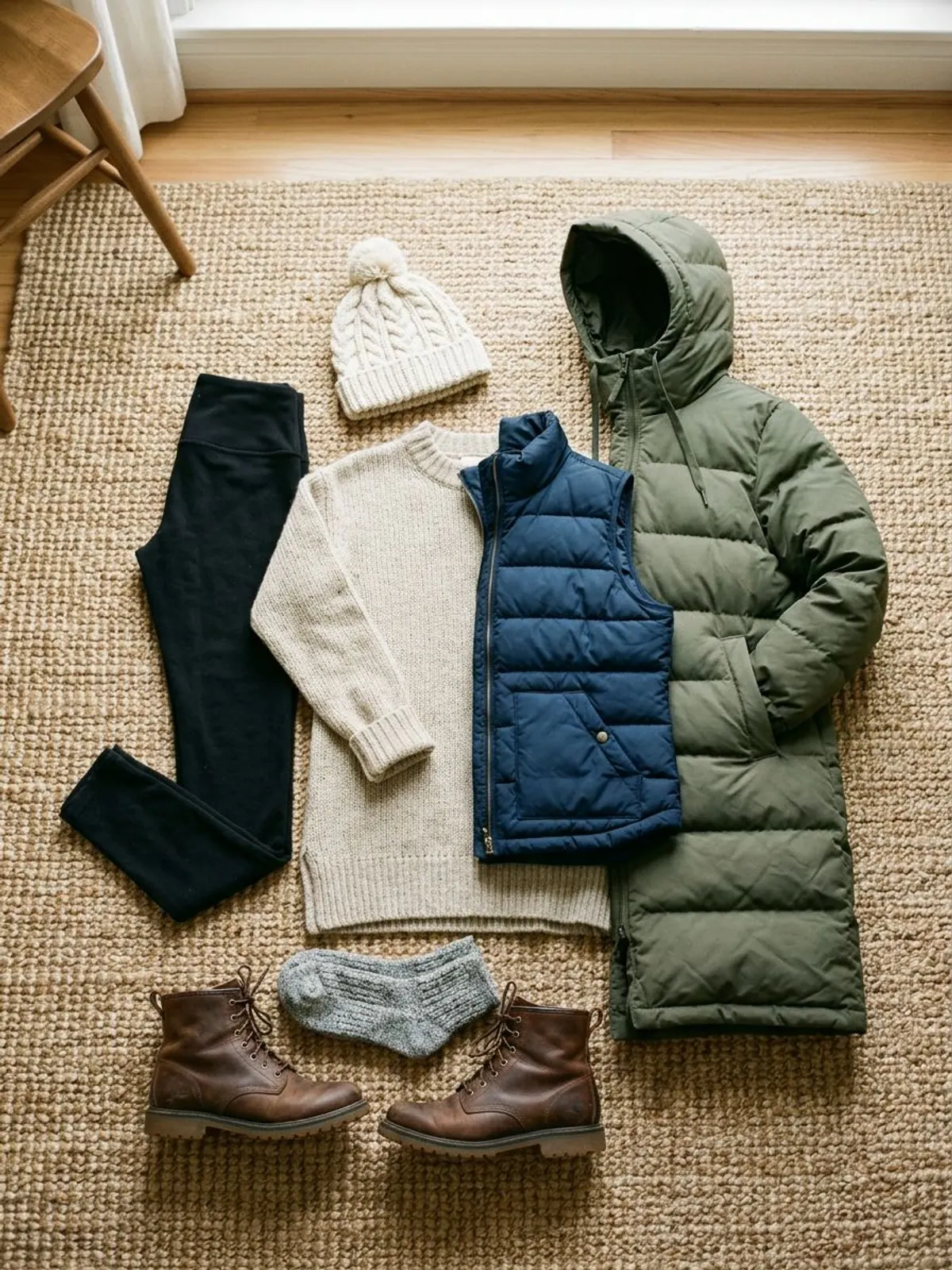
-
Step 1: For the weekend
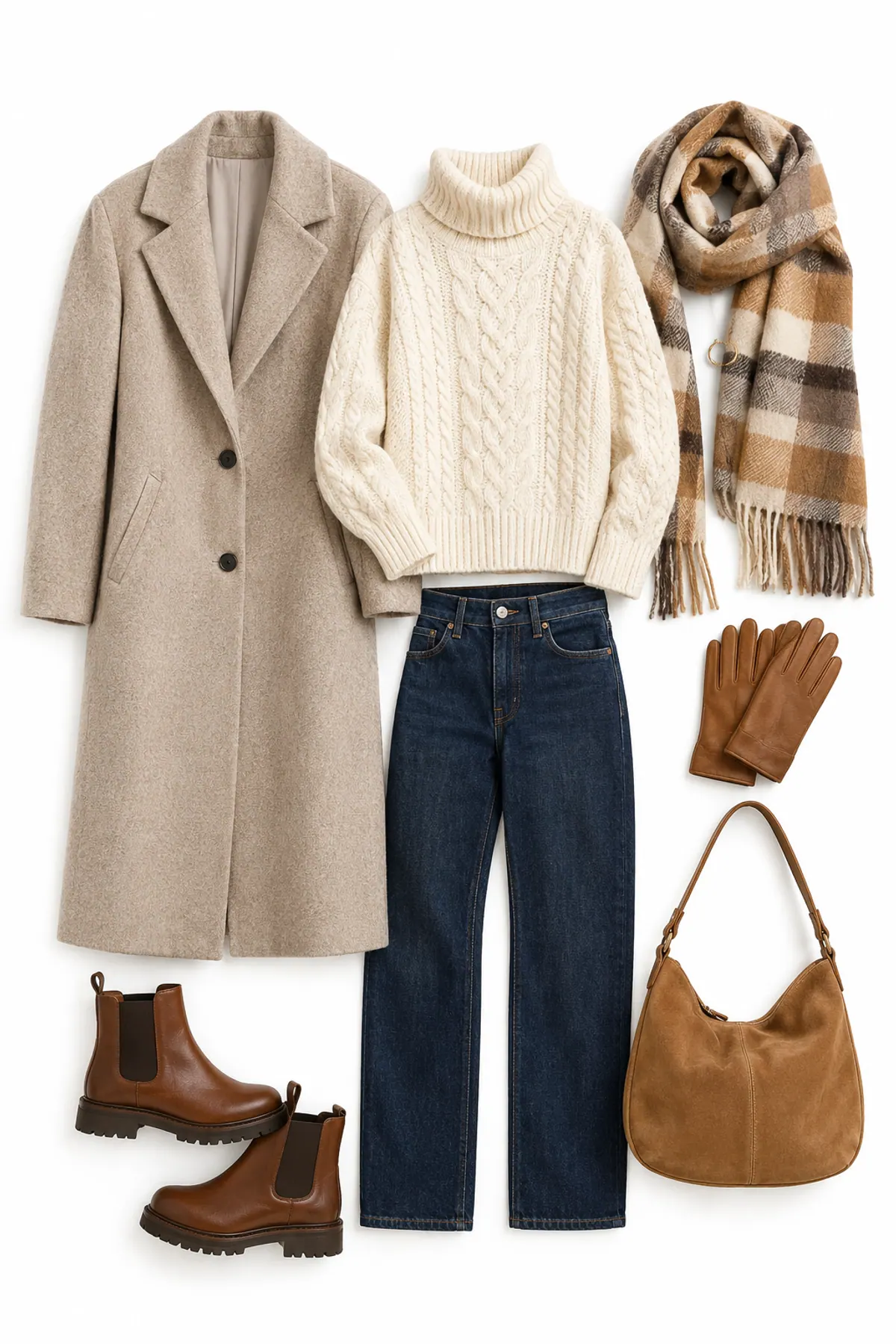
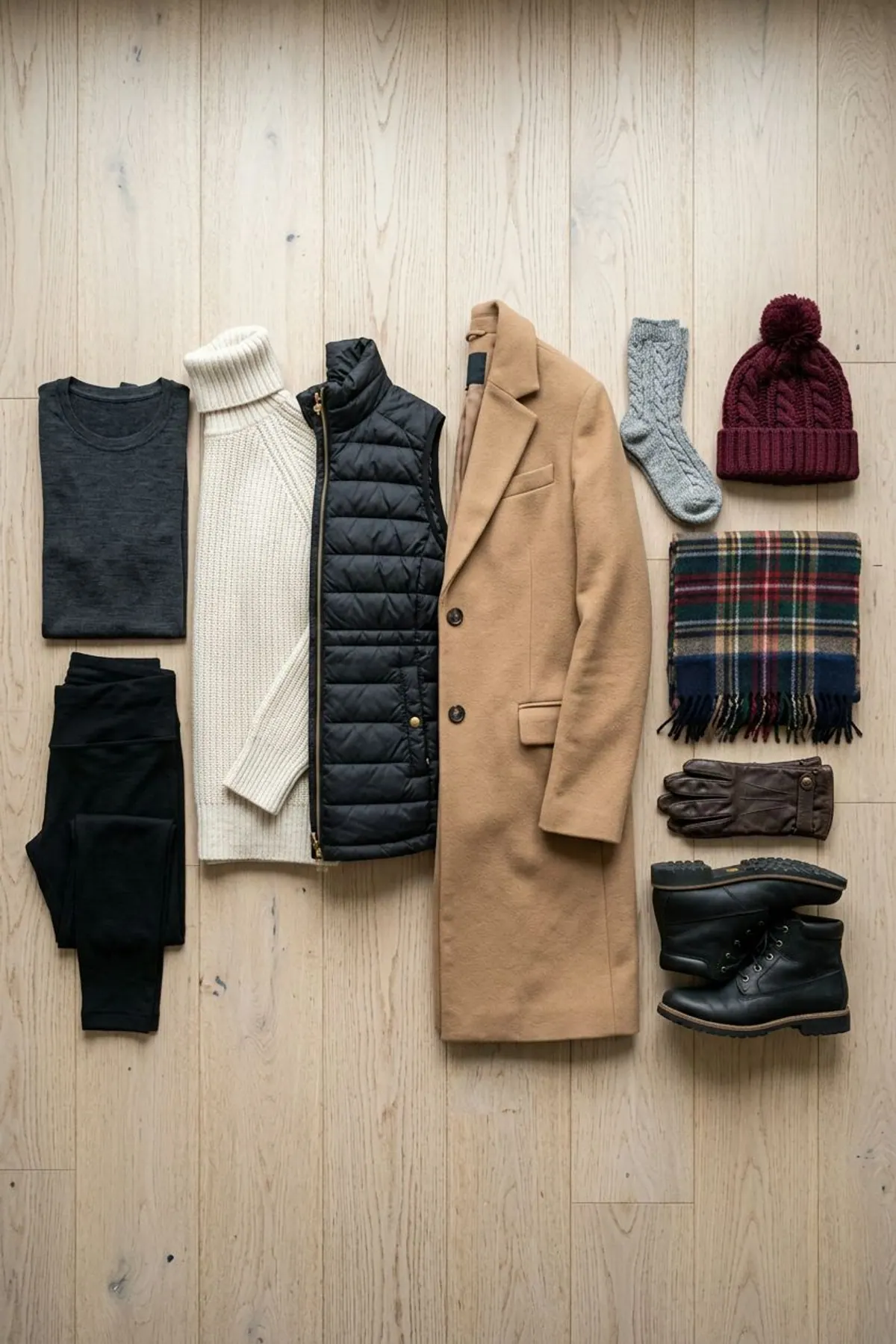
Black fleece-lined leggings + long oatmeal tunic sweater + navy down vest + long olive puffer + wool socks + waterproof boots + knit hat. Warm enough for a market or a long walk.
-
Step 1: For dinner out
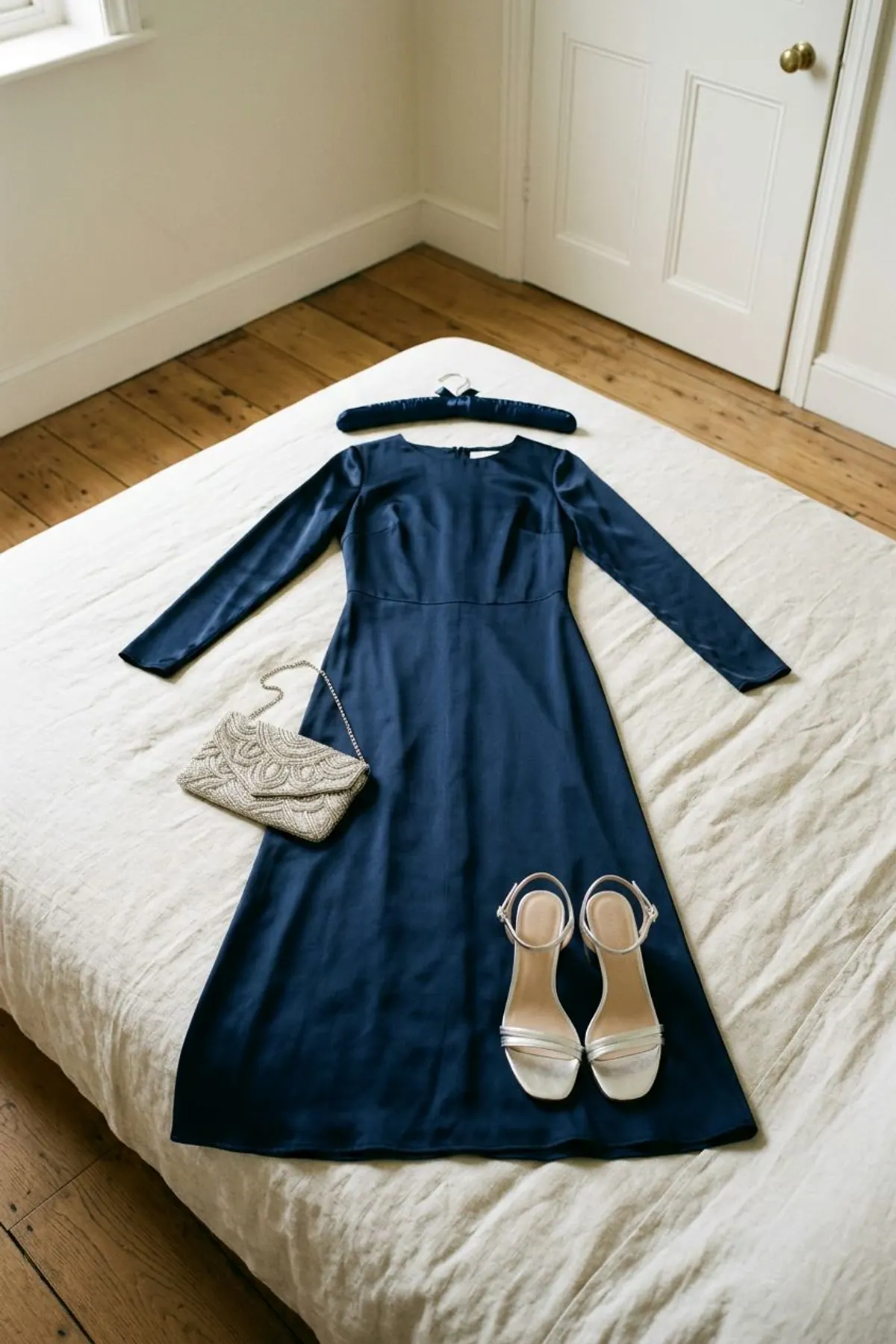
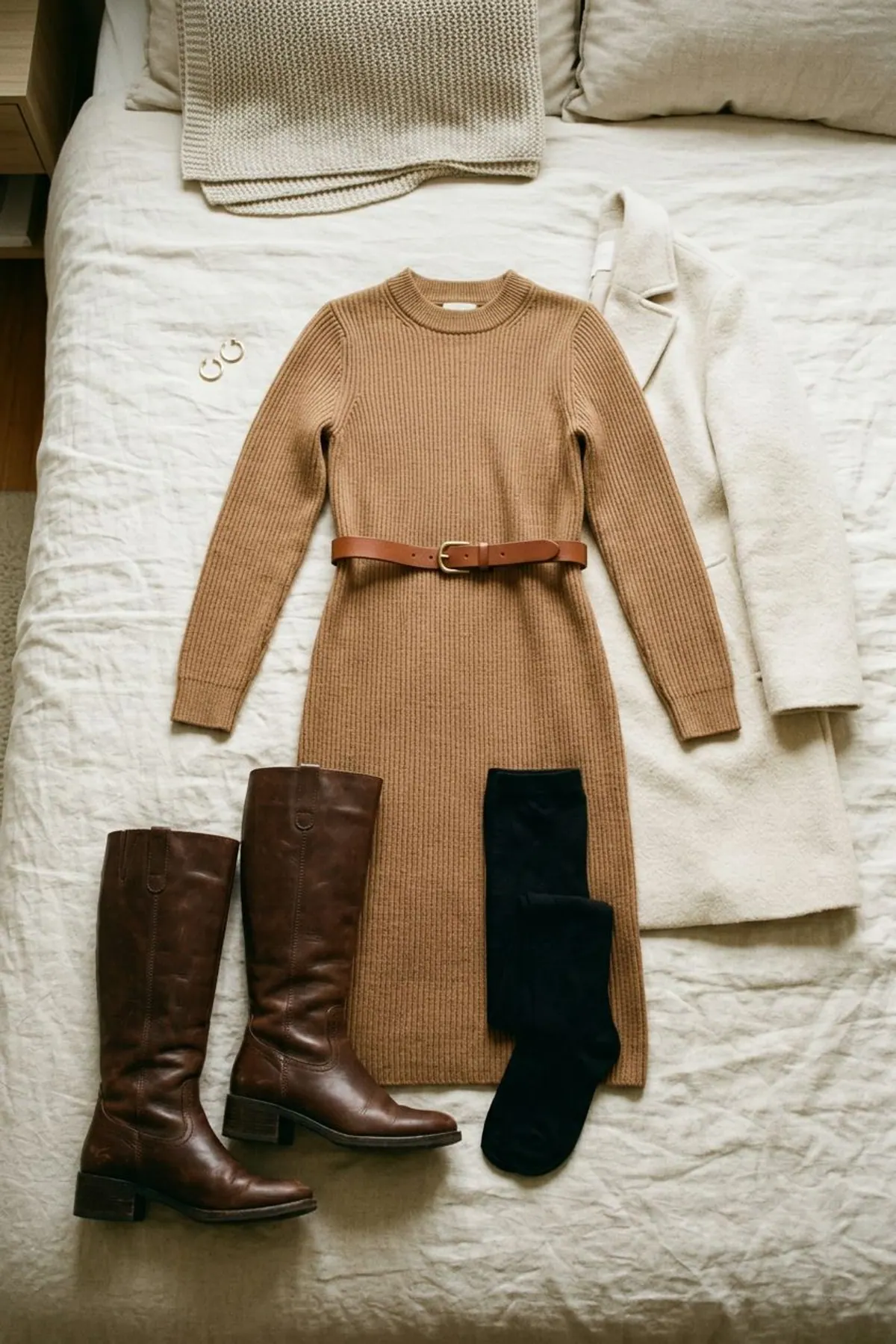
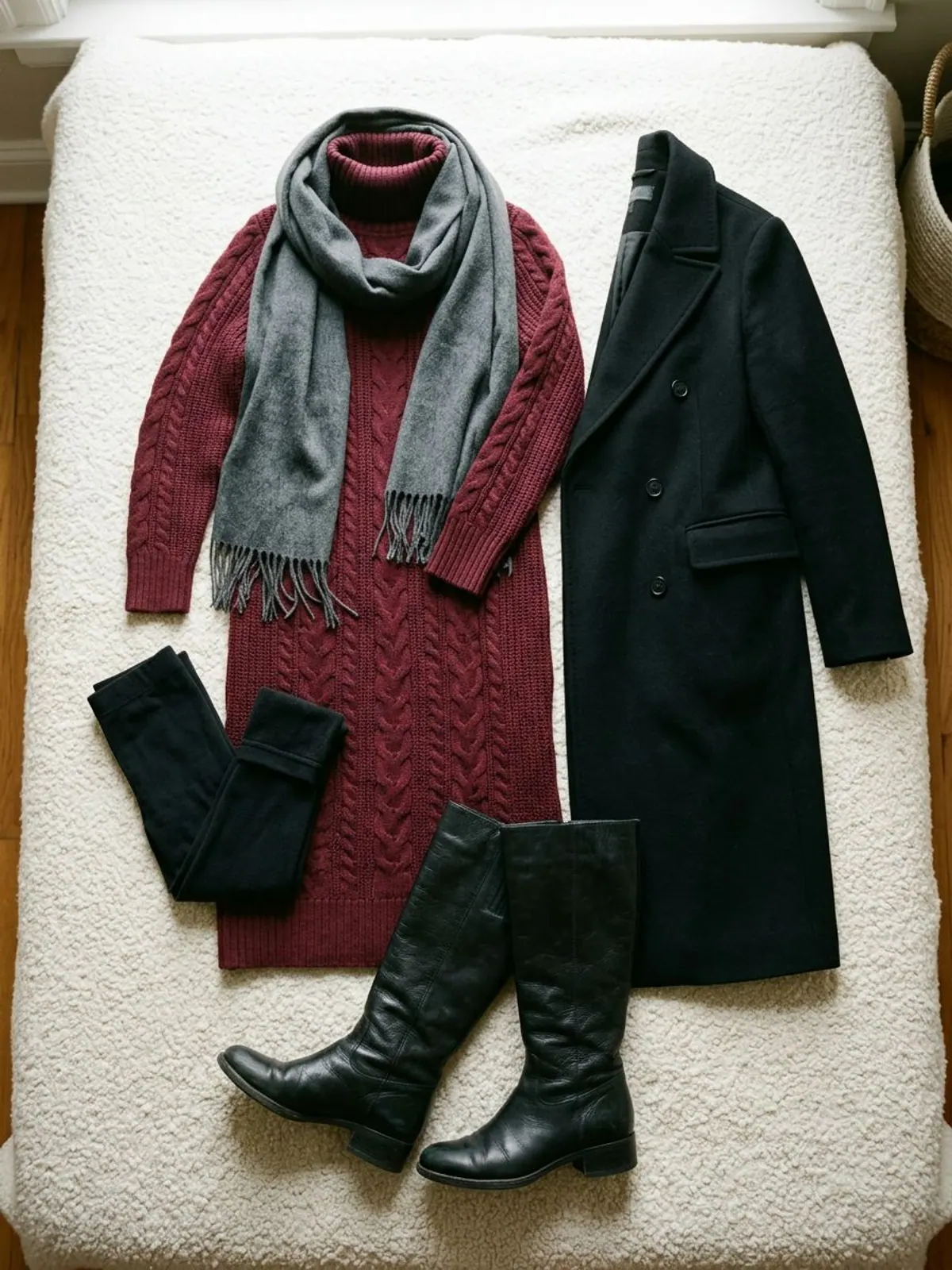
Burgundy knit sweater dress + fleece-lined opaque tights + black knee boots + long black wool coat + grey cashmere scarf. Add a thin base top under the dress on the coldest nights.
-
Step 1: For sub-freezing errands
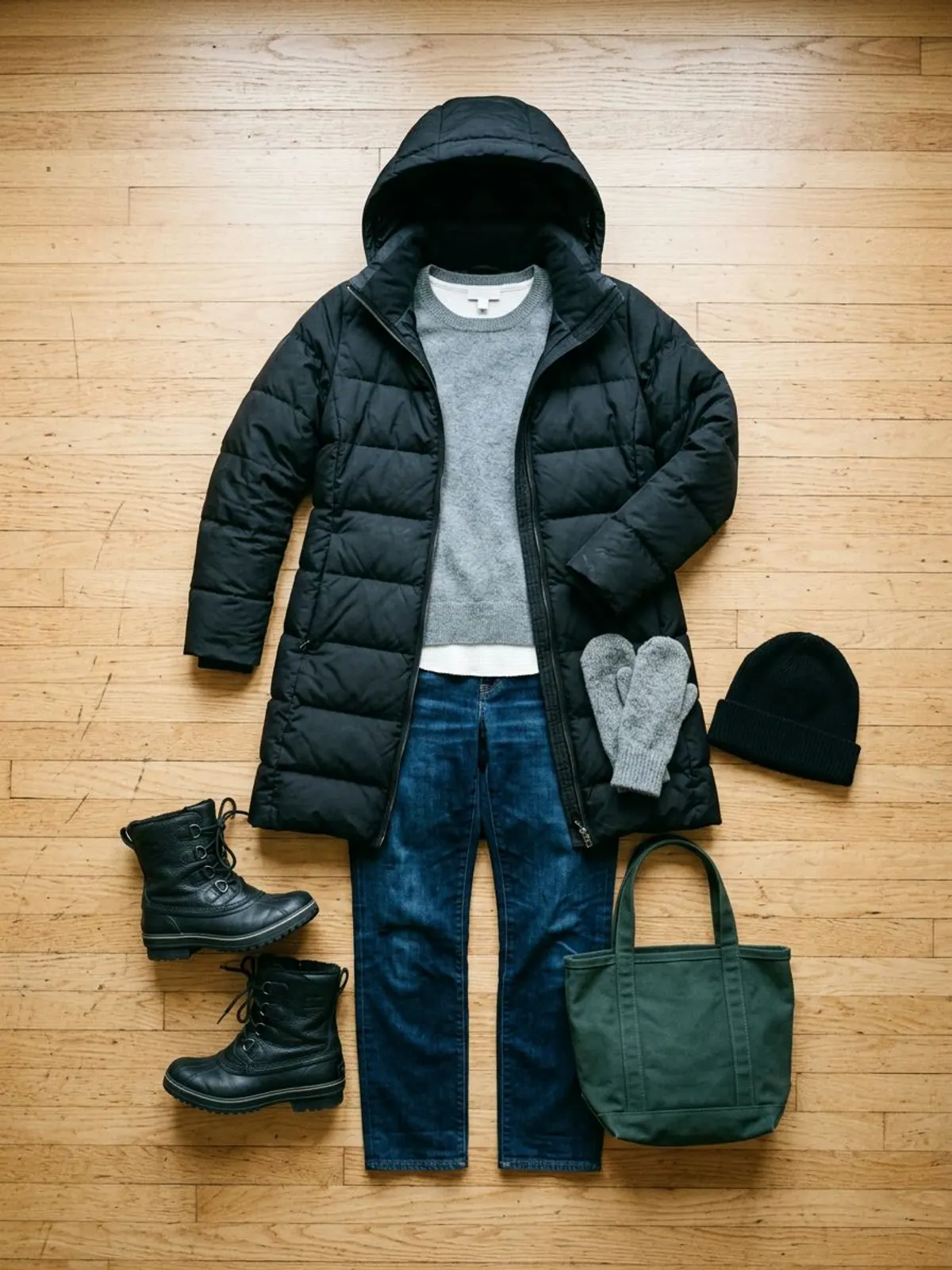
White waffle thermal top + grey crewneck + dark straight jeans (fleece-lined leggings underneath if it is bitter) + long hooded down coat + snow boots + mittens + hat.
For more outfit ideas once you have the layers, see winter outfits that still look chic in the cold.
Layering Mistakes That Make You Cold (or Bulky)
Do this
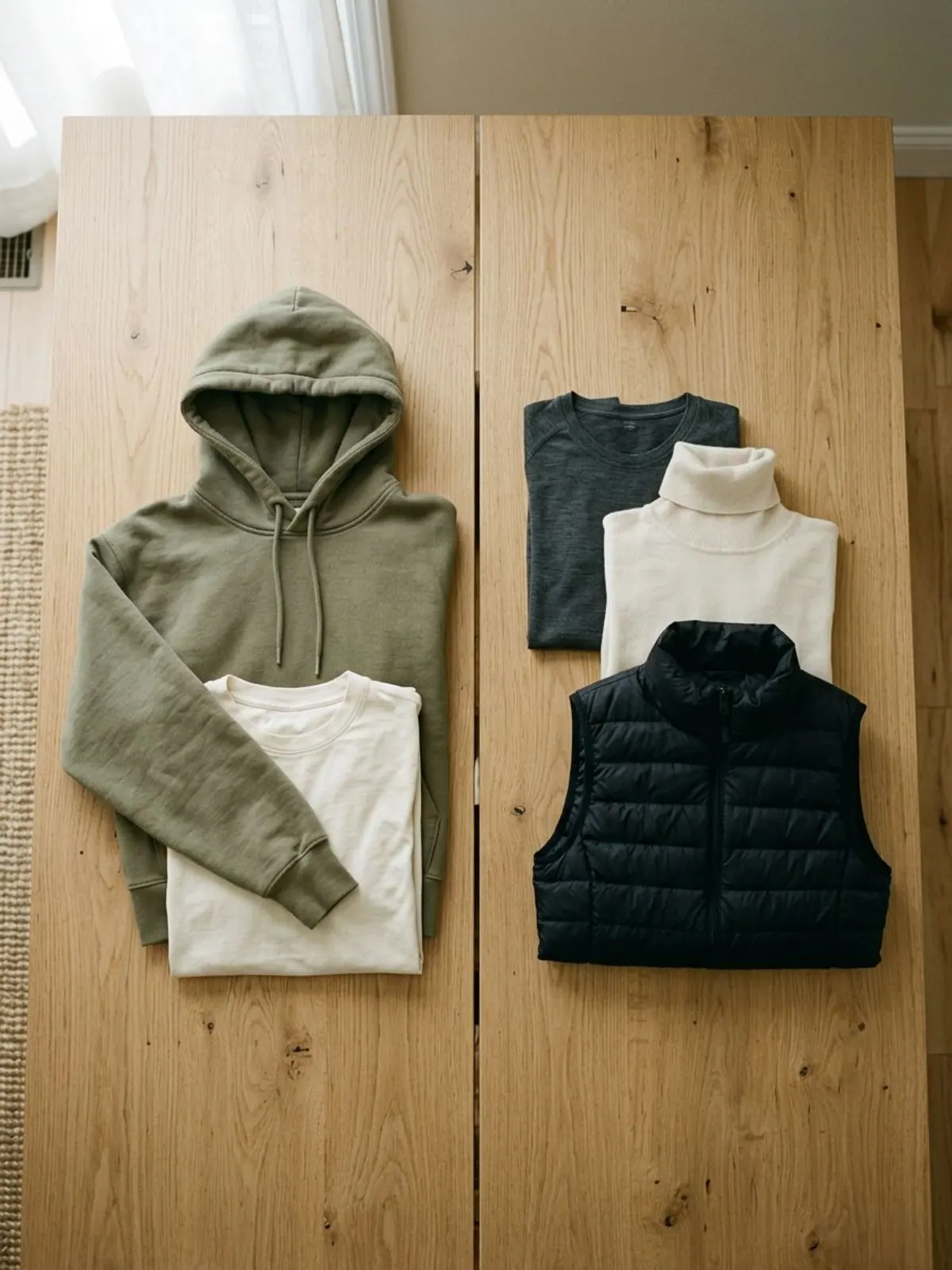
- Thin base layer in merino, silk or a synthetic thermal.
- Fine knits under a fitted coat.
- A vest for extra warmth, so sleeves stay slim.
- Room in your boots for a wool sock.
- Layers you can open or remove when you step inside.
Not this
- A cotton tee as your base layer.
- One huge sweater under a coat that no longer closes.
- Two thick sleeves stacked inside each other.
- Tight boots with thick socks squeezed in.
- Staying in damp clothes after snow or a sweaty walk.
If anything gets wet, change it as soon as you can. The CDC also advises removing wet clothing, since damp layers pull heat from your body. More ways to avoid the bulky look are in our winter fashion mistakes.
Variations for Your Day
If you run hot indoors: make the mid layer a cardigan or zip fleece instead of a pullover, so it opens in a second. Keep the base layer lightweight.
If you are standing still outside: a game, a parade or a bus stop calls for a midweight base layer and the vest, even if you skip them on walking days.
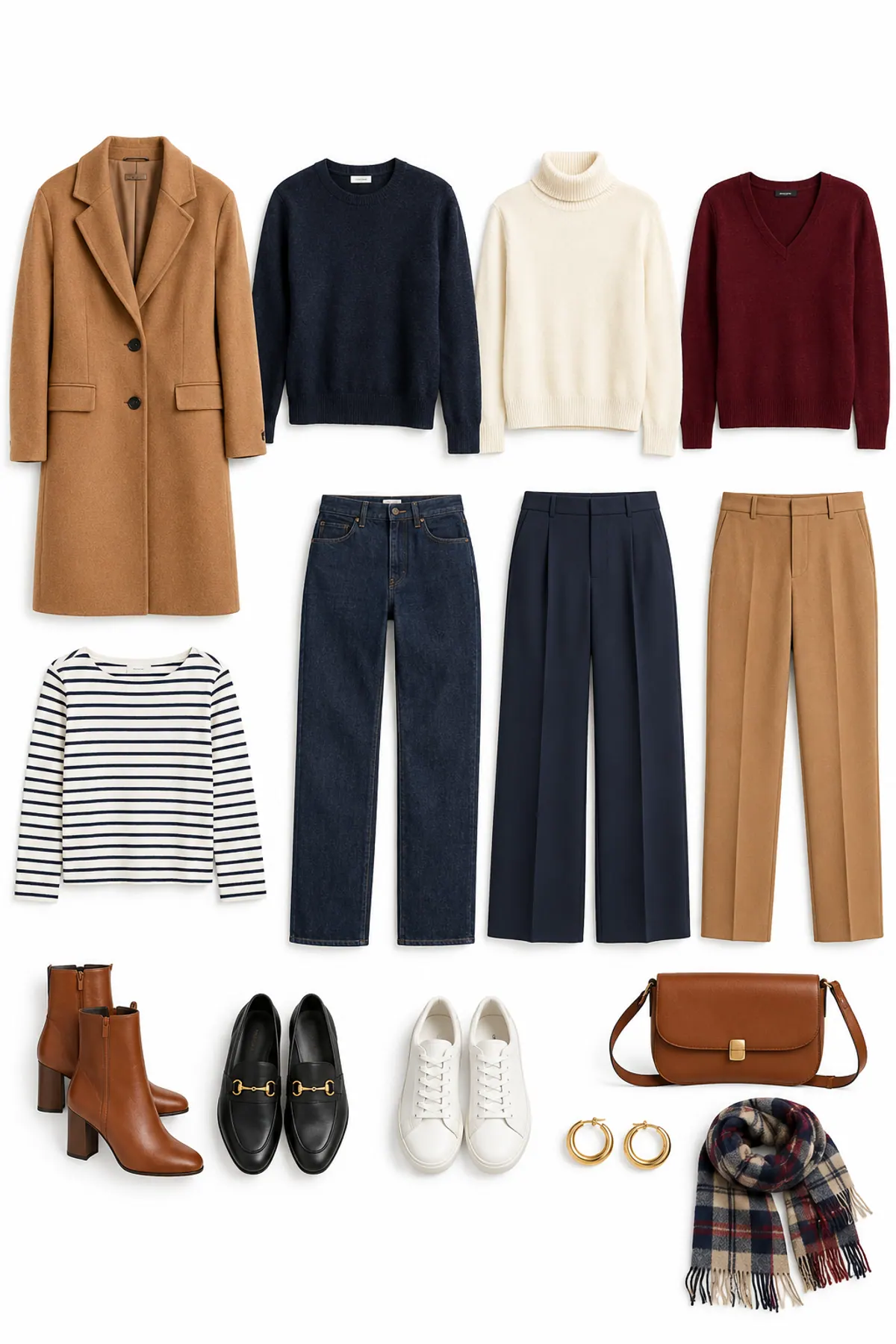
If you want fewer pieces: a winter capsule wardrobe with two base tops, three fine knits, one vest and one coat covers most of the season.
Cold weather layering check before you leave
Frequently asked questions
How do you layer clothes for cold weather?
Start with a thin base layer that moves moisture off your skin, add a mid layer that holds heat, add a vest or fleece on very cold days, and finish with a coat that blocks wind and wet. Add a hat, scarf, mittens and wool socks.
What is the warmest fabric for a base layer?
Wool, silk and synthetic thermals like polypropylene hold more body heat than cotton, according to university extension advice. Merino wool is soft and stays warm when damp.
How do I layer without looking bulky?
Use several thin layers instead of one thick one, choose fine knits under a fitted coat, and add warmth with a vest rather than a second sweater so your sleeves stay slim.
Can I wear fleece-lined leggings under jeans?
Yes, if your jeans have a straight or relaxed leg. Fleece-lined leggings under jeans are one of the warmest options for standing outside in the cold.
Are mittens warmer than gloves?
Mittens are usually warmer because your fingers share heat. The National Weather Service advises mittens that are snug at the wrist.
Save it for later
Pin this to your Seasonal Outfits board so it's there when you need it.
Save to Pinterest