This post contains affiliate links. As an Amazon Associate we earn from qualifying purchases, at no extra cost to you. Read our disclosure.
Key takeaways
- Hip dips come from bone structure and are common; the goal is comfort, not correction.
- Choose high-rise bottoms, drapey fabrics (ponte, crepe, viscose) and hip-length or longline layers.
- Skip low-rise waistbands, clingy knits and cropped jackets that stop at the widest point.
- Test every piece sitting and walking, and ask a tailor about the waist.
In this post12 sections
- What Hip Dips Are, and Why Clothes Are the Easy Fix
- The 6 Fit Rules That Work for Hip Dips
- Work Outfit Formulas for Hip Dips After 50
- 1. High-rise wide-leg crepe trousers with a tucked blouse
- 2. A-line midi skirt with a fitted knit
- 3. Jersey wrap dress with a cardigan
- Colour, Pattern and Pockets: Small Choices That Help
- Common Mistakes to Avoid
- Blazer and Jacket Lengths: Where the Hem Should Stop
- A Five-Day Work Plan for Hip Dips
- A 3-Point Check Before You Buy
- FAQ
What Hip Dips Are, and Why Clothes Are the Easy Fix
Hip dips are the inward curve between the hip bone and the top of the thigh. Cleveland Clinic explains that they come from bone structure, including the width of the pelvis and the length of the femoral neck, and calls them common and nothing to worry about. Exercise cannot remove them, though building muscle may soften how visible they are. So the useful question is not how to fix them but which cuts, rises and fabrics let your clothes skim the area instead of clinging to it.
We are not medical experts; this is what a published health source says. You are free to leave the area alone completely. Everything below is about what is comfortable and polished at work.
The 6 Fit Rules That Work for Hip Dips
| Rule | Choose | Skip |
|---|---|---|
| Waistband sits above the dip | High-rise trousers and skirts | Low-rise waistbands, which tend to sit exactly where the dips are, says Petite Dressing |
| Fabric with drape | Ponte, crepe, soft wool-blend suiting, drapey viscose | Thin stretchy knits that cling and heavy stiff fabrics that add bulk |
| Hem or layer covers the hip | Hip-length or longline blazers, long cardigans | Cropped jackets that stop at the widest point |
| Skirts that skim | A-line, fit-and-flare, wrap skirts | Pencil or bodycon cuts |
| Straight line from hip to hem | Straight-leg and wide-leg trousers | Skinny cuts that outline the curve |
| Flat pockets | Pockets that sit flat or are sewn shut | Patch pockets and bulky side pockets |
These come largely from Petite Dressing's guide (written for petite readers, April 2023), checked against the kinds of cuts retailers describe for work wear. It also advises that peplums sit at or slightly below the hip, and that blazers should not be oversized. Opinions differ on shapewear, which that guide calls optional, and on bodycon, which some women simply enjoy; if you love it, wear it.
Work Outfit Formulas for Hip Dips After 50
1High-rise wide-leg crepe trousers with a tucked blouse
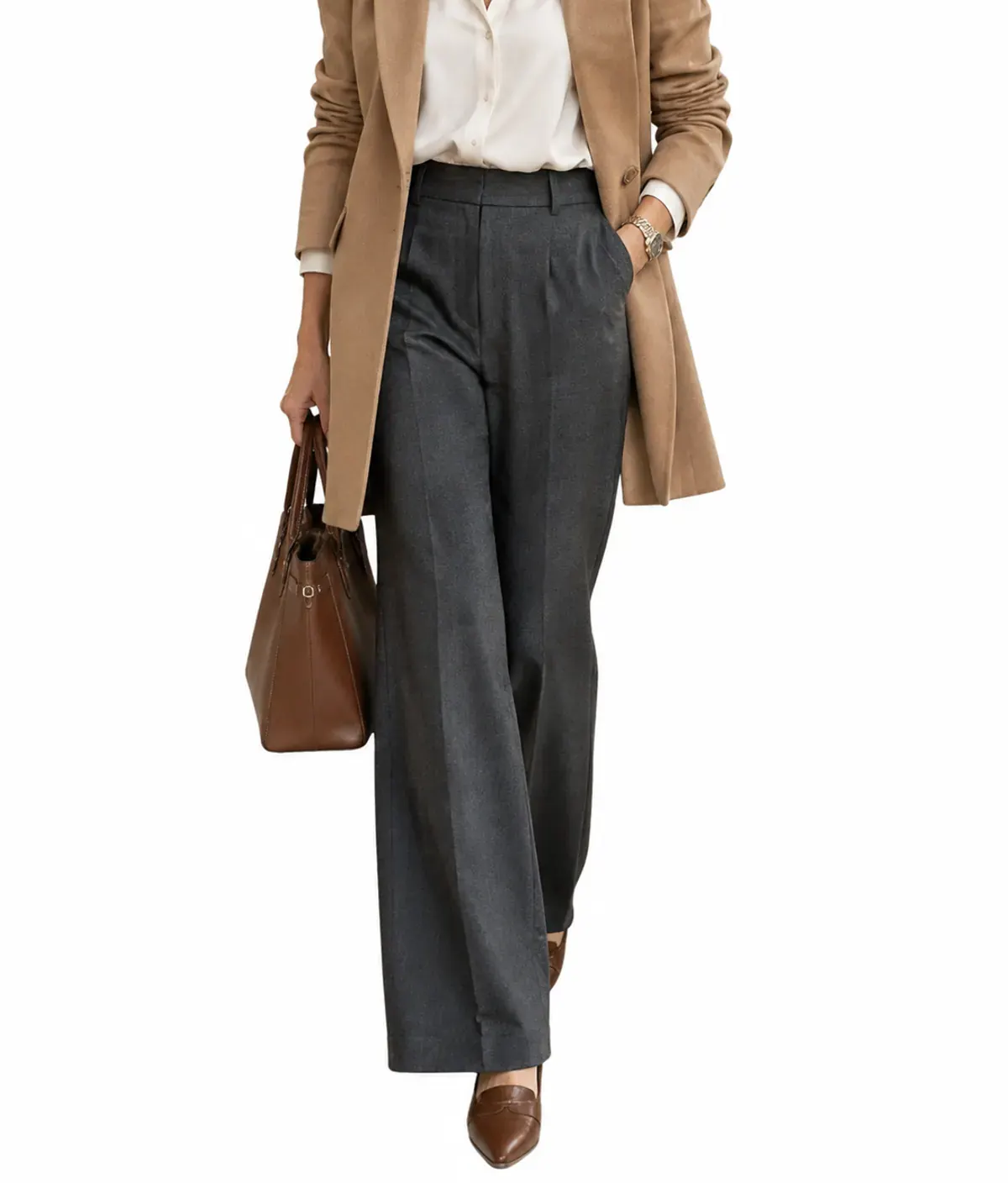
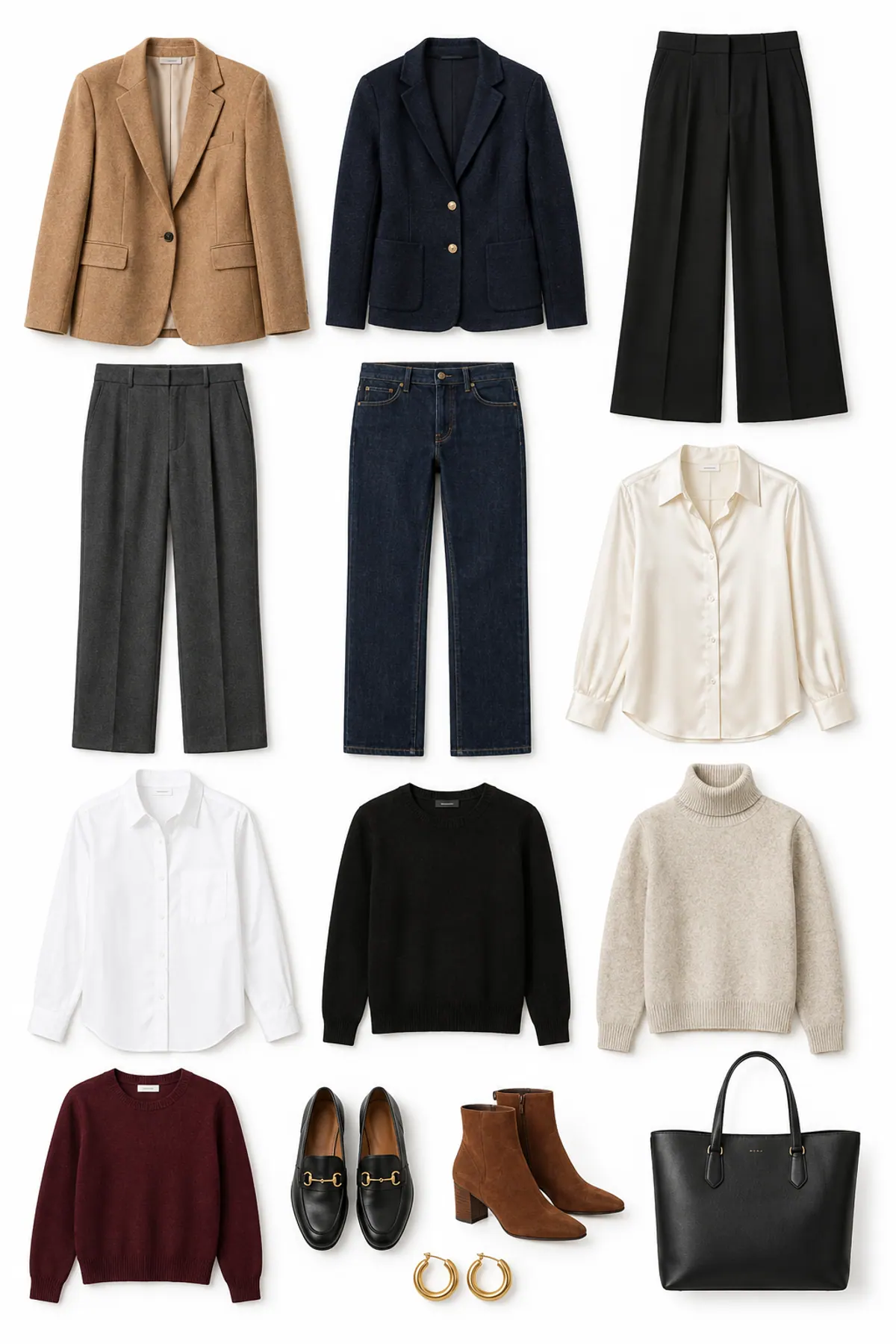
Wide-leg trousers in crepe fall straight from the hip, so the line from waist to hem skips the curve. Tuck a silky blouse into the high waist and add a long blazer. This is the easiest office outfit on the list.
- Check the rise on the size chart. Compare it with a pair that fits you.
Straight drape from the waist, no cling at the hip.
2A-line midi skirt with a fitted knit
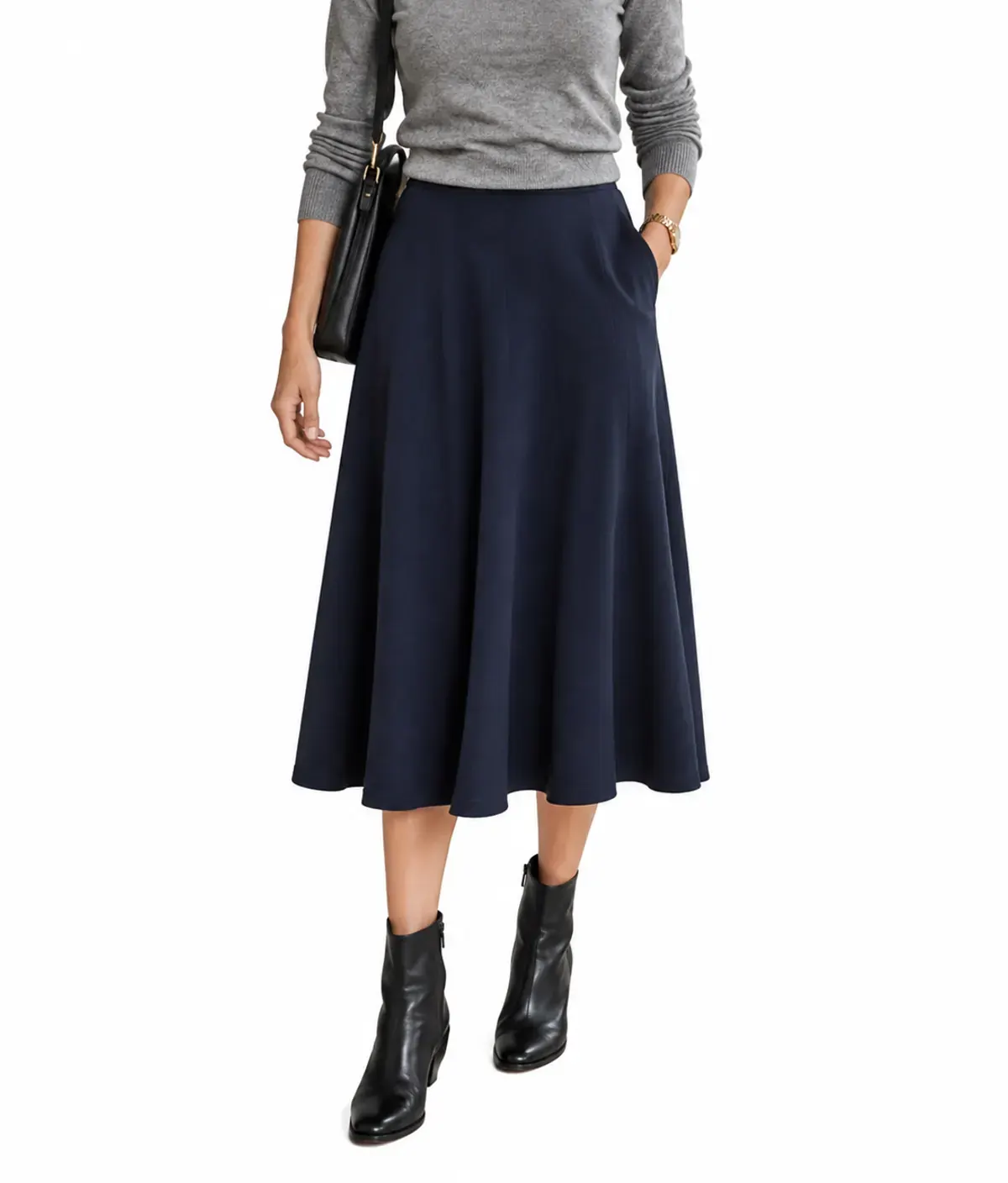
An A-line skirt in a drapey fabric clears the hip and moves with you. Pair it with a fitted fine-knit sweater so the shape is balanced, and keep the waistband at your natural waist.
- Avoid skirts with a seam or gathered waistband exactly at the hip.
Skims the hip without clinging.
3Jersey wrap dress with a cardigan
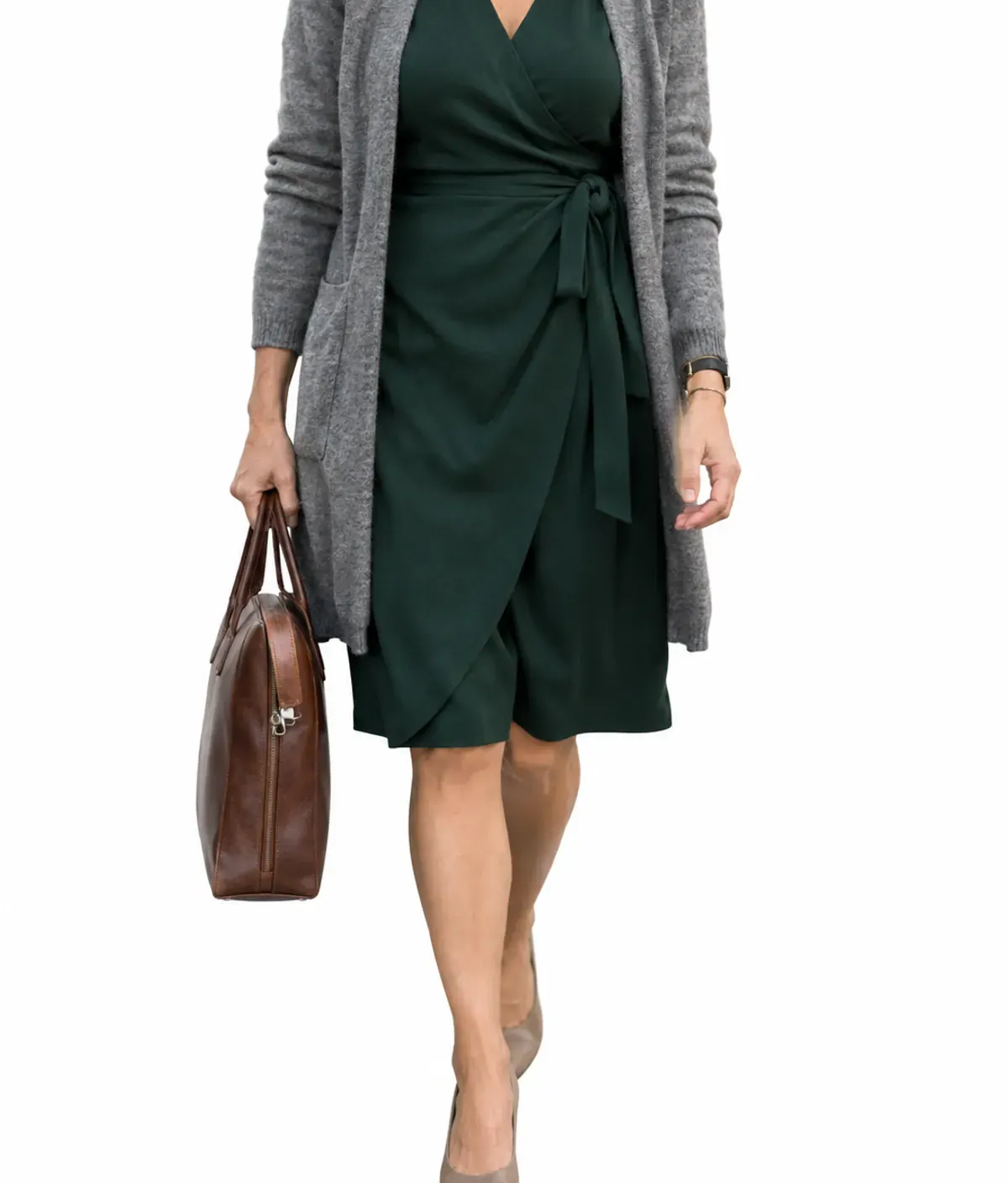
A wrap dress ties at the natural waist and flows over the hip. Choose a mid-weight jersey that does not cling, and wear a cardigan to add a line at the hip.
- Try sitting down in it before you buy: wrap fronts can gape.
One piece, a built-in waist and a drapey skirt.
Colour, Pattern and Pockets: Small Choices That Help
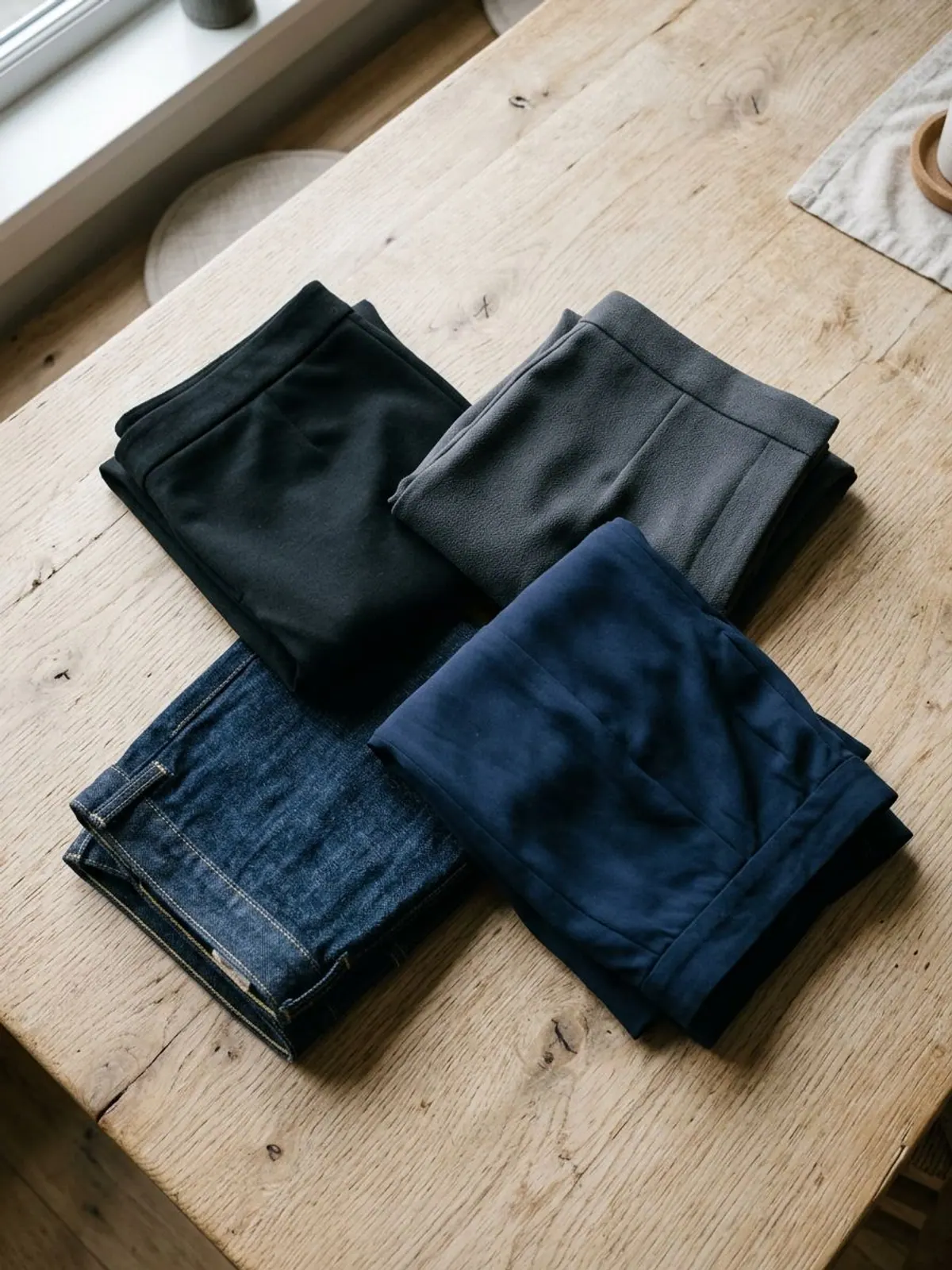
Dark, solid bottoms in navy, charcoal, black or deep green are the simplest way to keep the eye moving smoothly from waist to hem, and a lighter or brighter top draws attention upward. This is general styling practice rather than a rule, so wear the colours you love. Small, even prints and subtle textures such as a fine herringbone behave like solids from a distance, while large prints placed right at the hip can emphasise the area. If you like a bold print, put it on the top or the scarf instead.
Pockets deserve a second look. Slash pockets that lie flat are fine, but bulky patch pockets, cargo styles and pockets that gape open add volume at the hip. If a pair of trousers fits everywhere else, a tailor can often sew the pockets shut or remove the lining that causes the bulge. Ask for a quote first, because prices vary by city.
Common Mistakes to Avoid
Most problems come from one of four things: a waistband that sits on the hip bone, a fabric that is too thin and clingy, a jacket that stops at the widest point, and a size bought to fit the hip that leaves the waist gaping. Fix the waistband and the fabric first, because those two changes make the biggest difference to how an outfit hangs.
Another trap is over-correcting. Piling on layers or choosing very loose clothes can swamp a frame and add bulk, and Petite Dressing specifically warns against oversized blazers. Aim for pieces that skim: shaped enough to show your waist, loose enough to move. If you have a favourite pair that clings a little, a longer top or a longline cardigan over it is an easy compromise.
Blazer and Jacket Lengths: Where the Hem Should Stop
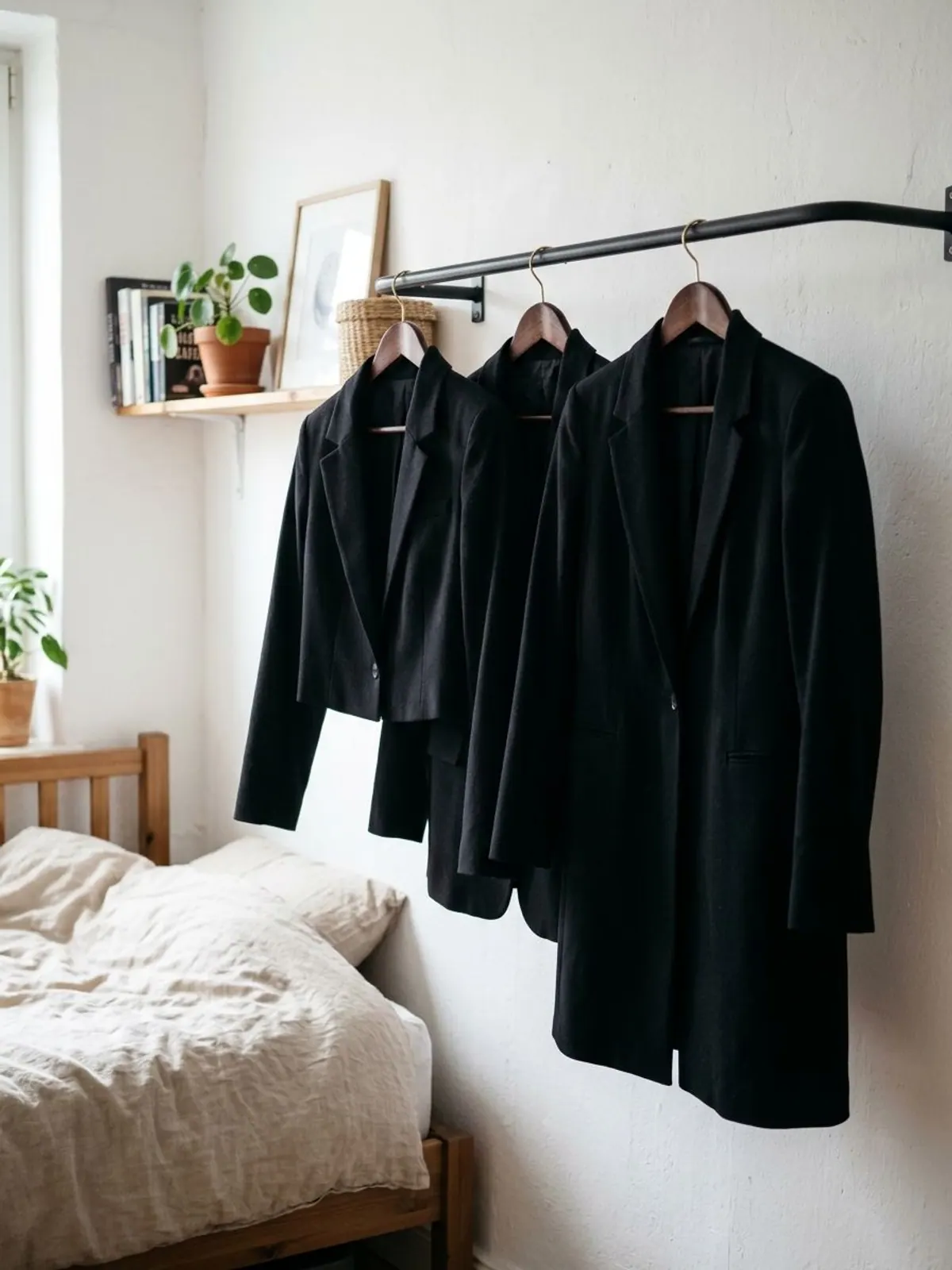
A blazer that ends at the hip or a little below covers the area without adding bulk. Petite Dressing warns against oversized blazers, so look for shoulders that fit and a body that is straight rather than boxy. Our blazer outfits guide shows how to wear one across five days.
A Five-Day Work Plan for Hip Dips
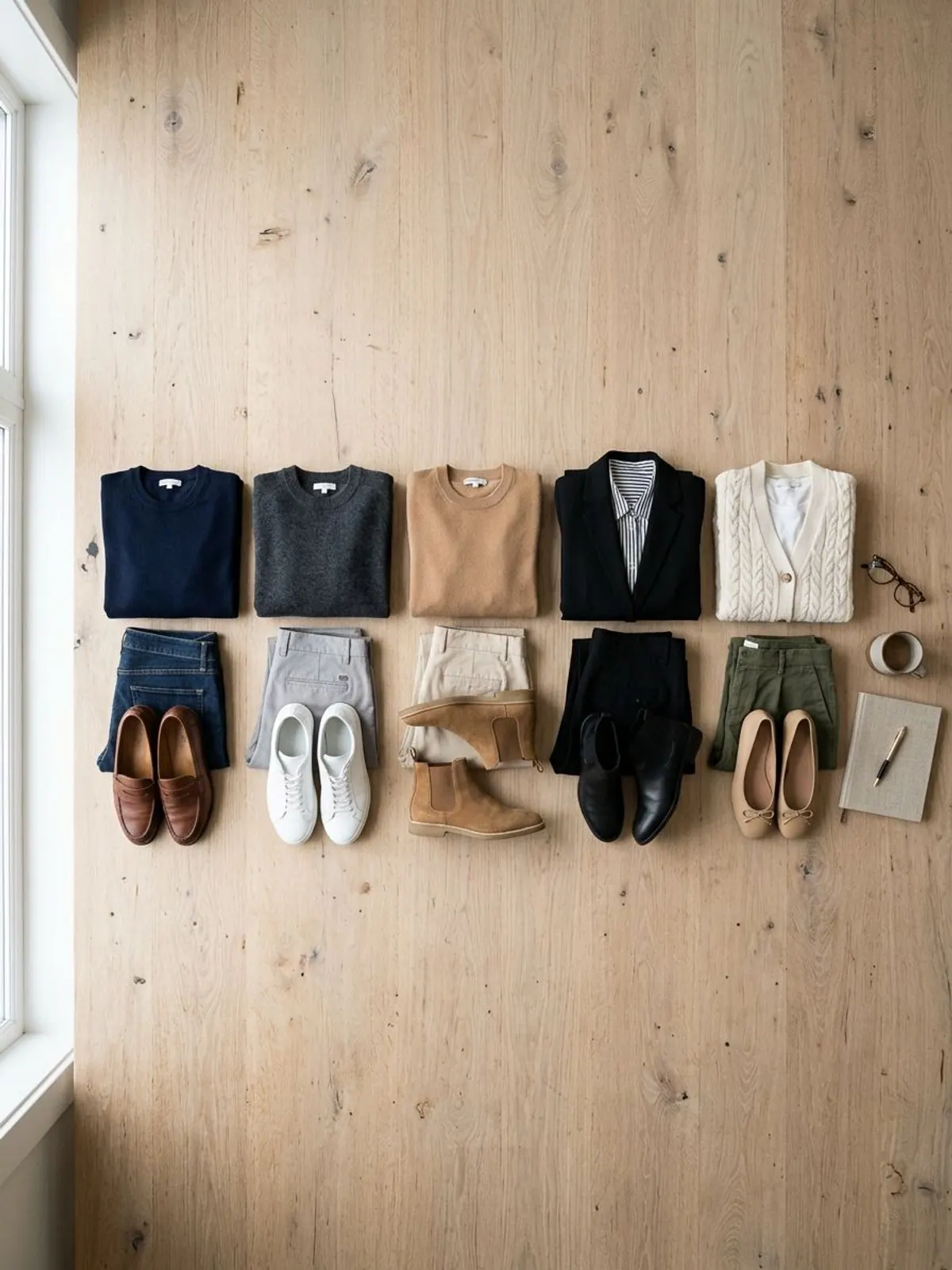
| Day | Outfit | Why it works |
|---|---|---|
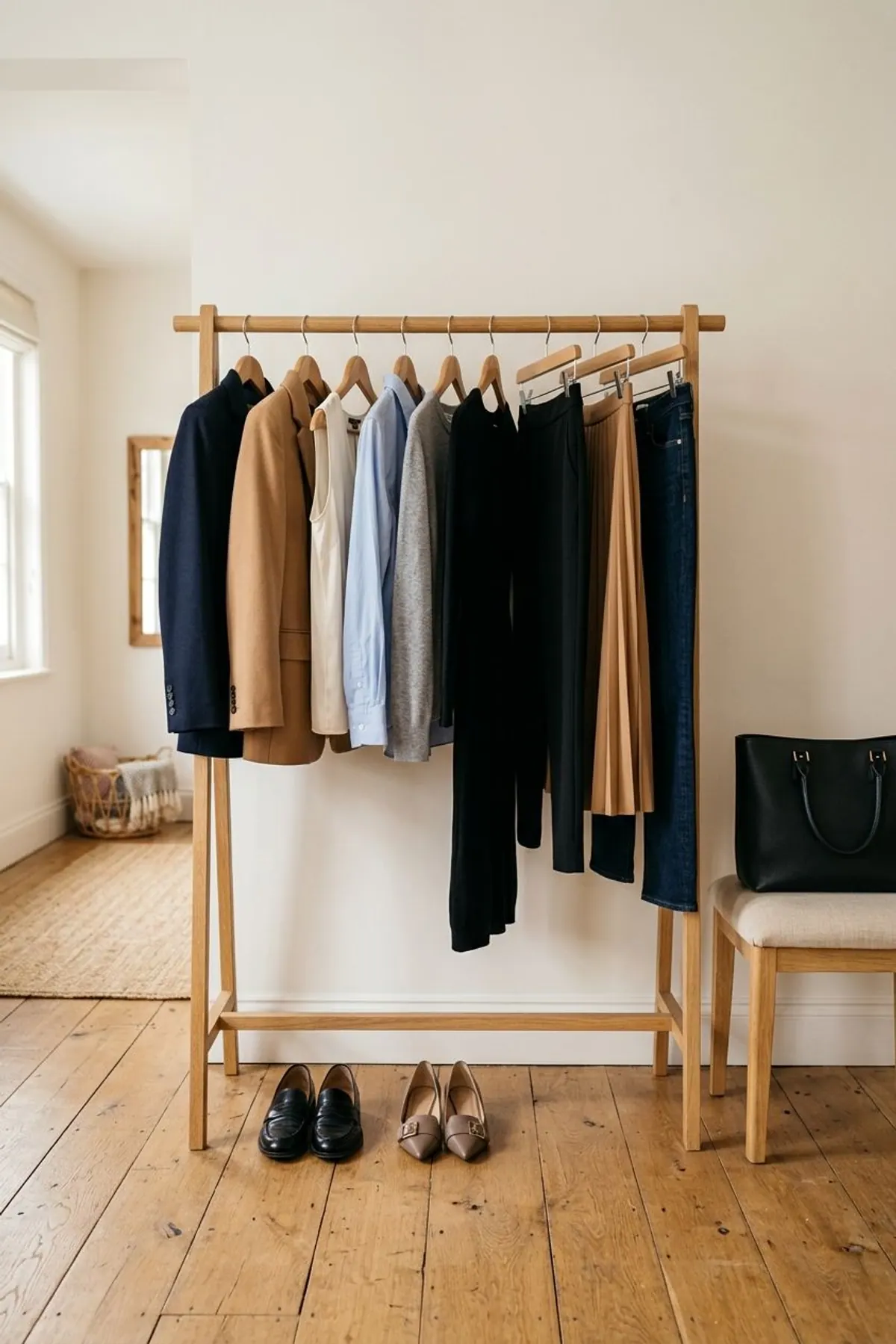
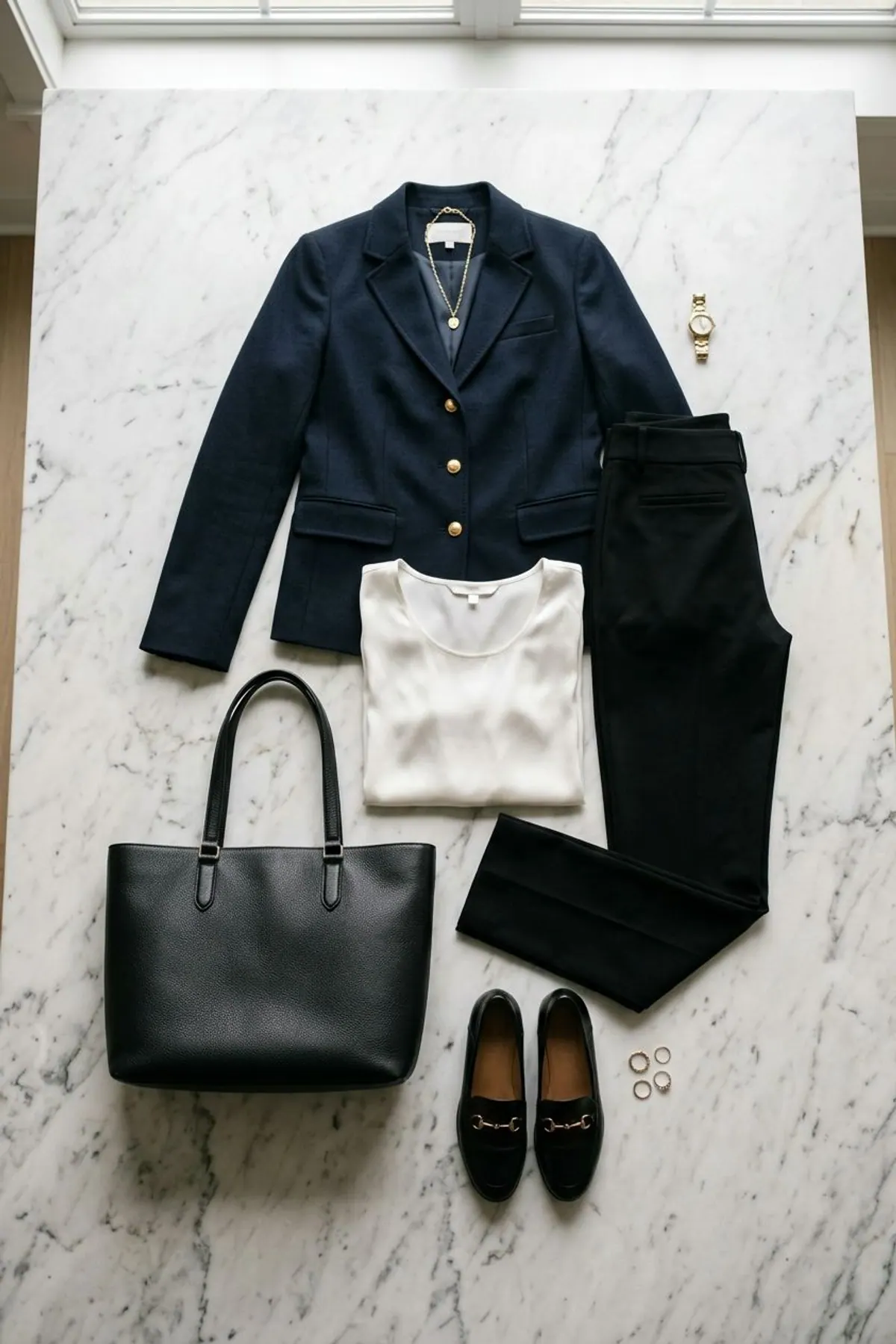
| Monday | Navy hip-length blazer, white blouse, black ponte trousers, loafers | High waist and a hem that covers the hip |
| Tuesday | Camel long cardigan, grey fine-knit sweater, charcoal wide-leg trousers | Straight line from waist to floor |
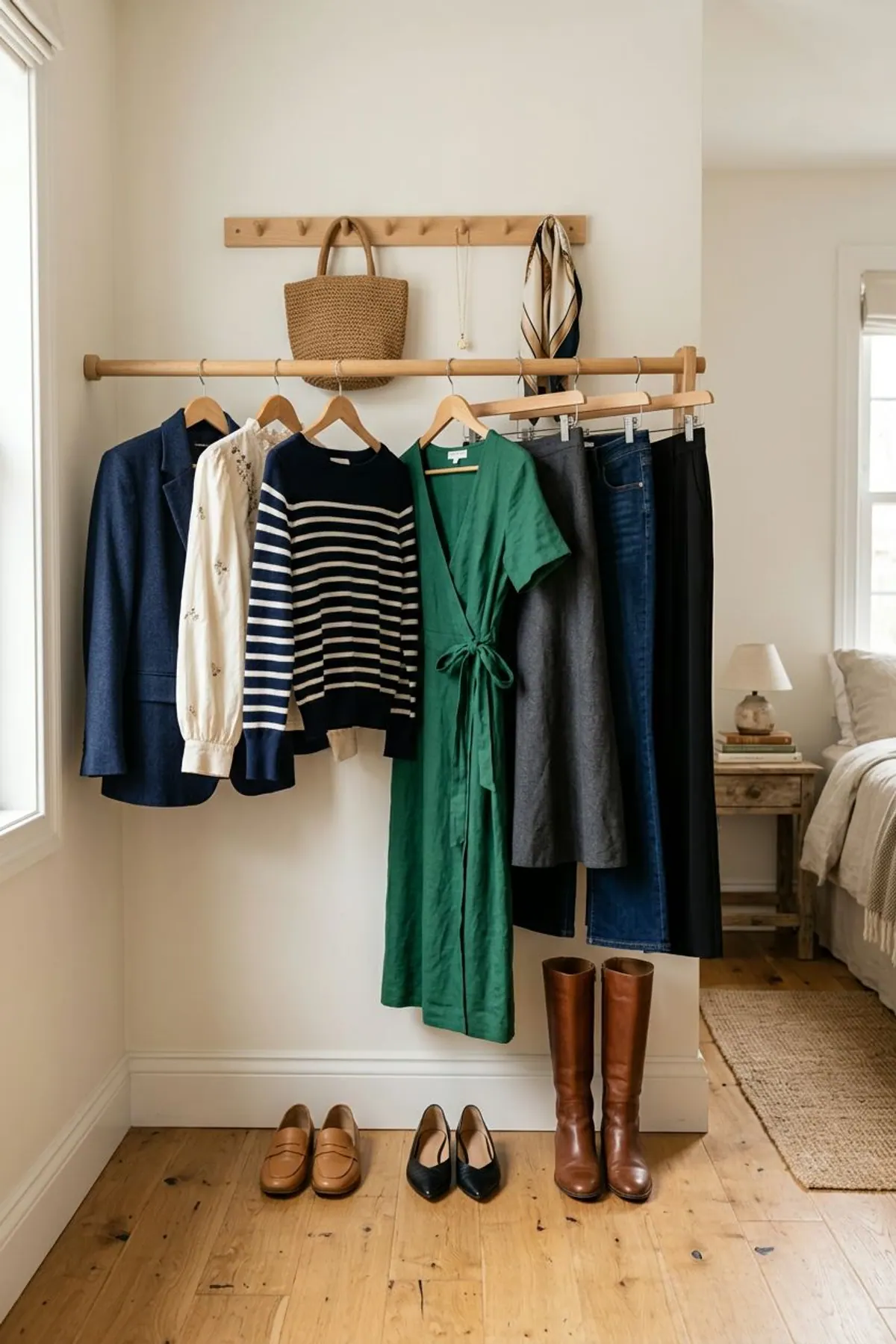
| Wednesday | Navy A-line midi skirt, cream sweater, ankle boots | Skirt clears the hip |
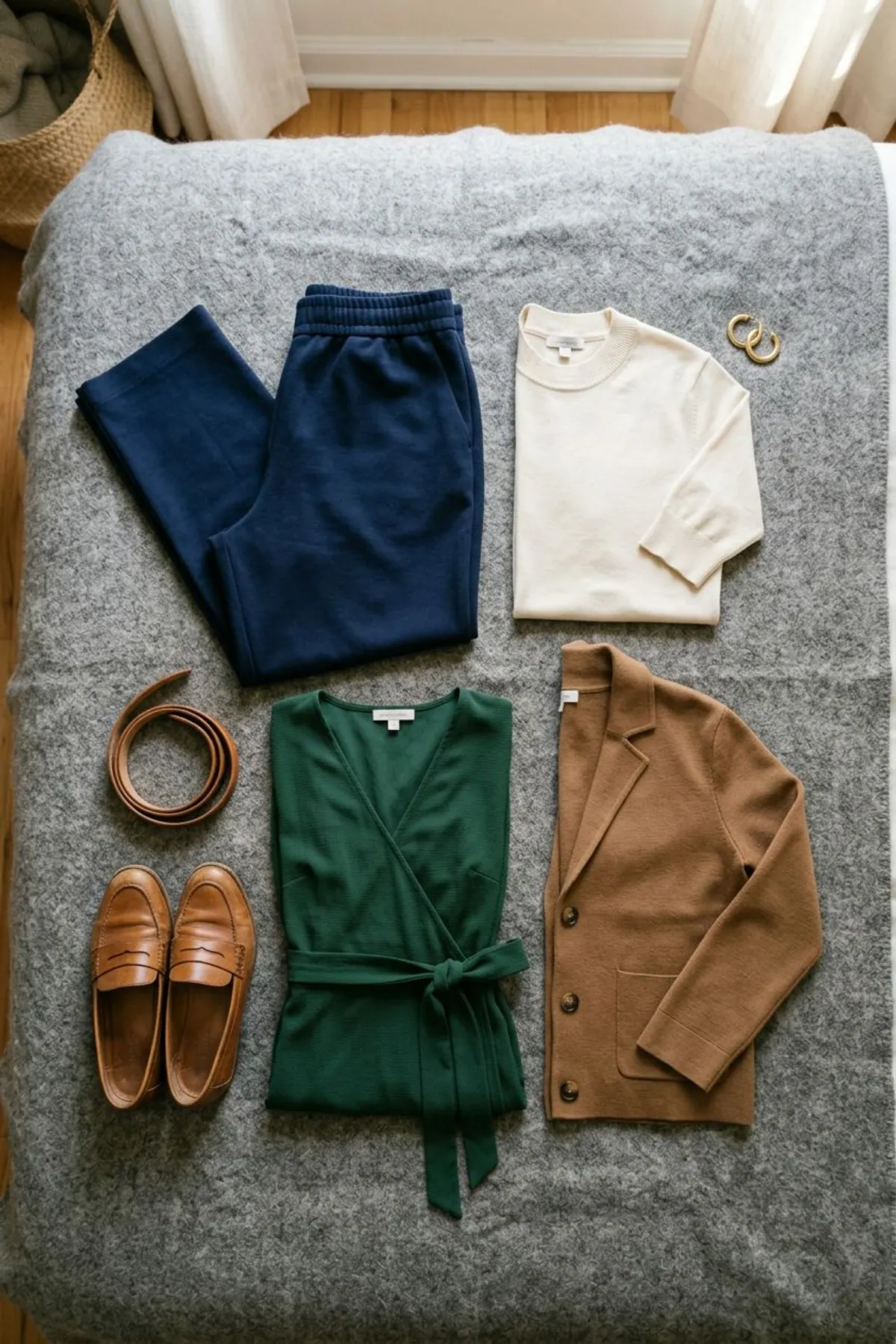
| Thursday | Green jersey wrap dress, grey cardigan, flats | Waist tie, then a drapey skirt |
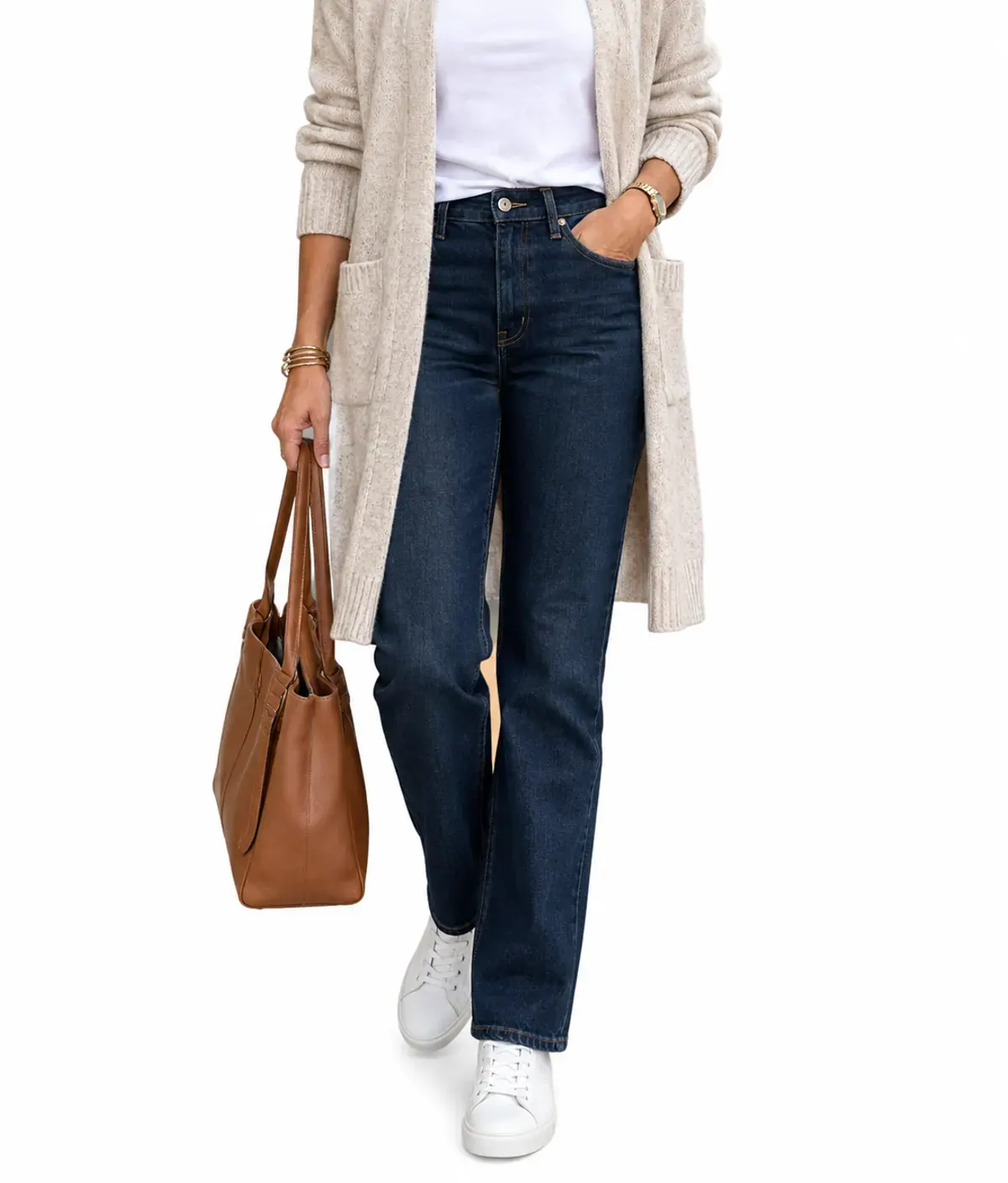
| Friday | High-rise dark straight jeans, oatmeal cardigan, white sneakers | Dark denim, longer layer |
A 3-Point Check Before You Buy
In the fitting room
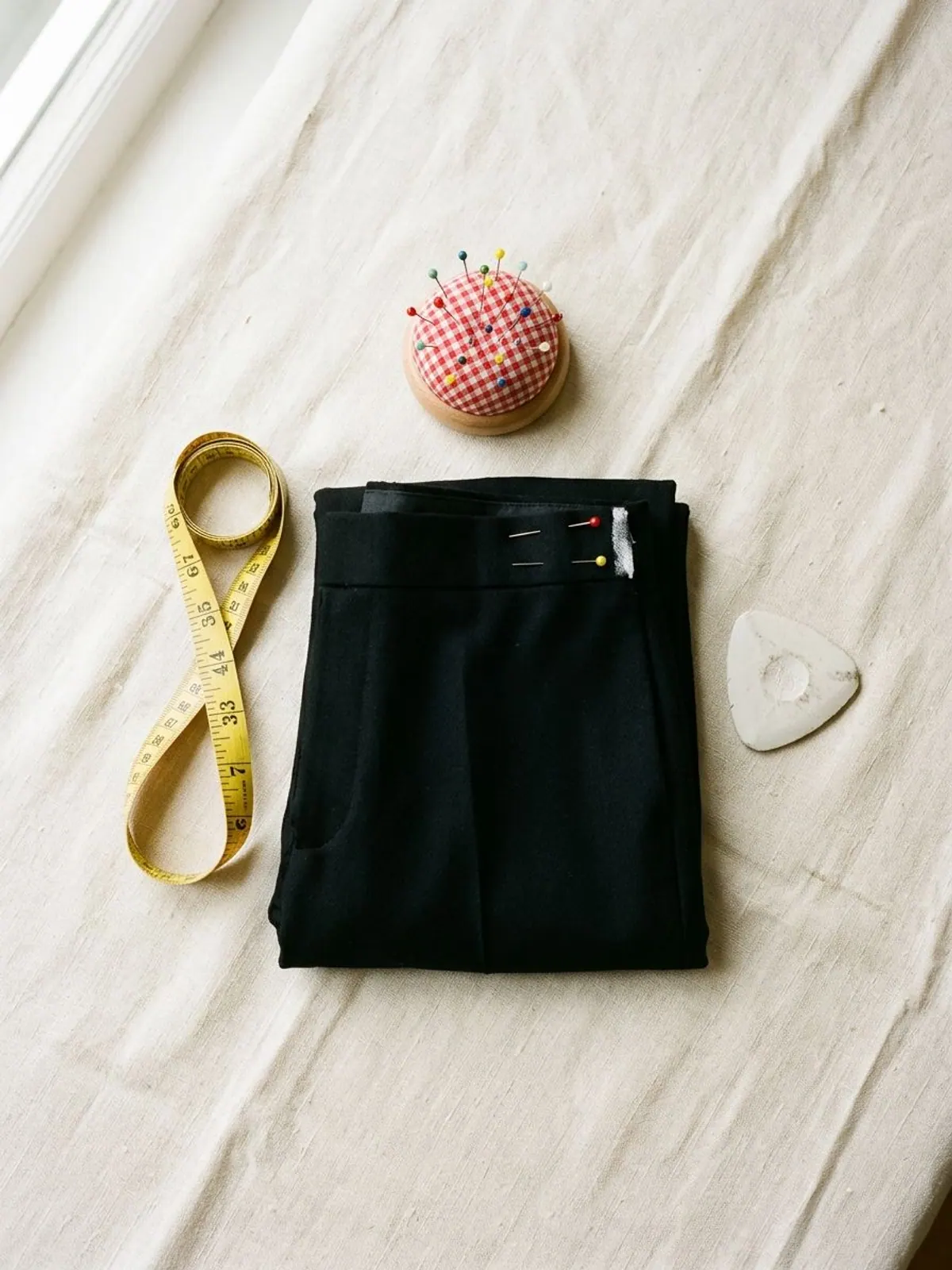
A tailor can take in a waistband for a modest fee, which is often cheaper than replacing trousers. Prices vary by city, so ask for a quote. For more on proportion, see how to dress for your body type over 40 and business casual rules for women over 40.
Frequently asked questions
What are hip dips?
Hip dips are the inward curve between the hip bone and the top of the thigh. Cleveland Clinic says they come from bone structure and are common and normal.
How do you dress for hip dips?
Choose high-rise bottoms, drapey fabrics, hip-length blazers and A-line or wrap skirts, and skip low-rise and clingy bodycon cuts, according to Petite Dressing's guide.
Can exercise get rid of hip dips?
According to Cleveland Clinic, exercise cannot remove them, because they come from bone structure. Building muscle may soften how visible they look.
What pants are best for hip dips?
High-rise straight-leg or wide-leg trousers in ponte, crepe or drapey viscose hang straight from the hip. Dark colors help, and flat pockets reduce bulk.
What should I wear to work with hip dips over 50?
A hip-length blazer over a tucked blouse and high-waisted trousers, an A-line midi skirt with a fitted knit, or a jersey wrap dress with a cardigan.
Save it for later
Pin this to your Style by Body Shape board so it's there when you need it.
Save to Pinterest