This post contains affiliate links. As an Amazon Associate we earn from qualifying purchases, at no extra cost to you. Read our disclosure.
Key takeaways
- Buy for the largest part of you (bust, middle or hip), then fix the rest with a tailor or a belt. The reverse never works.
- Fabric weight does more than cut. Ponte, crepe and dense knits skim; thin jersey and shiny spandex report every line.
- Check three lengths every time: a rise that reaches your waist, a hem at the top of the shoe or just below the knee, and a sleeve that ends at the elbow or wrist.
- Define the waist without squeezing it: a wrap tie, a stretch belt over a knit, or a jacket that nips in at the seam.
- Each of the nine outfits below is a repeatable formula. Swap the colors and you have a month.
In this post18 sections
- What Midsize Means After 50 (and Why Shape Is Not the Problem)
- What You Need
- The 4 Fit Rules for a Midsize Body Over 50
- 9 Outfits for Women Over 50 Midsize That Prove the Rules
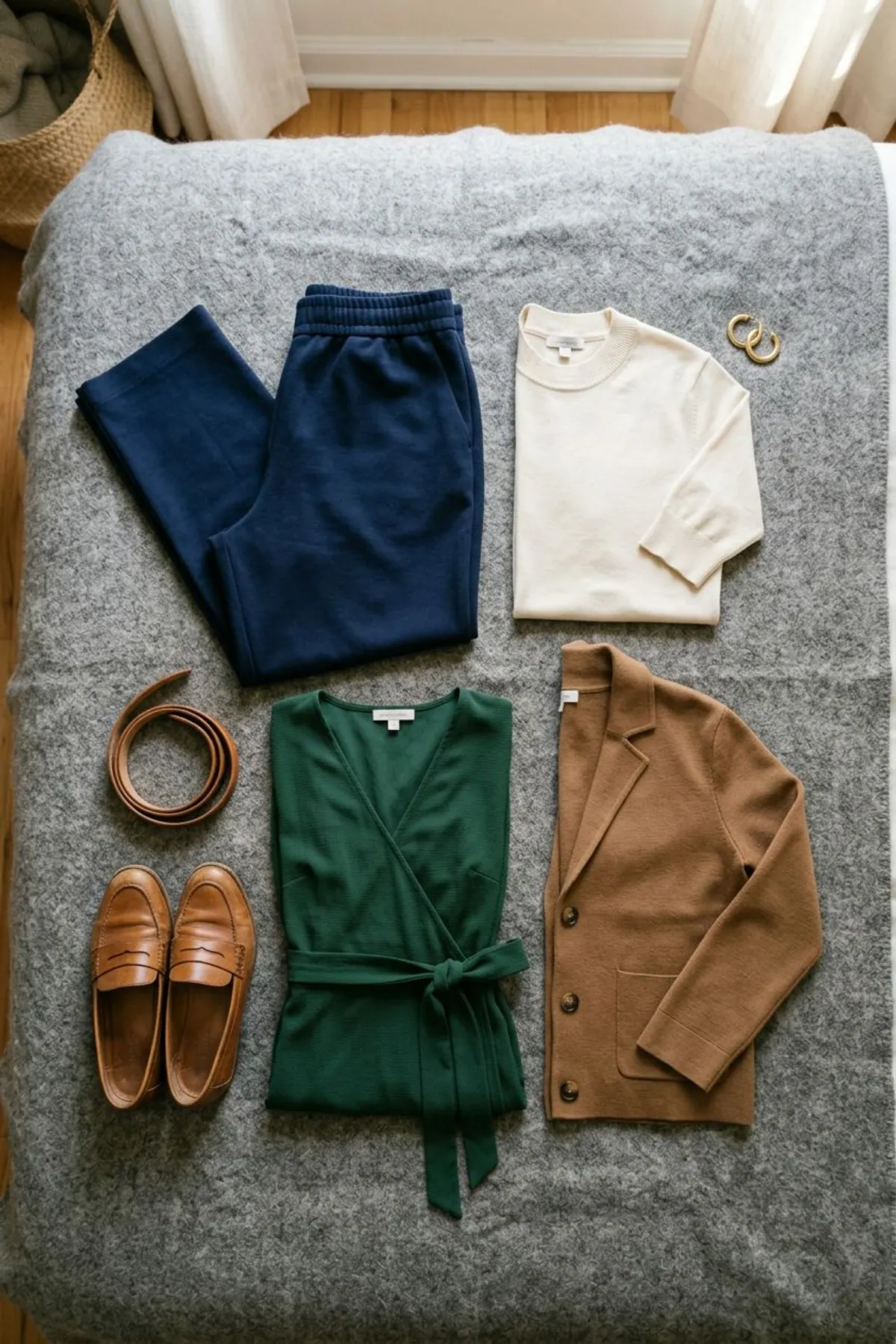
- 1. Ponte pants, elbow-sleeve knit, long cardigan
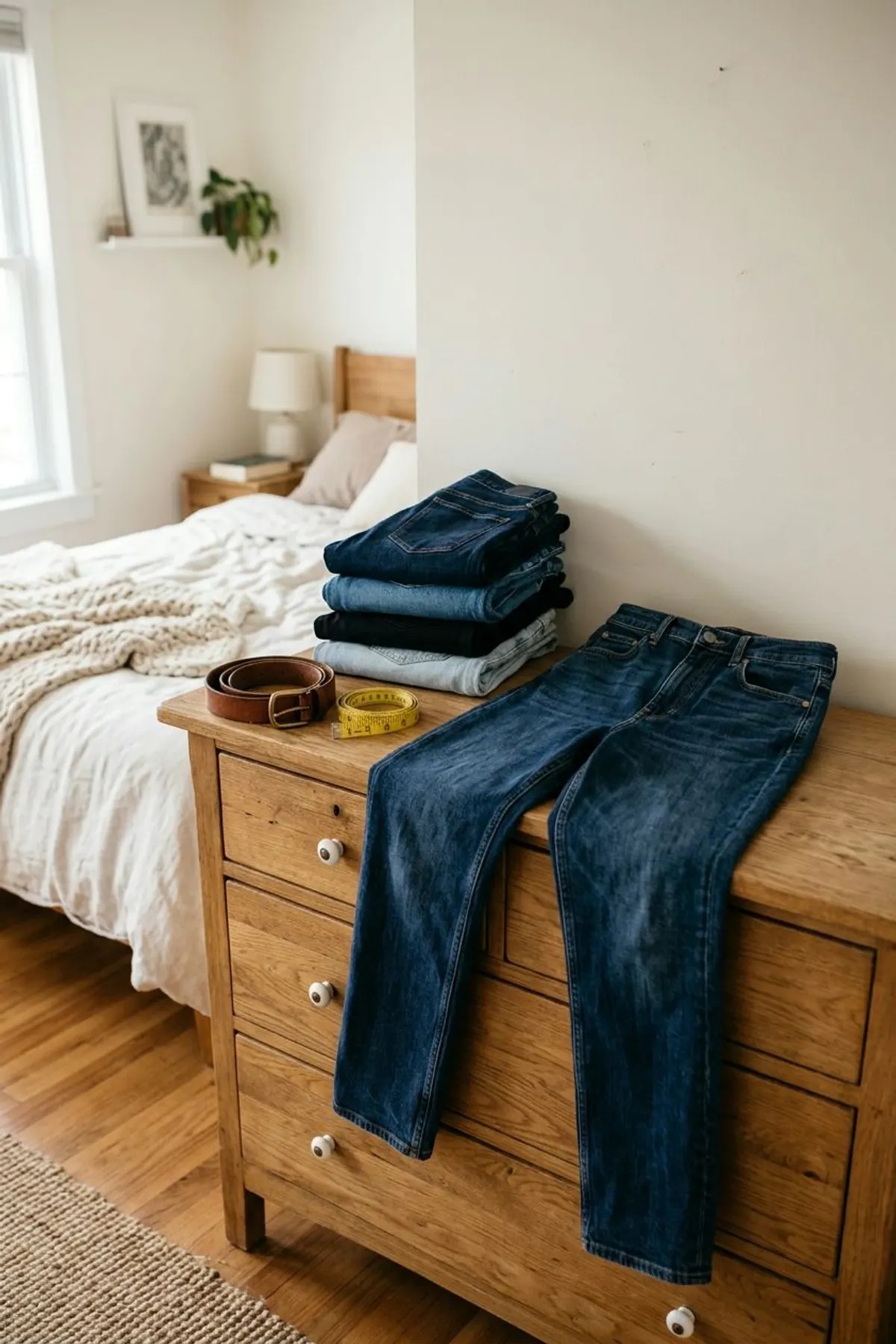
- 2. High-rise straight jeans, striped boatneck, navy knit blazer
- 3. Wrap dress, knee boots, trench
- 4. Camel A-line midi skirt, tucked fine knit, stretch belt
- 5. Tunic sweater, slim black pants, leather sneakers
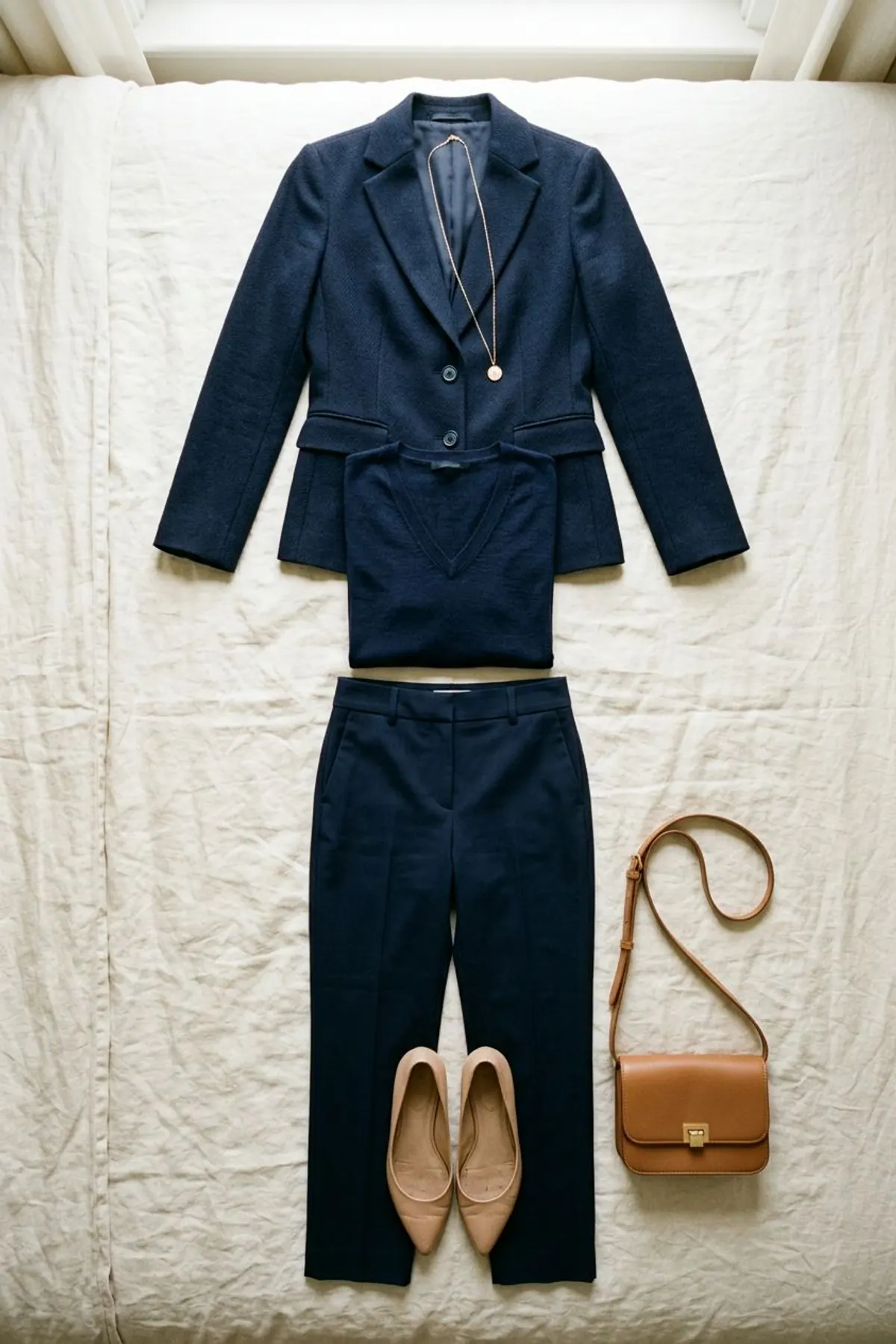
- 6. Navy ponte trousers, ivory blouse, cardigan jacket, block heels
- 7. One-color column: burgundy knit, burgundy wide leg, camel coat
- 8. Olive utility jacket, white tee, dark straight jeans, loafers
- 9. Black V-neck midi dress, long pendant, heeled sandal
- Shift the Formulas for Your Shape
- Where to Shop in the Middle Sizes
- Midsize Mistakes After 50 and the Easy Swaps
- Build the Outfits Once: Outfit Formula Cards
- FAQ
Most midsize advice online is written for women in their 20s and stops at "wear a crop top with wide-leg pants." After 50, the middle softens, the bust often drops a little, and the upper arm wants a sleeve. None of that changes the rules. It only makes fit matter more, because the same size 14 can look sharp or shapeless depending on where it fits you first.
What Midsize Means After 50 (and Why Shape Is Not the Problem)
Midsize is a size band, not a body shape. You can be a midsize pear, apple, hourglass or rectangle. The shape rules from our 2-minute shape check still apply, but in the middle sizes a second problem sits on top of them: the clothes themselves are cut for someone two sizes smaller or two sizes bigger.
That is why a size 12 blazer can be tight across the bust and loose at the waist on the same day. The cut assumed a size 12 bust with a size 12 waist, and after 50 those two measurements often sit in different sizes. Fit rules solve this. Shape rules alone do not.
What You Need
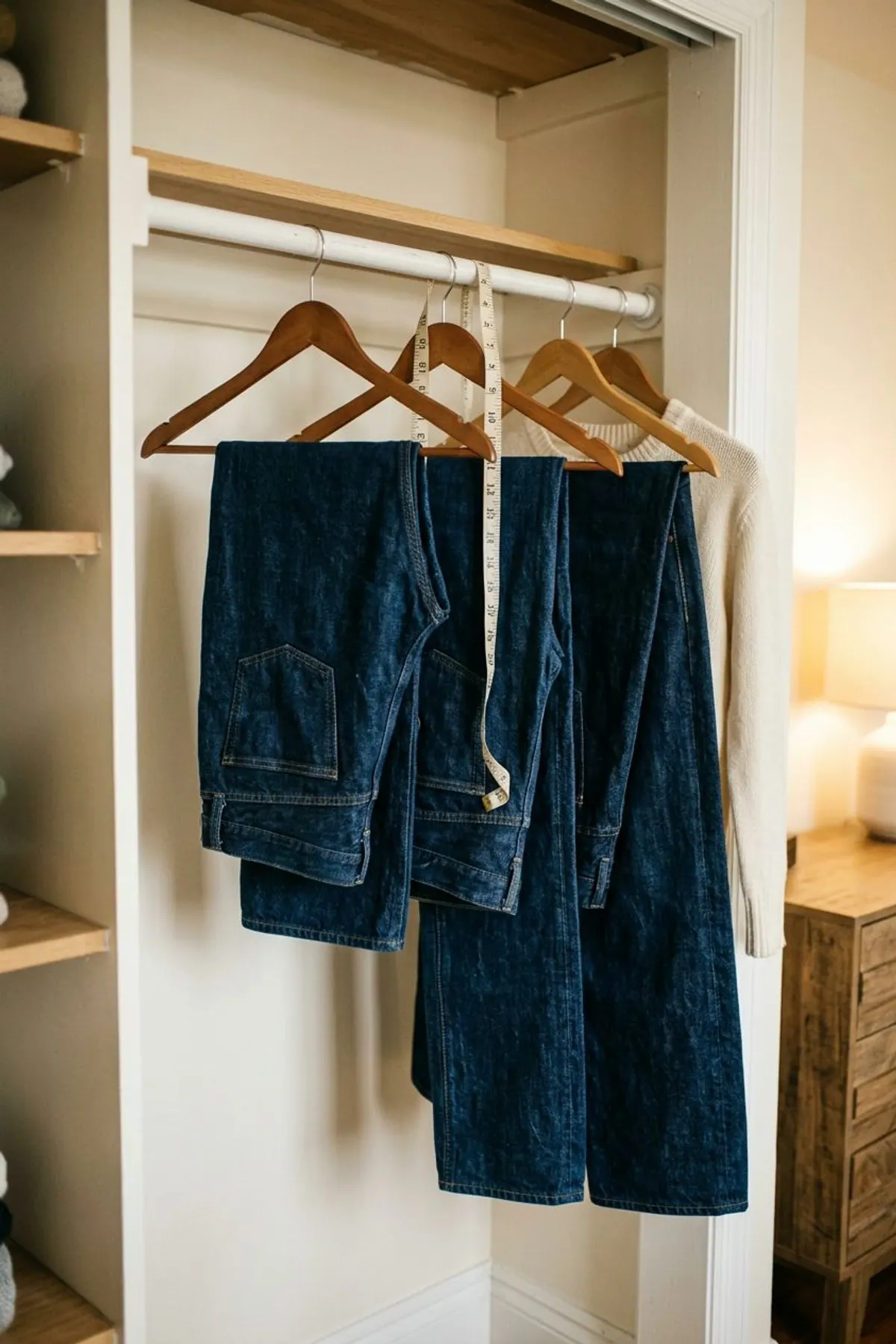
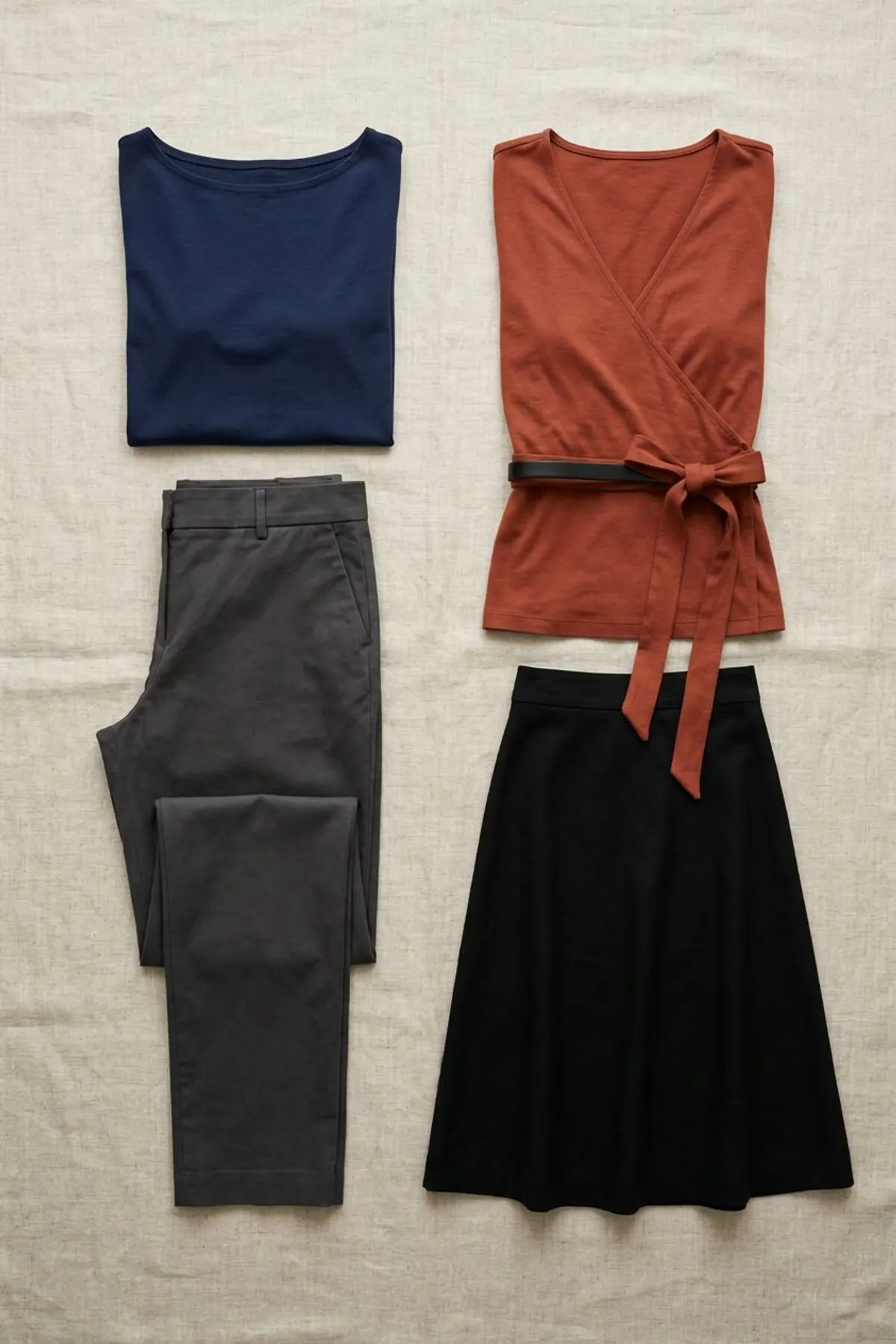
You do not need a new closet. You need a few pieces cut with the middle sizes in mind: a dense pant, a true high-rise jean, one wrap dress, a fine knit with a real sleeve, a jacket that has stretch, a tunic that hangs, and a belt that does not dig. Links go to plain Amazon searches so you can filter by your size.
The midsize fit kit
- Start here
Ponte pants, high rise, mid sizes
Typically $30 to $70
Dense double knit that skims the middle and holds a straight leg.
Check price on Amazon for Ponte pants, high rise, mid sizes -
High-rise straight jeans in mid sizes
Typically $40 to $90
The rise reaches the waist and the leg hangs straight from the hip.
Check price on Amazon for High-rise straight jeans in mid sizes -
Wrap dress, midi, elbow sleeve
Typically $35 to $90
Ties at your narrowest point without a seam that has to fit.
Check price on Amazon for Wrap dress, midi, elbow sleeve -
Elbow-sleeve fine knit
Typically $25 to $60
Covers the upper arm, ends at the hip, tucks without bulk.
Check price on Amazon for Elbow-sleeve fine knit -
Structured cardigan jacket with stretch
Typically $40 to $100
Blazer shape, sweater comfort; fits the shoulder and skims the waist.
Check price on Amazon for Structured cardigan jacket with stretch -
Tunic-length sweater
Typically $30 to $80
Hip length with a side slit so it hangs instead of clinging.
Check price on Amazon for Tunic-length sweater -
Stretch belt for knits
Typically $15 to $35
Marks the waist over a dress or knit without digging in.
Check price on Amazon for Stretch belt for knits
The 4 Fit Rules for a Midsize Body Over 50
Run every piece through these four checks. They take under a minute in a fitting room and they explain almost every outfit that has ever let you down.
-
Step 1: Rule 1: Fit the largest part, then fix the rest
Decide which measurement is your largest in relation to the size chart: bust, middle or hip. Buy to that one. A blazer that closes smoothly over the bust can have its waist taken in; a jean that fits the hip can have its waist darted. The reverse, buying to the waist and hoping the hip stretches, gives you pulling, riding up and a line across the thigh.
After 50 this usually means tops bought to the bust and bottoms bought to the hip. Write your three measurements in your phone once and compare them to the chart before you buy anything online.
-
Step 2: Rule 2: Buy the fabric weight, not the style
The same wide-leg pant in thin jersey clings to the thigh and in ponte hangs straight. The same wrap dress in a shiny stretch fabric shows the line of your underwear and in a matte crepe does not. Fabric weight is the single biggest difference between a midsize outfit that looks expensive and one that looks like loungewear.
Look for ponte, crepe, twill with a little stretch, dense cotton knits and merino. Hold the fabric up to the light: if you can see your hand through it, it will show every line. Put it back.
-
Step 3: Rule 3: Check the three lengths
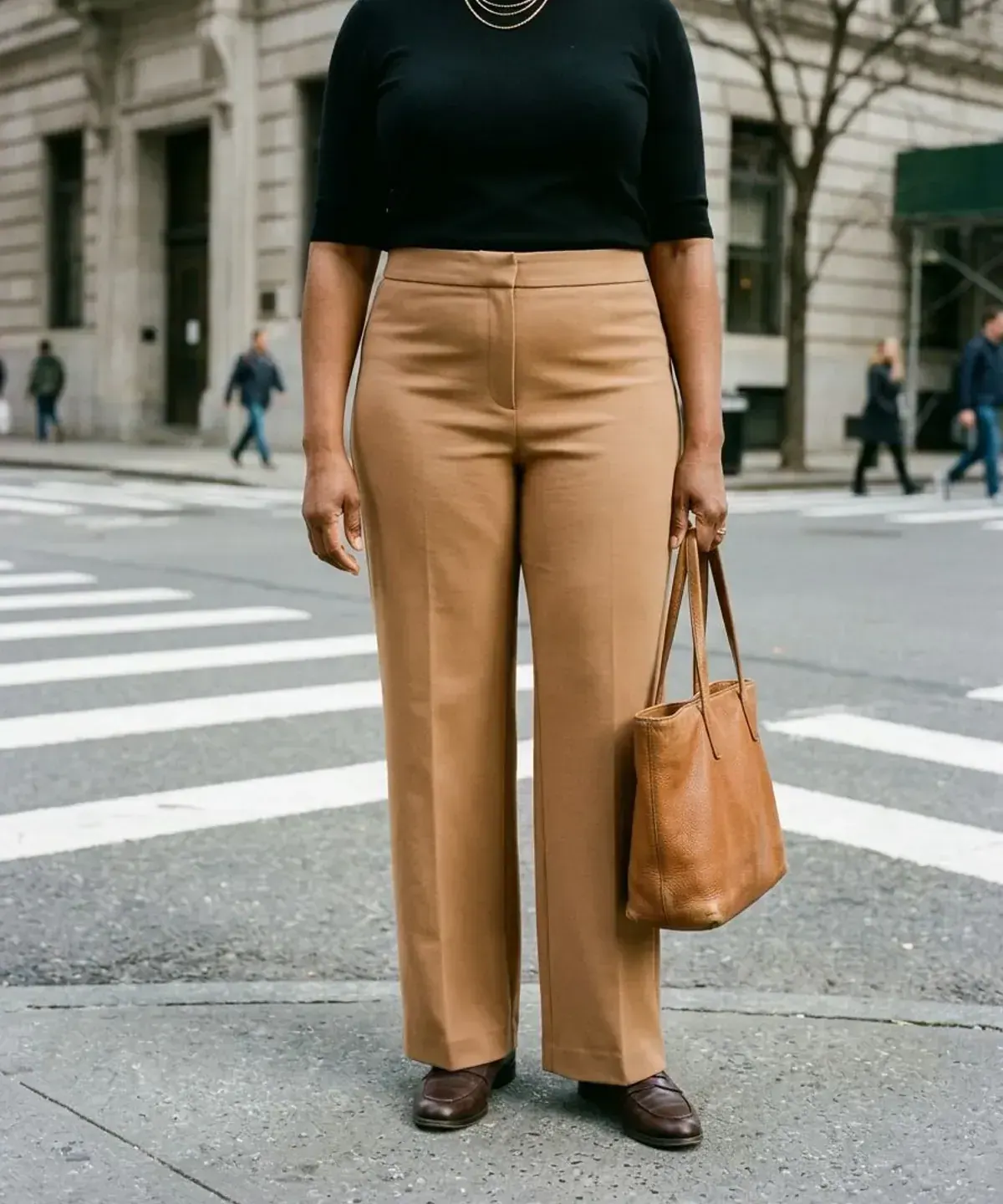
Three lengths decide whether a midsize outfit looks put together. The rise should reach your natural waist, the narrowest part just above the navel, so the pant holds the middle instead of cutting under it. The hem should end at the top of the shoe for a straight or wide leg, and just below the knee or at mid-calf for a skirt or dress. The sleeve should stop at the elbow or the wrist, never at the widest part of the upper arm.
If a pant is right in the rise and wrong in the hem, buy it and have it hemmed. The hem is the cheapest fix a tailor does.
-
Step 4: Rule 4: Define the waist without squeezing it
A waist does not have to be small to be shown. It only has to be the narrowest line in the outfit. A wrap dress tied just above the navel, a stretch belt over a fine knit, a cardigan jacket with a seam that nips in, or a top half-tucked at the front all draw that line without a tight waistband.
Skip anything that squeezes: rigid belts over trousers, waistbands that leave a mark, or a dress with a fitted seam that lands on the fullest part of the middle. Comfort shows in how you stand.
| Length | Where it should land | What to do if it is wrong |
|---|---|---|
| Rise | At the natural waist, just above the navel | Size up or switch brand; a low rise cannot be fixed |
| Pant hem | Top of the shoe for straight and wide legs; ankle bone for a cropped leg with flats | Hem it ($10 to $20 at most tailors) |
| Skirt or dress hem | Just below the knee or mid-calf | Hem it, or size by the hip and shorten |
| Sleeve | Elbow or wrist, never the widest part of the arm | Push up a long sleeve to the elbow; avoid cap sleeves |
| Top hem | High hip for a tuck, low hip for a tunic | Half-tuck the front; never a top that stops at the middle |
9 Outfits for Women Over 50 Midsize That Prove the Rules
Each outfit below is a formula, not a one-off. Keep the formula and swap the colors or the shoe and you have a month of mornings. Every piece comes in the middle sizes and passes the four rules above.
1Ponte pants, elbow-sleeve knit, long cardigan
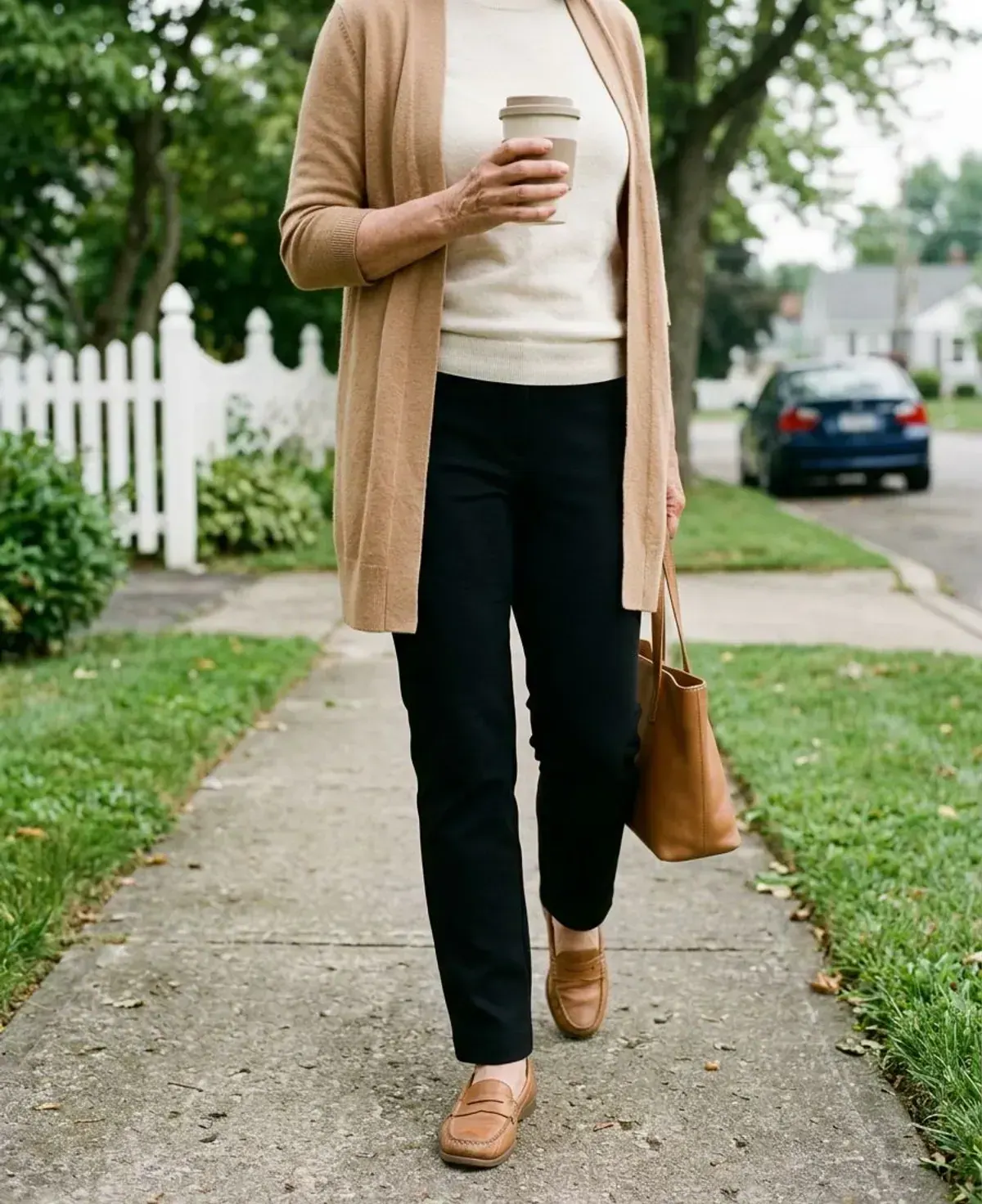
This is the midsize uniform for a reason. The ponte pant hangs straight from the hip (Rule 2), the knit ends at the high hip and is tucked only at the front (Rule 3), and the long cardigan draws a vertical line from shoulder to thigh. Keep the cardigan open; closing it adds a horizontal band across the middle.
Tip: choose a cardigan that ends at mid-thigh, not at the hip, so it does not stop on the fullest point.
Dense double knit that skims the middle and holds a straight leg.
2High-rise straight jeans, striped boatneck, navy knit blazer
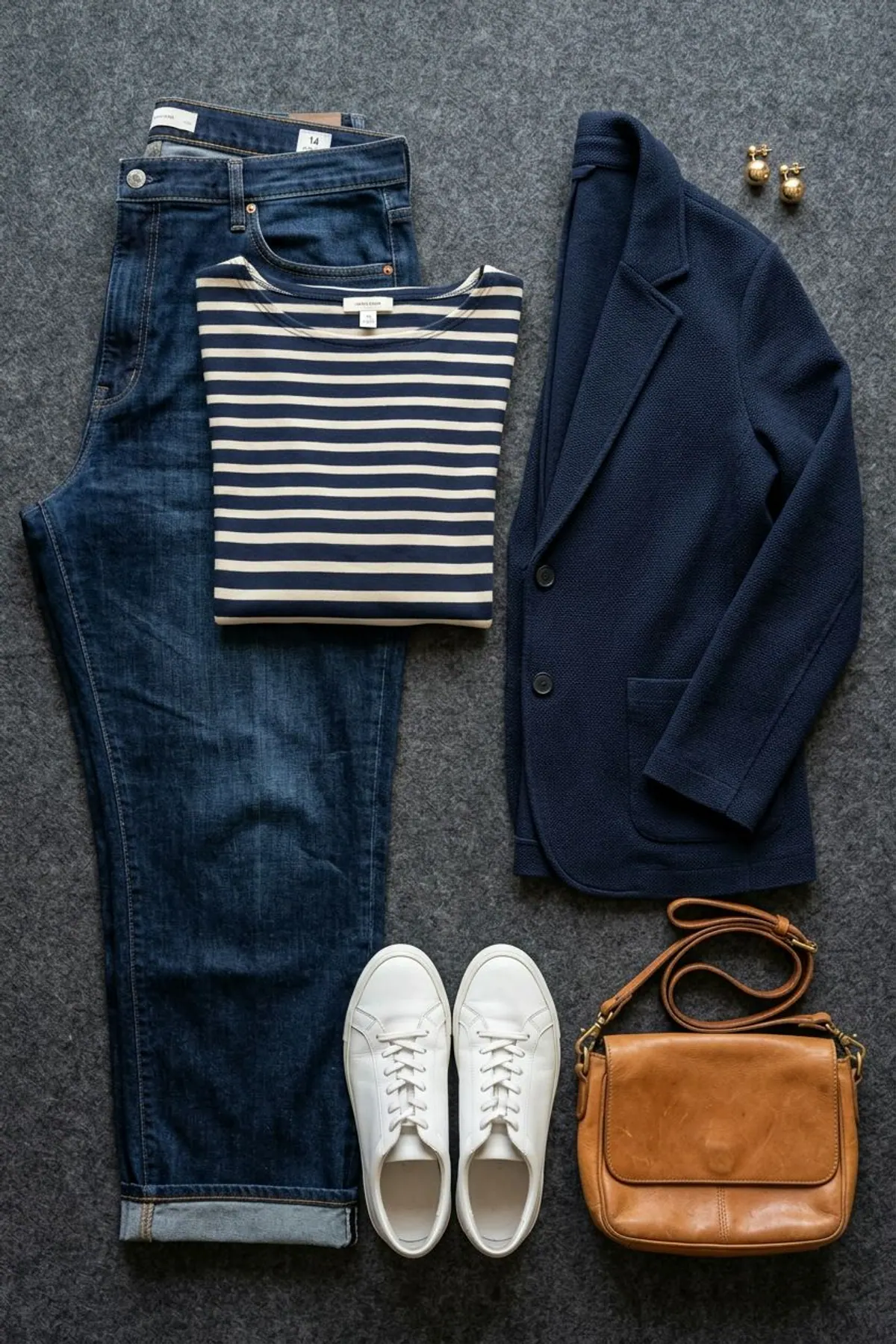
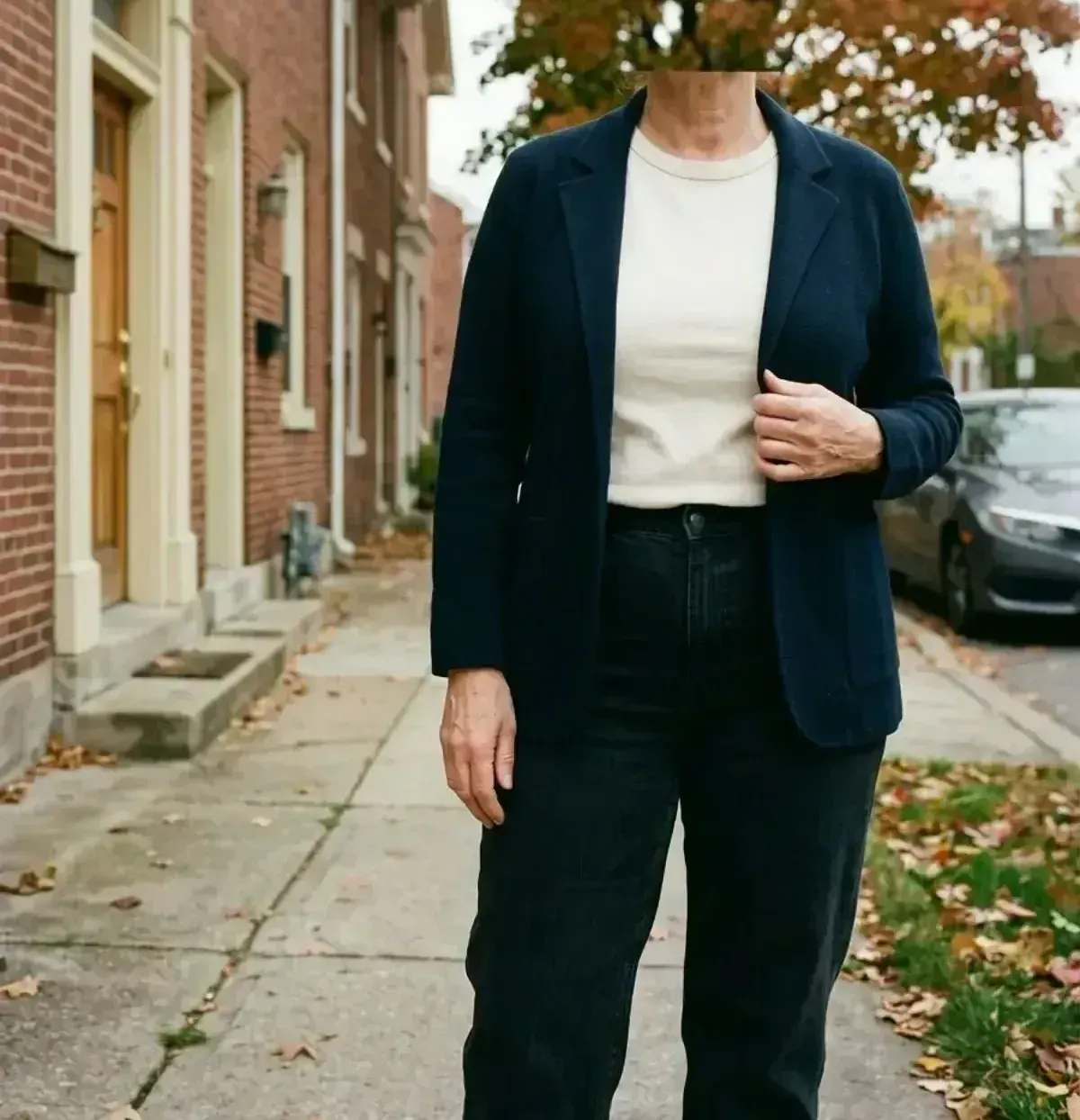
The jean is bought to the hip and darted at the waist (Rule 1). A boatneck widens the shoulder line a touch, which balances a full hip and a soft middle without any shaping underneath. The knit blazer has stretch, so it closes over the bust and still skims. If you are shopping for the jean itself, our jeans fit guide for apple shapes covers the tummy panels and rises that also suit a midsize middle.
Tip: one small cuff at the hem is as short as it should go; a full-length straight leg with a sneaker looks longer than a cropped one.
The rise reaches the waist and the leg hangs straight from the hip.
3Wrap dress, knee boots, trench
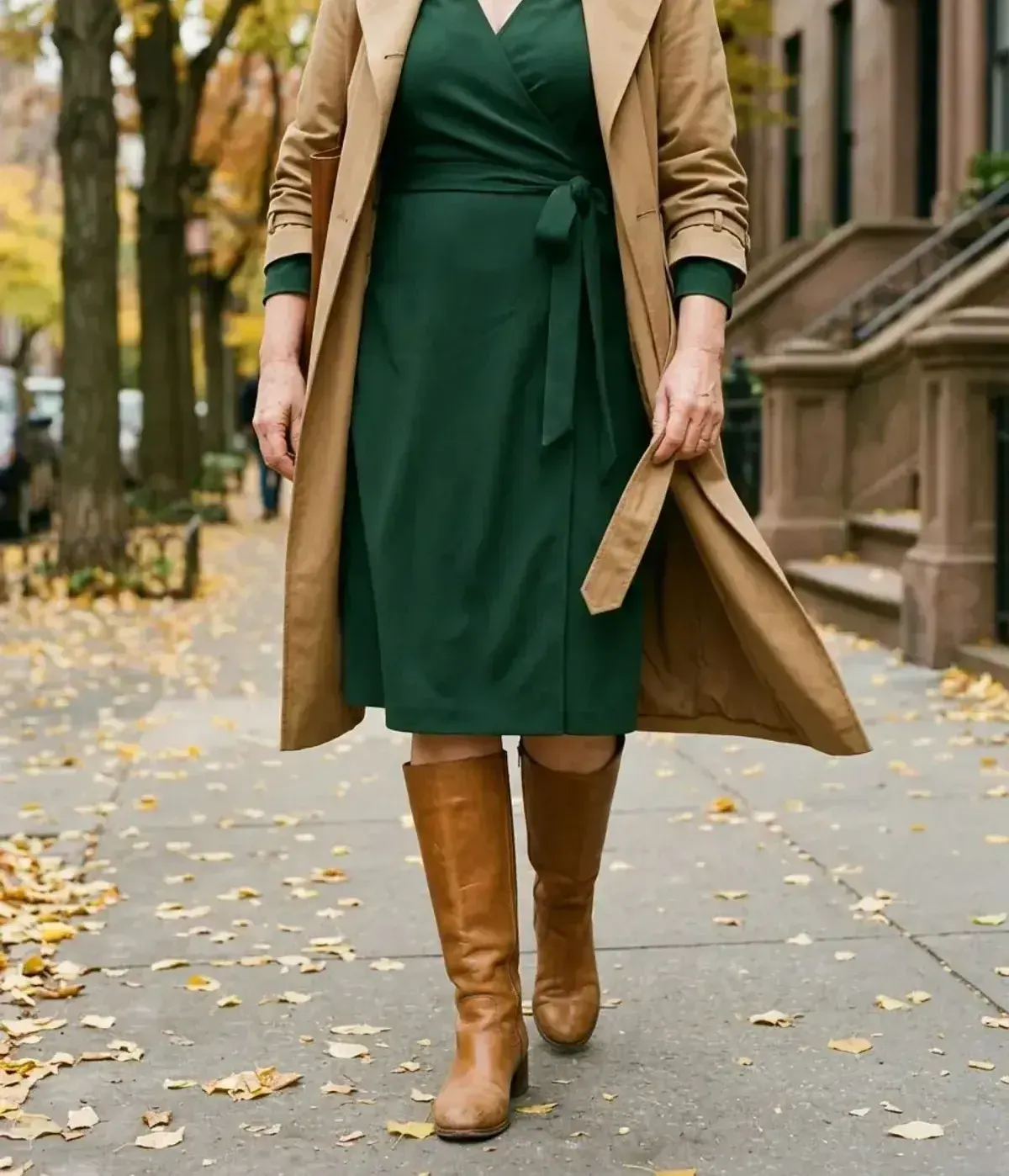
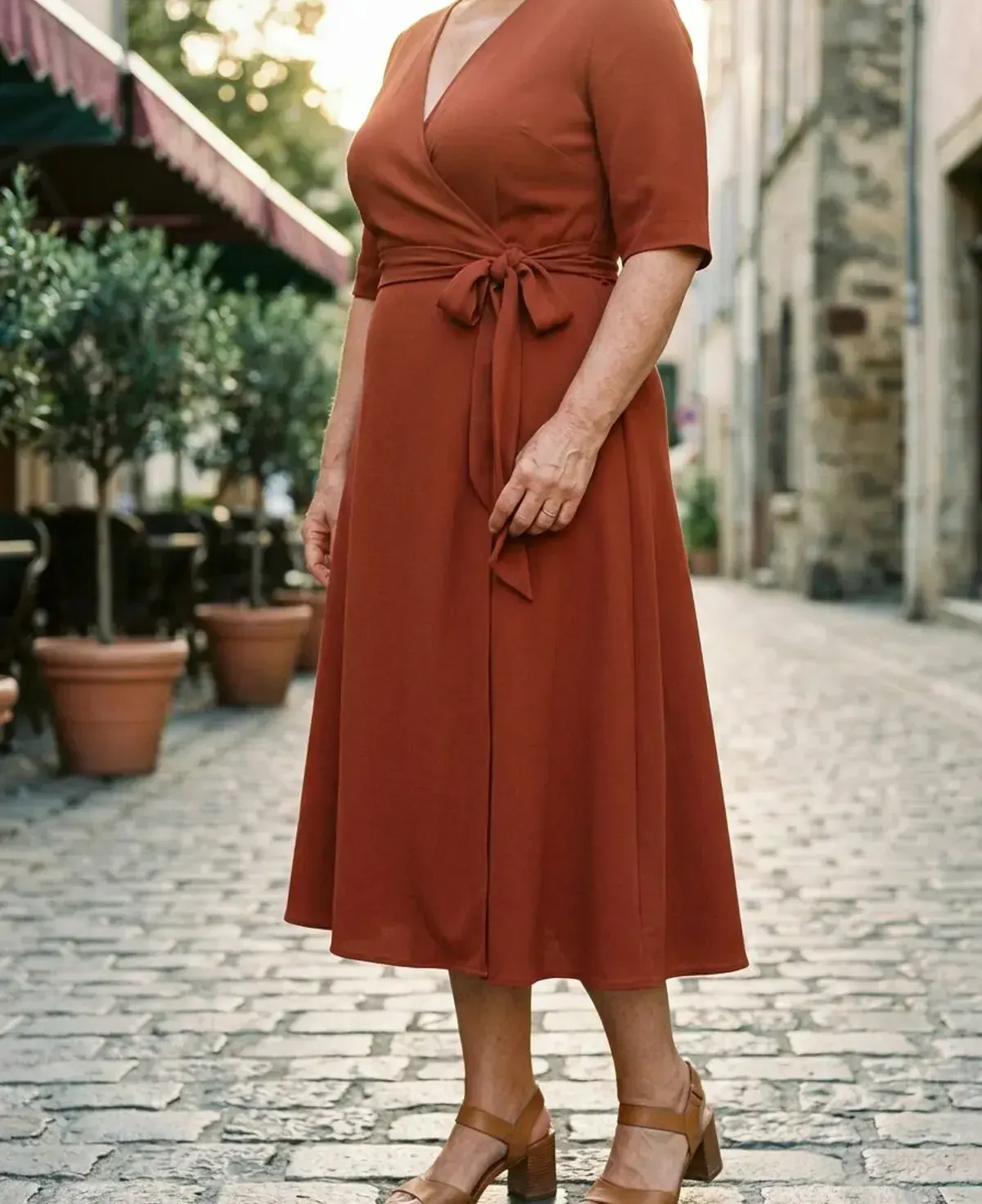
The wrap dress is the one dress cut that fits a midsize body on every measurement, because the tie does the fitting (Rule 4). Choose a matte crepe or a heavy jersey, an elbow or three-quarter sleeve, and a hem just below the knee or at mid-calf. The boots close the gap between hem and foot so the leg reads as one line.
Tip: if the V neckline runs low, a fine camisole in the same color keeps it office-safe.
Ties at your narrowest point without a seam that has to fit.
4Camel A-line midi skirt, tucked fine knit, stretch belt
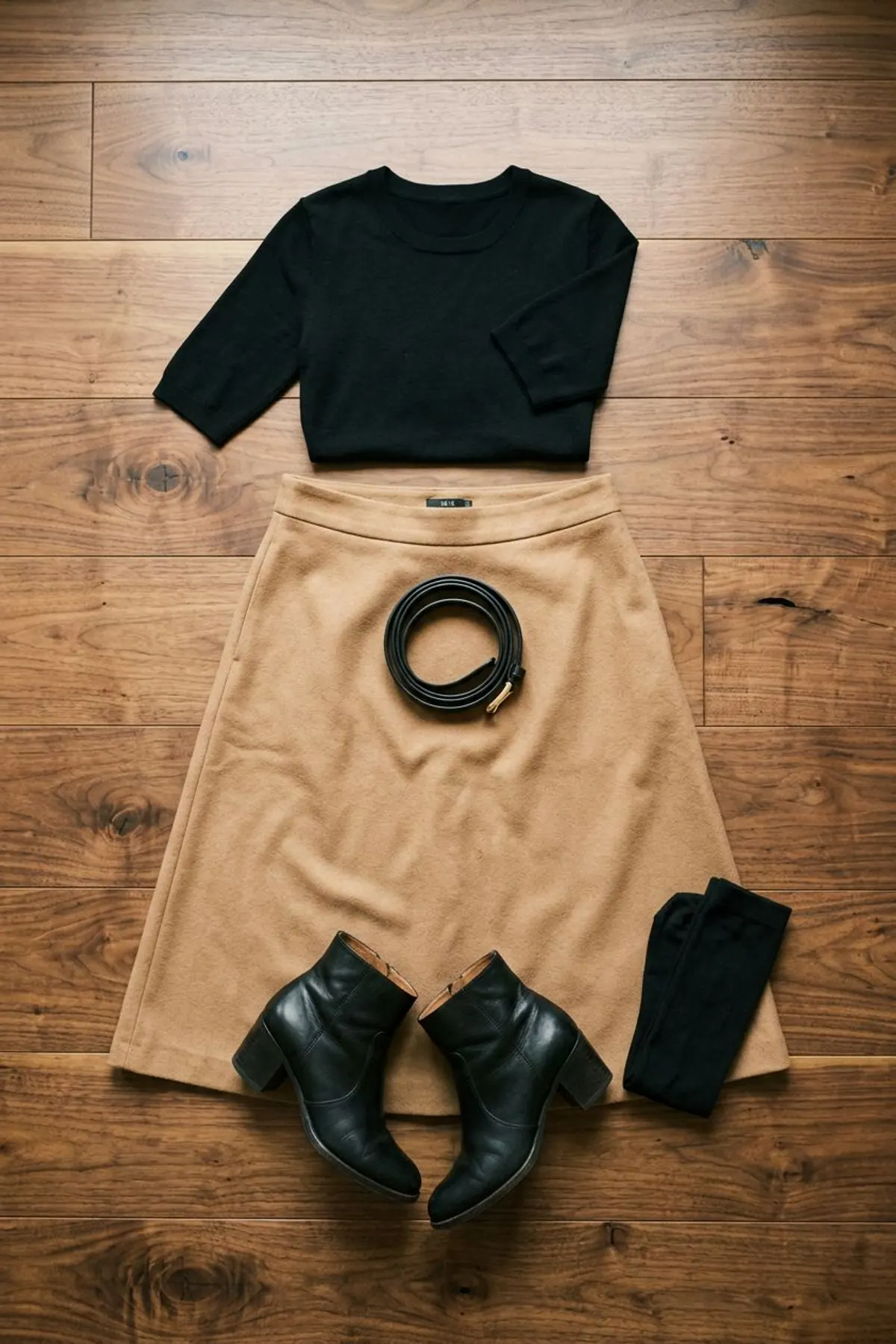
An A-line skirt that sits at the natural waist and flares from there skims the hip and thigh without any cling. Tuck a fine knit fully, add a stretch belt over the waistband, and the waist is the narrowest line in the outfit by a clear margin. Ankle boots in the same color as the tights keep the leg long.
Tip: choose a skirt with a flat front waistband and elastic only at the back.
Marks the waist over a dress or knit without digging in.
5Tunic sweater, slim black pants, leather sneakers
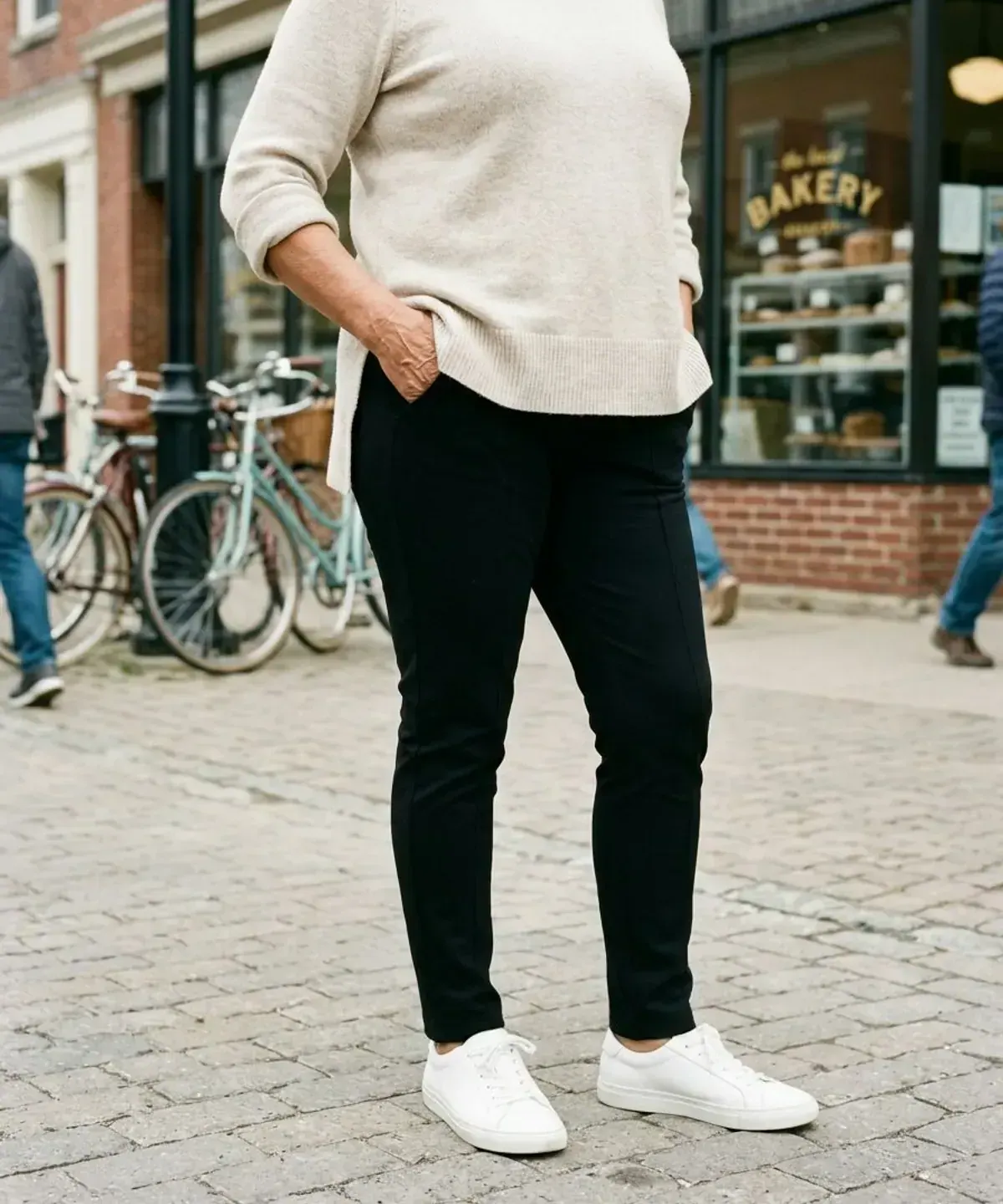
The casual outfit that most midsize women over 50 actually want. The trick is the tunic's weight and length: a mid-weight knit that ends at the low hip with side slits hangs instead of clinging (Rule 2 and Rule 3). The pant underneath is slim but not a legging, so there is no shiny stretch fabric on show.
Tip: push the sleeves to the elbow; it shows the wrist and makes the whole look lighter.
Hip length with a side slit so it hangs instead of clinging.
6Navy ponte trousers, ivory blouse, cardigan jacket, block heels
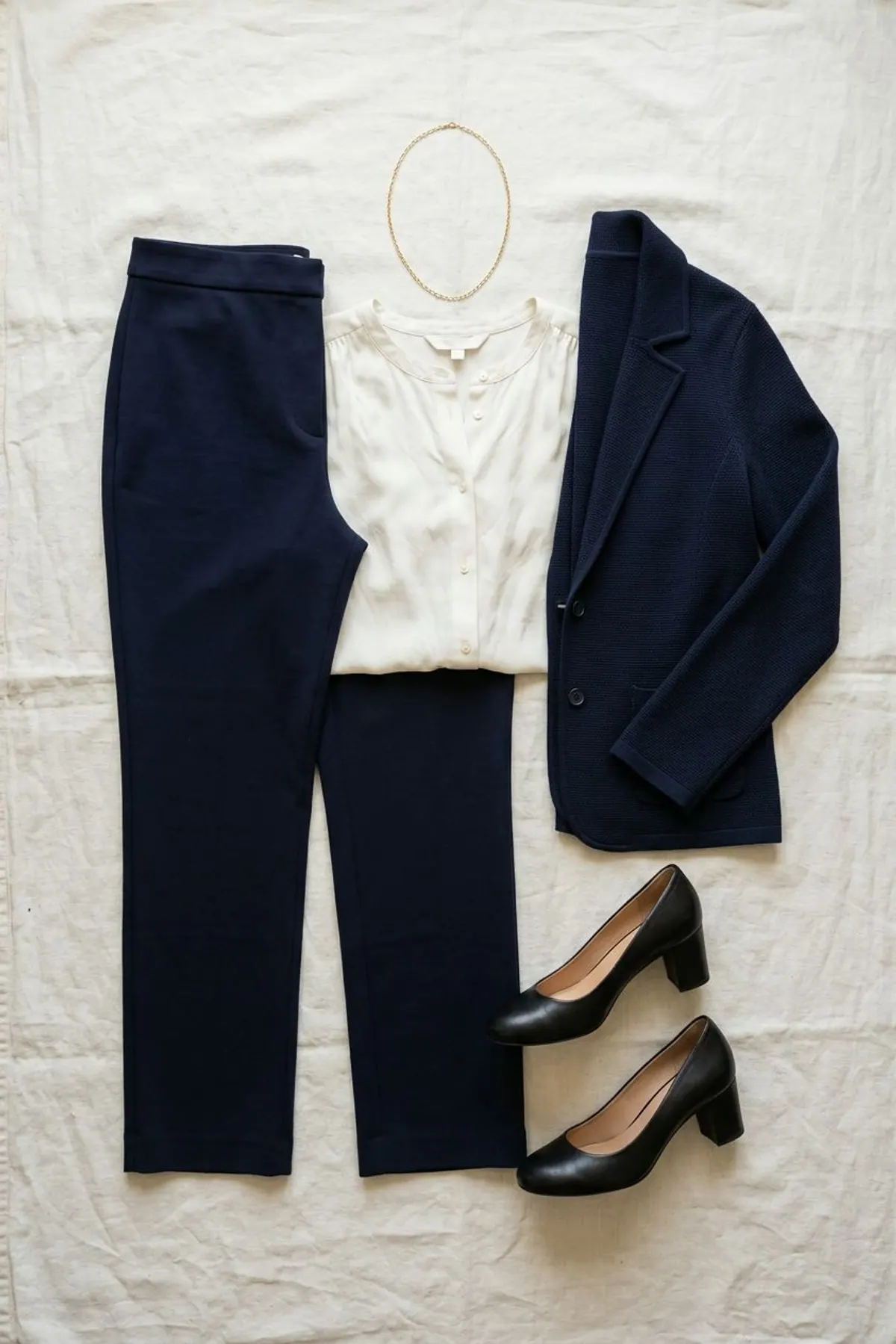
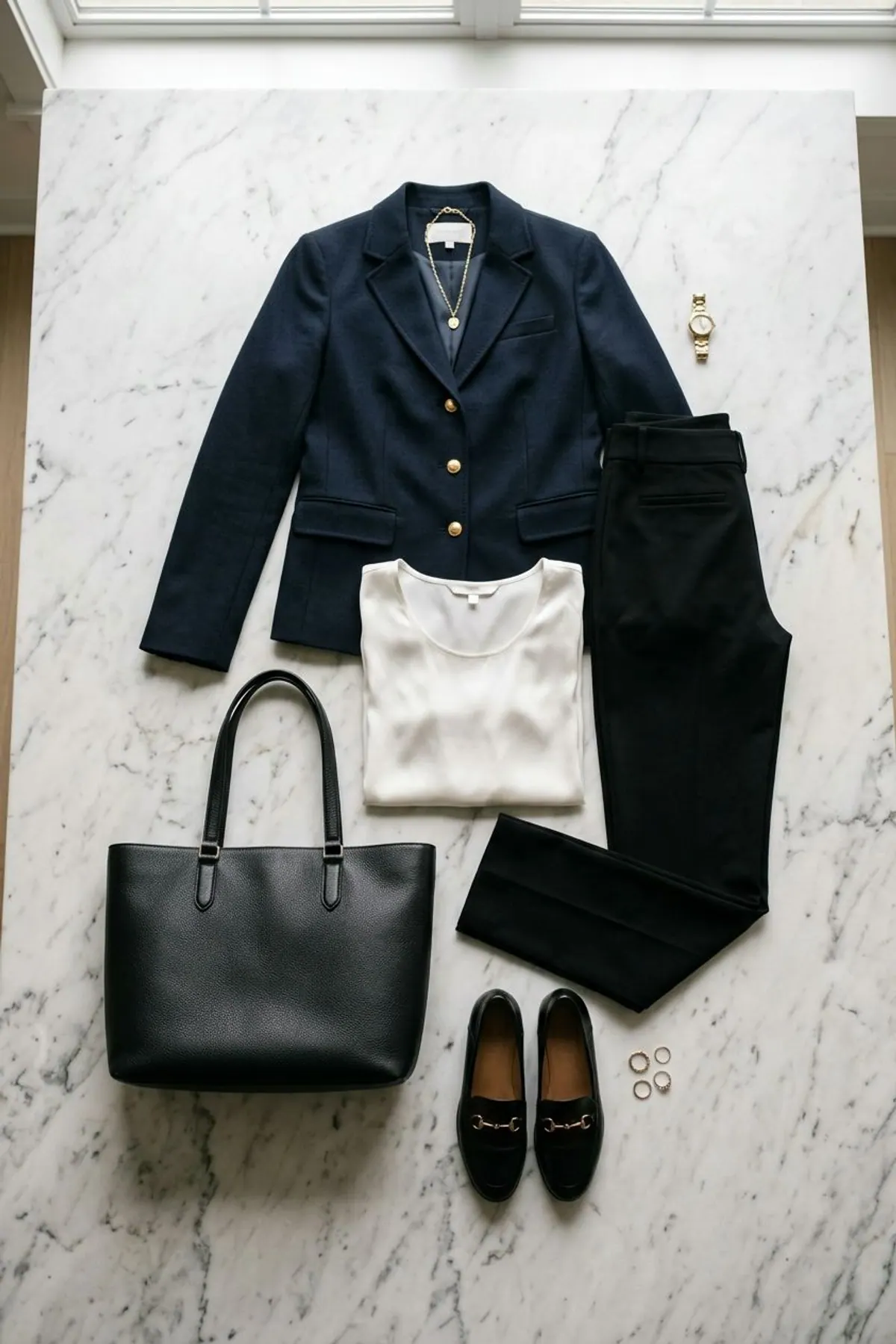
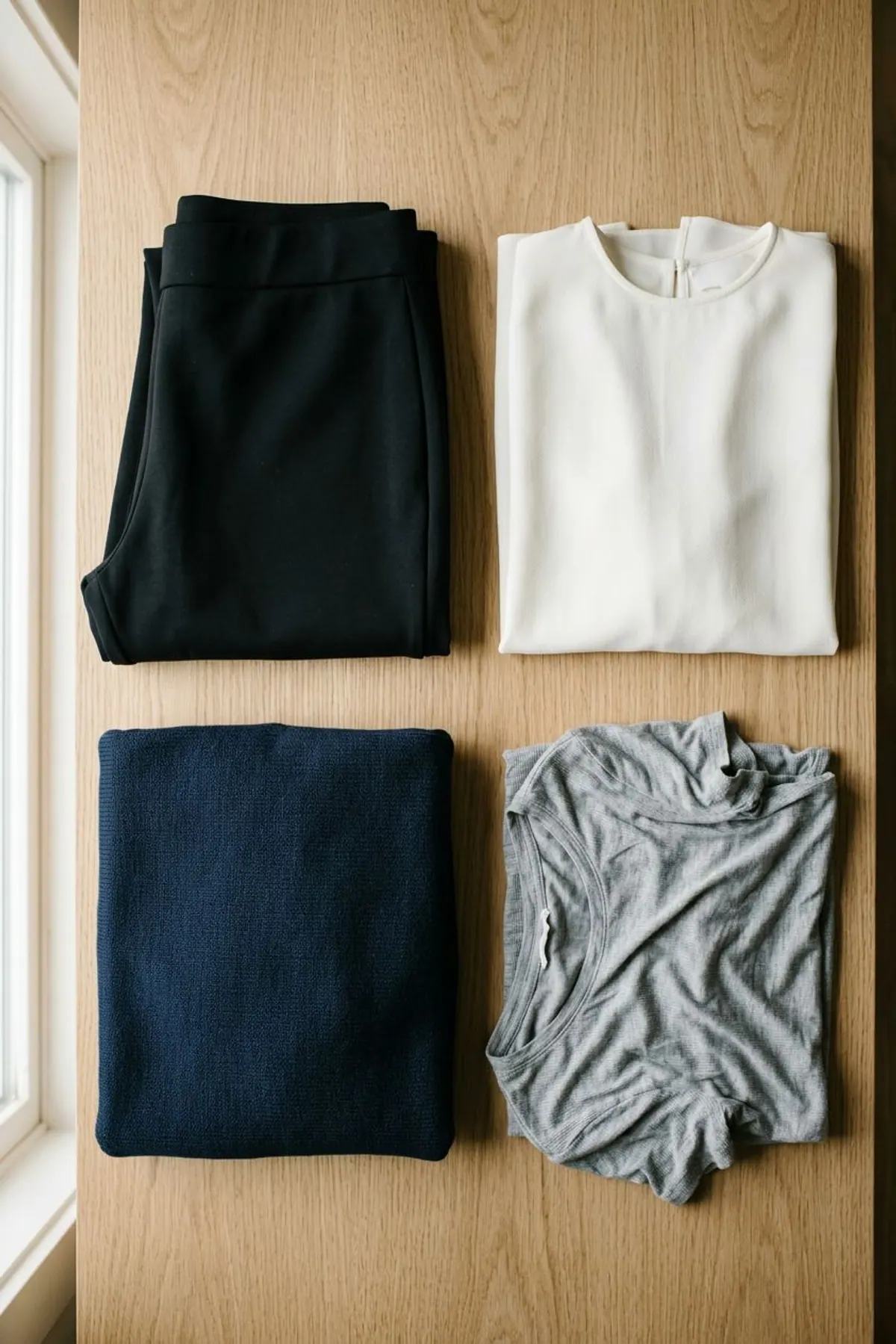
For work, the cardigan jacket replaces the blazer. It has the shoulder and lapel of a jacket with the stretch of a sweater, so it fits the bust and still closes (Rule 1). The blouse is tucked at the front only, and the trousers end at the top of the shoe. More desk-to-dinner builds like this are in our business casual formulas.
Tip: a block heel of 2 inches or less keeps the hem right all day.
Blazer shape, sweater comfort; fits the shoulder and skims the waist.
7One-color column: burgundy knit, burgundy wide leg, camel coat
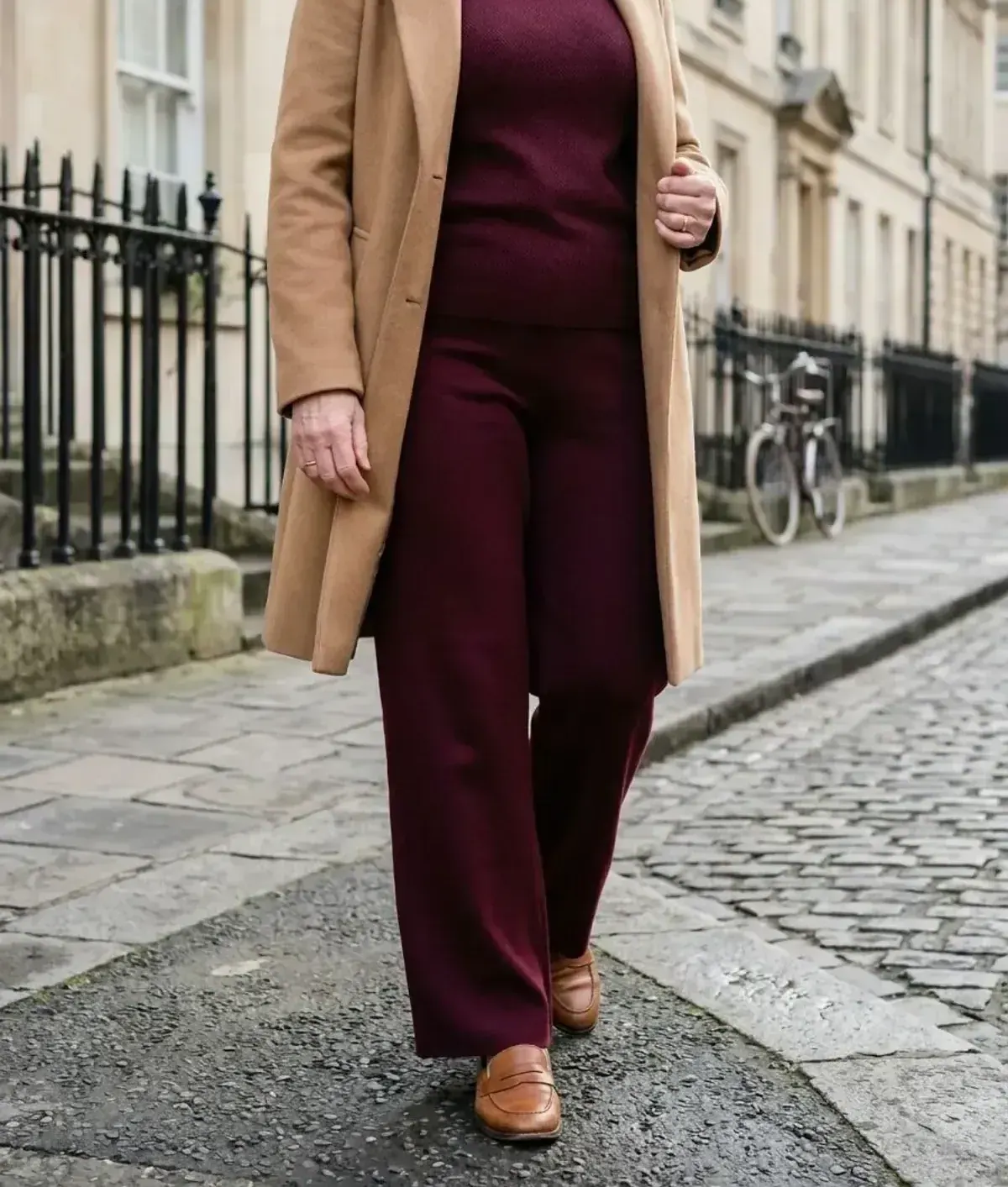
A single color from shoulder to shoe is the longest line a midsize body can make, and an open coat in a second color frames it. Keep both pieces matte and the same shade. The wide leg is the fuller cut that still passes Rule 2 because it is ponte, and the hem skims the loafer.
Tip: navy, burgundy, olive and chocolate all do this better than black, which flattens detail.
Dense double knit that skims the middle and holds a straight leg.
8Olive utility jacket, white tee, dark straight jeans, loafers
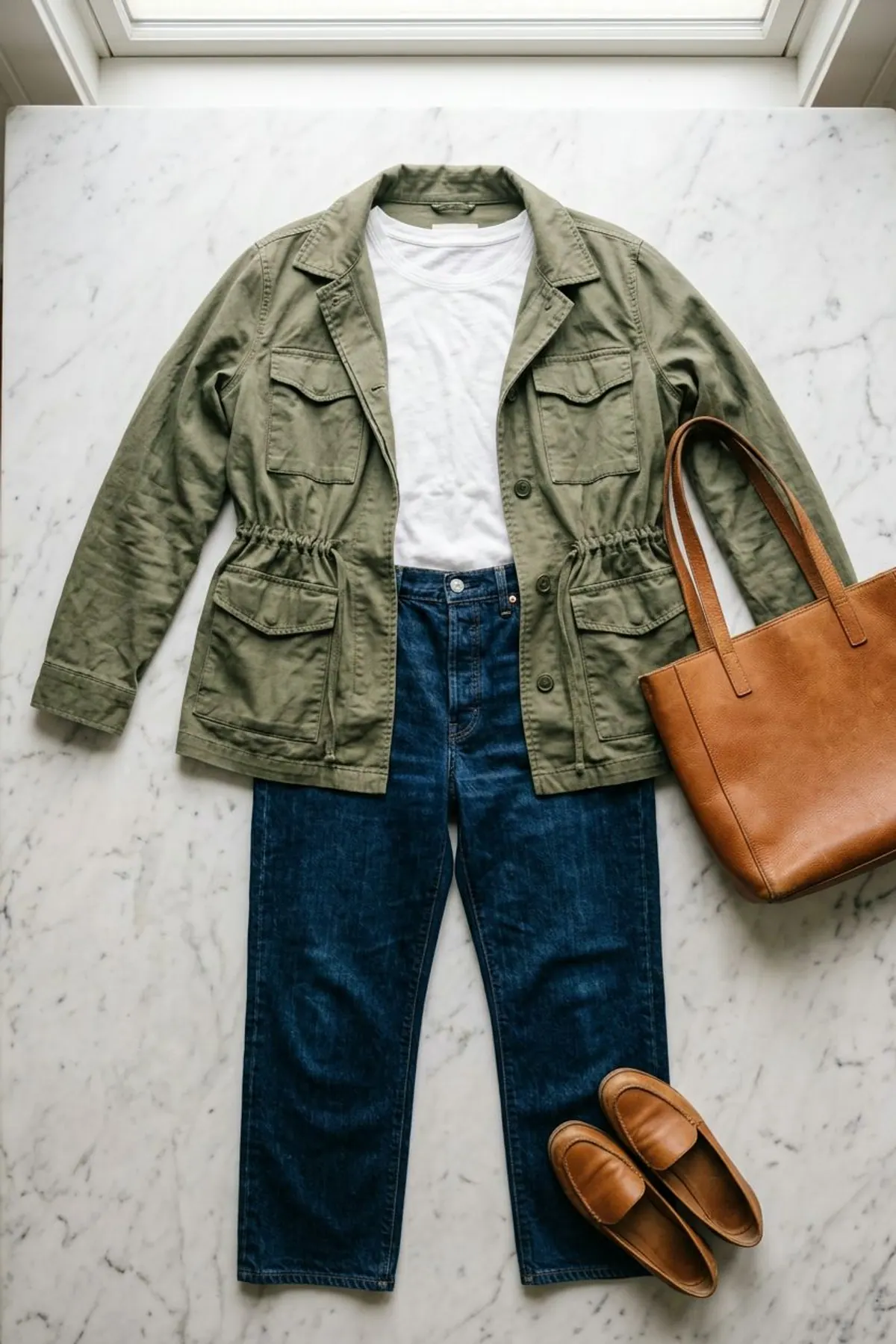
The weekend version of outfit 2. A utility jacket has a drawstring or seam at the waist, so it draws the narrowest line for you (Rule 4) while still sitting loose over the middle. The tee is tucked at the front, the jean is full length, and the loafer dresses it up a notch over a sneaker.
Tip: pull the jacket's waist cord in just enough to shape it, then let the hem hang.
The rise reaches the waist and the leg hangs straight from the hip.
9Black V-neck midi dress, long pendant, heeled sandal
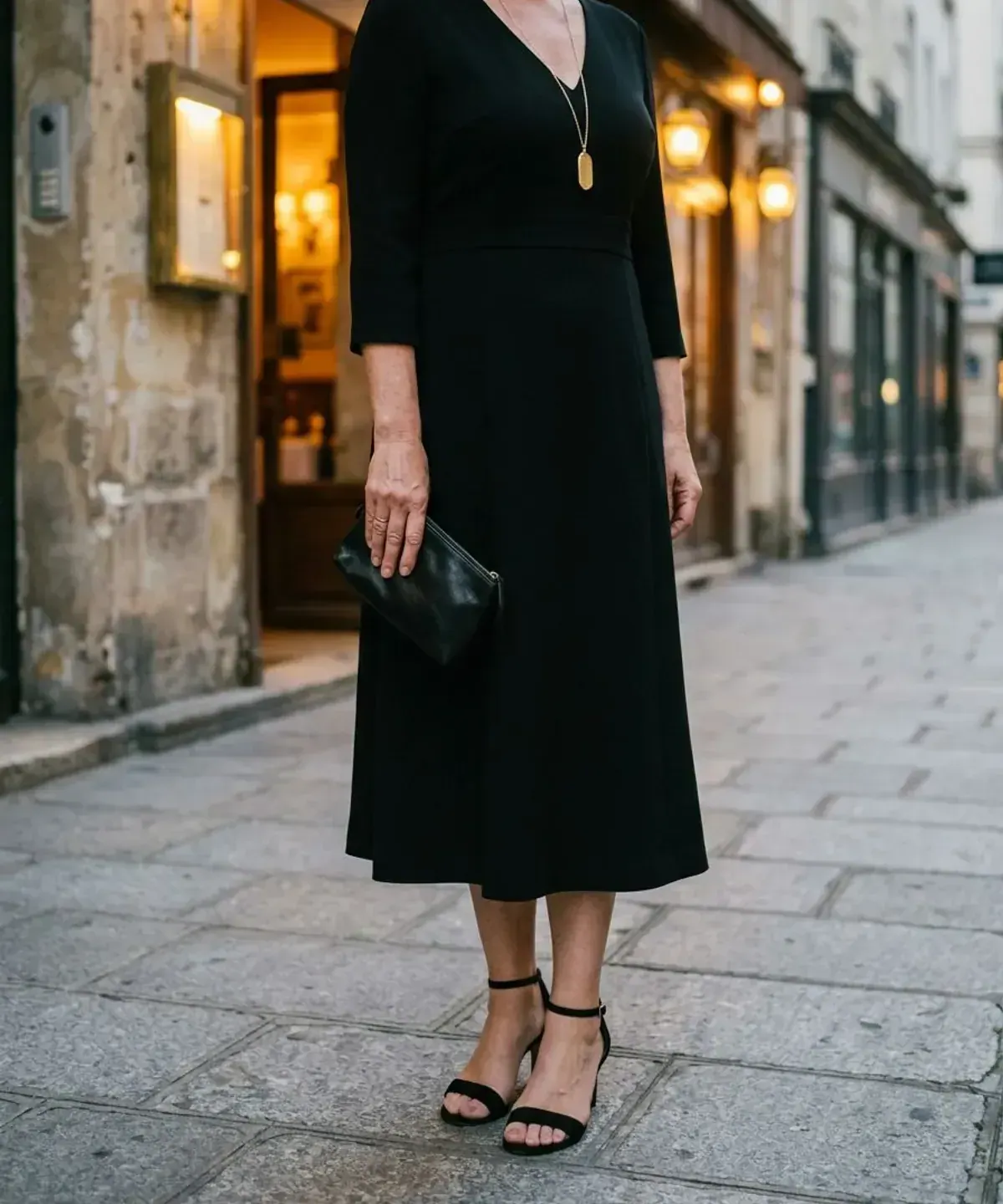
For evening, one dress does the work. A V neck lengthens the upper body, a three-quarter sleeve covers the arm and shows the wrist, and a crepe that holds its shape skims the middle (Rule 2). A long pendant adds another vertical line down the center. If the dress has a seam at the waist, make sure it lands at your natural waist, not below it.
Tip: a heeled sandal with a thin ankle strap keeps the foot light; a thick strap cuts the leg.
Ties at your narrowest point without a seam that has to fit.
Shift the Formulas for Your Shape
The nine outfits work on every midsize body. Your shape only changes which rule you lean on hardest. Use the quick table, then read the full guide for your shape.
| Midsize shape | Lean on this rule | The shift |
|---|---|---|
| Pear (hip is the largest) | Rule 1: buy to the hip | Darker, matte bottoms; a boatneck or a structured shoulder up top. See the pear shape outfits. |
| Apple (middle is the largest) | Rule 4: waist by line, not by belt | Wrap ties and V necks; skip rigid belts. See the apple shape outfits. |
| Hourglass | Rule 2: fabric weight | Fitted knits in dense fabric; avoid boxy cuts that hide the waist you have. |
| Rectangle | Rule 4: make a waist | Belted knits, half tucks and the one-color column with an open coat. |
Where to Shop in the Middle Sizes
The frustration of the middle sizes is that a 14 in one brand is a 16 in another and a 12 in a third. Instead of chasing a number, shop by two things: the brand's measurement chart and the fabric list. Brands that publish a bust, waist and hip in inches for every size save you a return; the ones that only say S, M, L and XL do not know who they are cutting for.
Look for lines that go to at least a 16 or an XL in the same cut (not a separate plus range with different proportions), that use ponte, crepe and dense cotton, and that offer petite and regular lengths. Our plus size capsule over 50 lists the fabric and stretch notes that carry over to the top of the midsize band.
The midsize fitting-room checklist
Midsize Mistakes After 50 and the Easy Swaps
What we like
- Buy to the largest measurement and tailor the rest
- Ponte, crepe, twill and dense knits
- A hem that touches the top of the shoe
- Half-tuck or a stretch belt to mark the waist
- An open long layer for a vertical line
- One matte color head to toe with a contrast coat
Keep in mind
- Sizing down and hoping the fabric gives
- Thin jersey, shiny spandex, anything sheer
- Cropped hems with a chunky shoe that cut the leg
- A rigid belt cinched over trousers
- A boxy top that stops at the fullest part of the middle
- Head-to-toe black every day (it hides the fit you got right)
The biggest mistake is the quiet one: wearing everything a size too big because the right size pulled somewhere. The fix is Rule 1. Buy the piece that fits the largest part and let a tailor, a belt or a half tuck do the rest. The outfit formulas that always work use the same fixes across every size.
Build the Outfits Once: Outfit Formula Cards
The nine outfits above are formulas because that is how a working closet runs. The Outfit Formula Cards are 60 of them on cut-out cards: each lists the pieces, the shoe and the one accessory, so a morning takes a card, not a decision. Every card uses the same fit rules in this guide, which means they work in a size 8 and a size 16.
If you would rather start with the pieces, the free Capsule Wardrobe Checklist lists 30 that all work together, with the fabric notes that matter most in the middle sizes.
Frequently asked questions
What size is midsize?
There is no official cut-off. Most people use midsize for roughly a US 10 to 16, the band where straight sizes stop fitting well and plus sizes are cut for a different proportion. If you are between the two ranges in most brands, this guide is for you.
Does body type matter more than size?
Shape decides where to draw the eye; size decides how clothes fit. In the middle sizes, fit is the bigger problem, because off-the-rack cuts assume a bust, waist and hip in the same size. Fix fit first with the four rules, then apply your shape's one shift.
How does body shape change after 50?
For most women the middle softens, the bust sits a little lower and the upper arm fills out, while the hip measurement often stays about the same. That is why the rise, the sleeve and the waist line matter more after 50 than they did at 35.
How do I dress midsize over 50 without looking frumpy?
Frumpy almost always means too big or too thin. Buy the size that fits your largest measurement, choose dense matte fabrics, get the hem to the top of the shoe, and mark the waist with a tie, a belt over a knit or a half tuck. Then add one structured layer such as a cardigan jacket.
Should midsize women size up or size down?
Neither as a habit. Size to your largest measurement, which is usually the bust for tops and the hip for bottoms, and have the rest adjusted. Sizing down to a number creates pulling; sizing up to be safe creates the shapeless look that reads as older.
What are the best casual outfits for midsize women over 50?
A tunic sweater over slim pants with leather sneakers, high-rise straight jeans with a striped boatneck and a knit blazer, and an olive utility jacket over a white tee and dark jeans. All three mark the waist and keep the fabric dense, which is what makes casual look chosen rather than default.
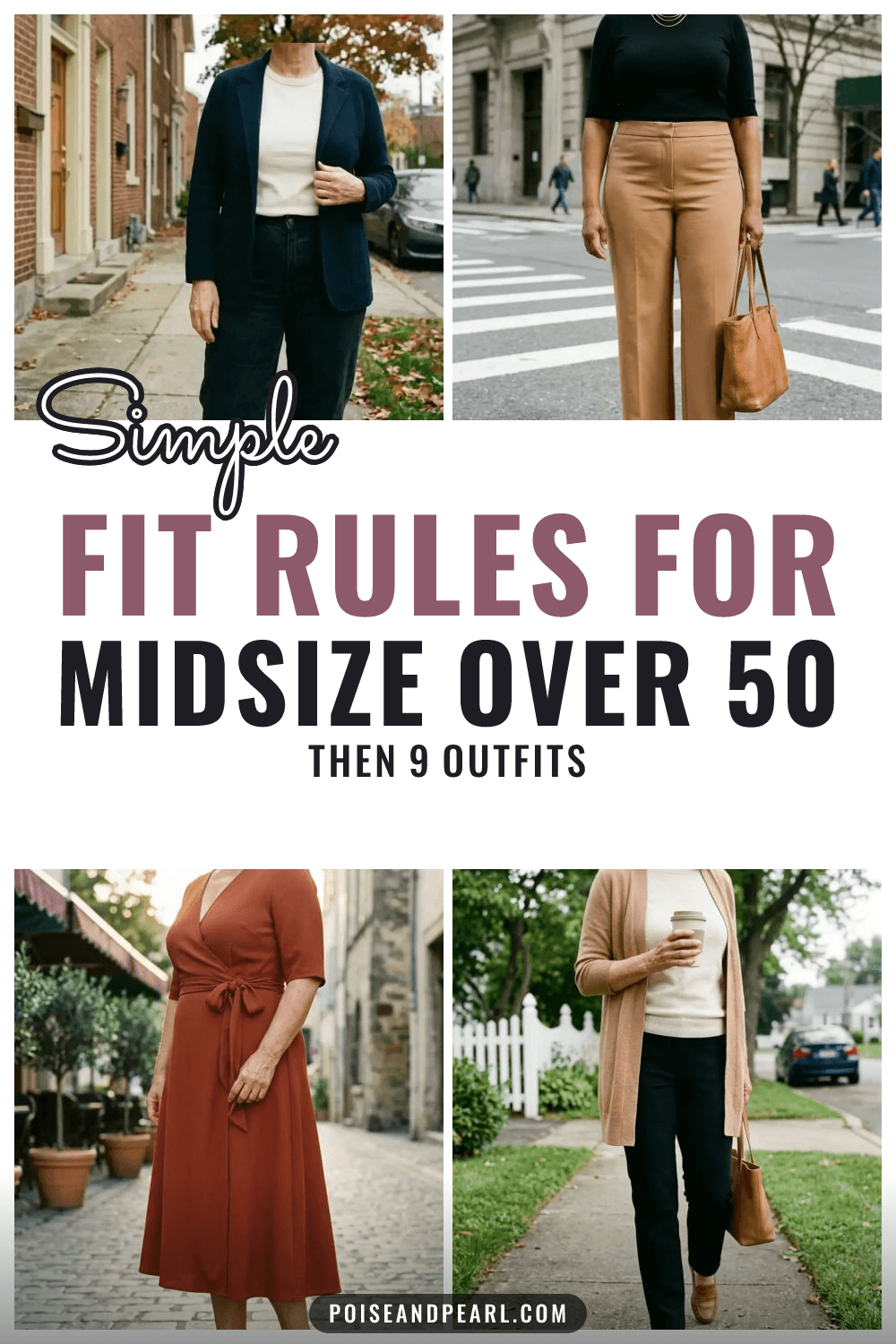
Save it for later
Pin this to your Style by Body Shape board so it's there when you need it.
Save to Pinterest