This post contains affiliate links. As an Amazon Associate we earn from qualifying purchases, at no extra cost to you. Read our disclosure.
Key takeaways
- A reset is an audit, a gap list and a shop plan, not another declutter.
- Count your clothes by type and write the tally down.
- Log what you wear for two weeks before you decide.
- A gap is a piece that makes at least three outfits work.
- Set a total and a price ceiling for each gap before the sales start.
In this post9 sections
- Wardrobe Reset or Clean-Out: Which One Do You Need?
- January Wardrobe Reset Checklist in 4 Steps
- What an Audit Tally Looks Like
- Your Gap List: Five Questions Before Anything Goes on It
- Your Shop Plan for January Sales
- Tools That Make the Reset Easier
- Reset Mistakes and Easy Swaps
- Your January Wardrobe Reset Checklist
- FAQ
Wardrobe reset checklist for women over 50: do an audit of what you own, write a gap list of what is truly missing, then make a shop plan before the January sales. This page walks you through all three, with a tally you can fill in tonight. It is not a declutter. If you only want to sort piles, start with our closet clean-out plan first.
Affiliate note: some product links below are Amazon links, and we may earn a small commission if you buy, at no extra cost to you. Prices are typical ranges, not quotes. Budget numbers are examples, not financial advice.
Wardrobe Reset or Clean-Out: Which One Do You Need?
A clean-out removes what no longer fits or suits you. A reset starts after that. It counts what is left, finds the real gaps and gives every purchase a job before you spend anything. The two fit together, and the reset is the one that protects your budget in January.
| Closet clean-out | January wardrobe reset | |
|---|---|---|
| Main question | What goes? | What do I still need? |
| Output | Keep, alter and let-go piles | A tally, a gap list and a shop plan |
| Best time | Any time you have a free hour | Right after the holidays, before sales shopping |
| Spending | None | A planned amount, spent only on gaps |
| Our guide | 5-session clean-out plan | This page |
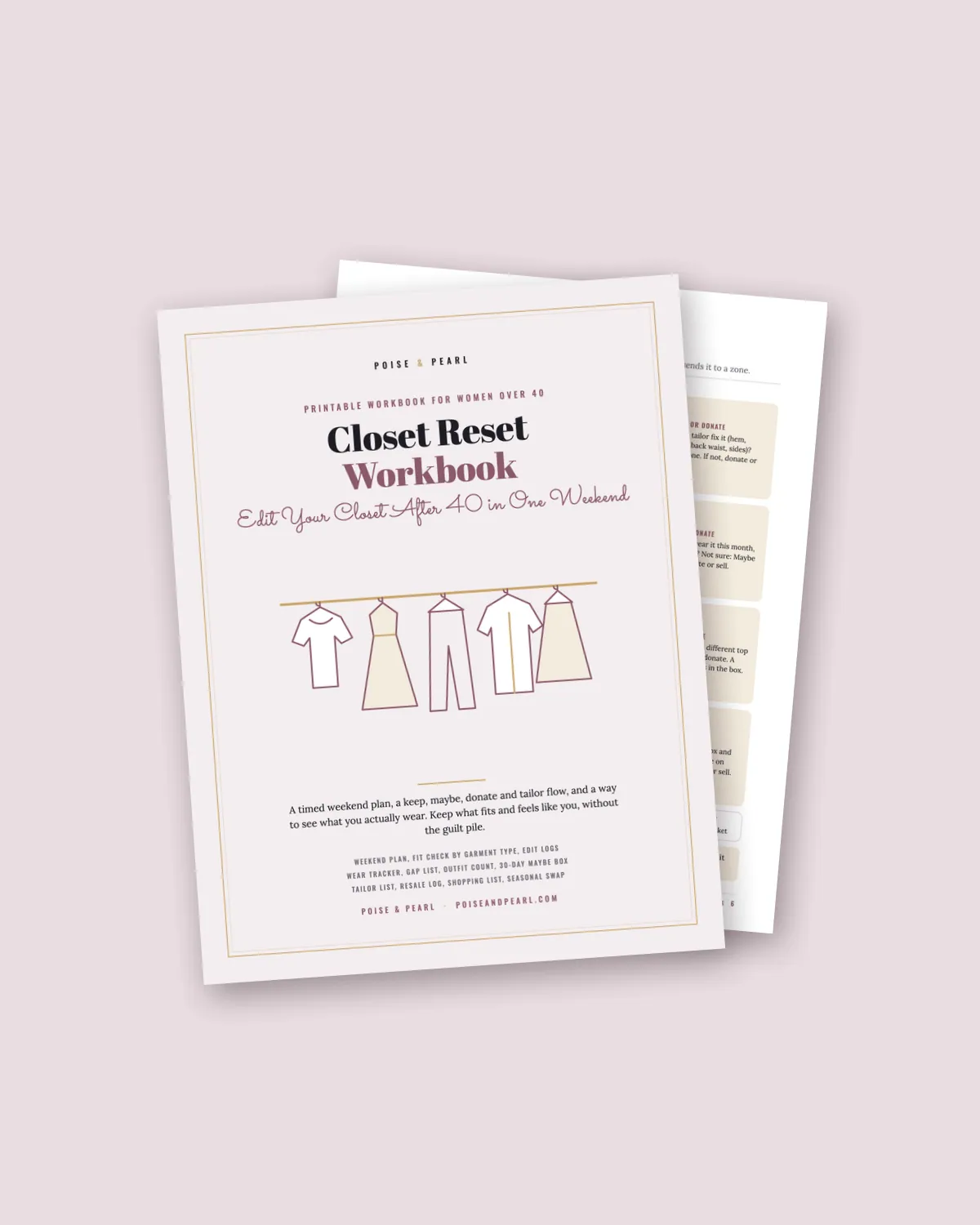
The Closet Reset Workbook ($7, 24 printable pages) has the edit logs, a gap list, an outfit count and a one-in-one-out shopping list laid out for exactly this job. Use it as you go, or copy the same columns into any notebook.
January Wardrobe Reset Checklist in 4 Steps
Plan about two weekends of short sessions, or one focused weekend if you prefer. Do the steps in order, because each one feeds the next. Nothing goes in a cart until step 4.
-
Step 1: Step 1: Audit what you own (60 to 90 minutes)
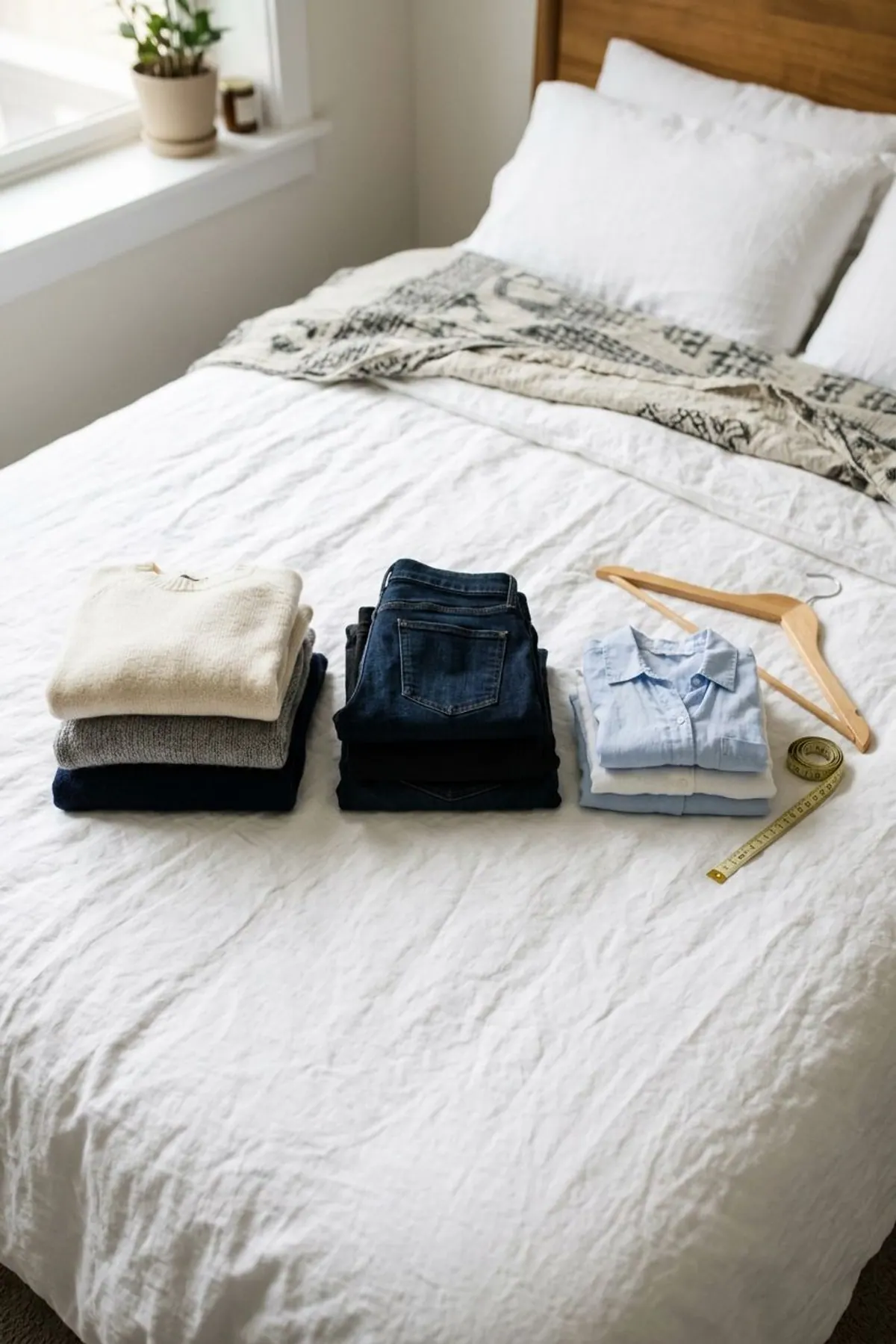
Count your clothes by type: tops, bottoms, layers, dresses, coats and shoes. Take each type out of the closet, try on anything you are unsure about and mark it with one of four labels: keep, alter or repair, replace or let go.
Write the counts in a notebook, one line per type. A written tally shows you which category is crowded and which is thin, which a full rail never does.
-
Step 2: Step 2: Check what you actually wear (two weeks)
For two weeks, write down what you put on each day. Do not change your habits to look good on paper. A short log shows which pieces earn their space and which ones you only like in theory.
Pieces you never reached for go in a dated maybe box. Pieces you wore three or more times are your core, so note what they have in common: color, fabric, fit, length.
-
Step 3: Step 3: Write your gap list
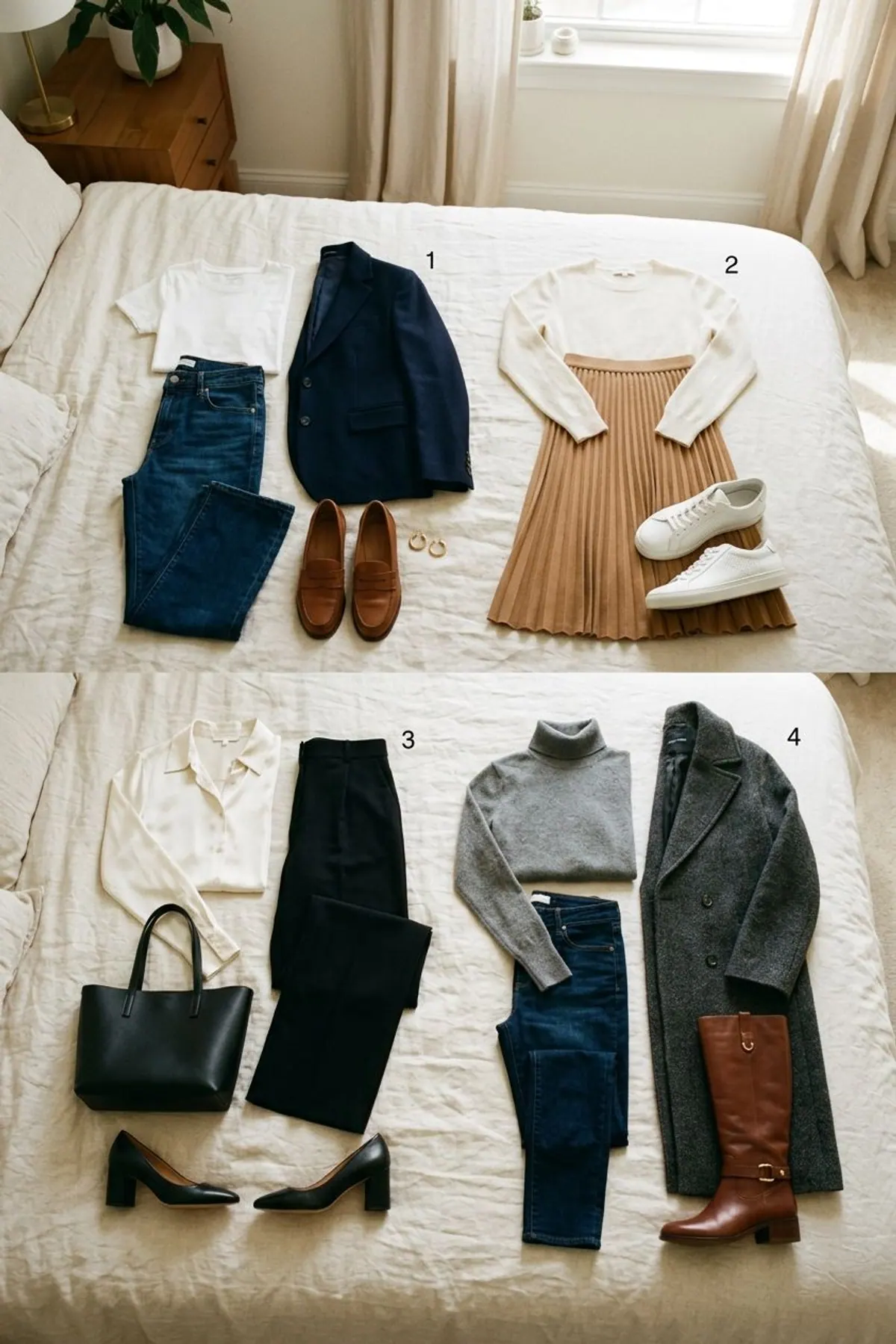
Build five outfits from your keep pile, the ones you would actually wear this month. Every time an outfit needs a piece you do not own, or owns only in a worn-out version, write it on the gap list.
A gap is a piece that would make at least three outfits work. A one-off you think is pretty is not a gap, it is a want, and it goes on a separate wish line.
-
Step 4: Step 4: Make your shop plan
Rank the gaps by how many outfits each one makes possible, then set a total you are happy to spend. Write each gap with its color, fabric, fit and a price ceiling, so you can recognize it in a sale and walk past everything else.
One in, one out: when a new piece arrives, a worn-out one leaves.



What an Audit Tally Looks Like
Here is a worked example, so you can see the shape. The numbers are made up to show the math, and yours will differ.
| Outcome | Pieces | What happens next |
|---|---|---|
| Keep | 31 | Hang at the front of the rail |
| Alter or repair | 6 | Book one tailor visit for all six |
| Replace (worn out) | 7 | Add to the gap list as the same piece, better made |
| Let go | 8 | Donate, sell or swap within two weeks |
| Total | 52 | 31 + 6 + 7 + 8 = 52 |
In this example the counted gaps are four, so the shop plan covers seven replacements plus four gaps, eleven pieces at most. That is a far smaller job than shopping a whole sale rack, and each piece has a reason.

Your Gap List: Five Questions Before Anything Goes on It
Run every candidate through these questions. If you cannot say yes to the first three, it is a want, not a gap.
Gap list test
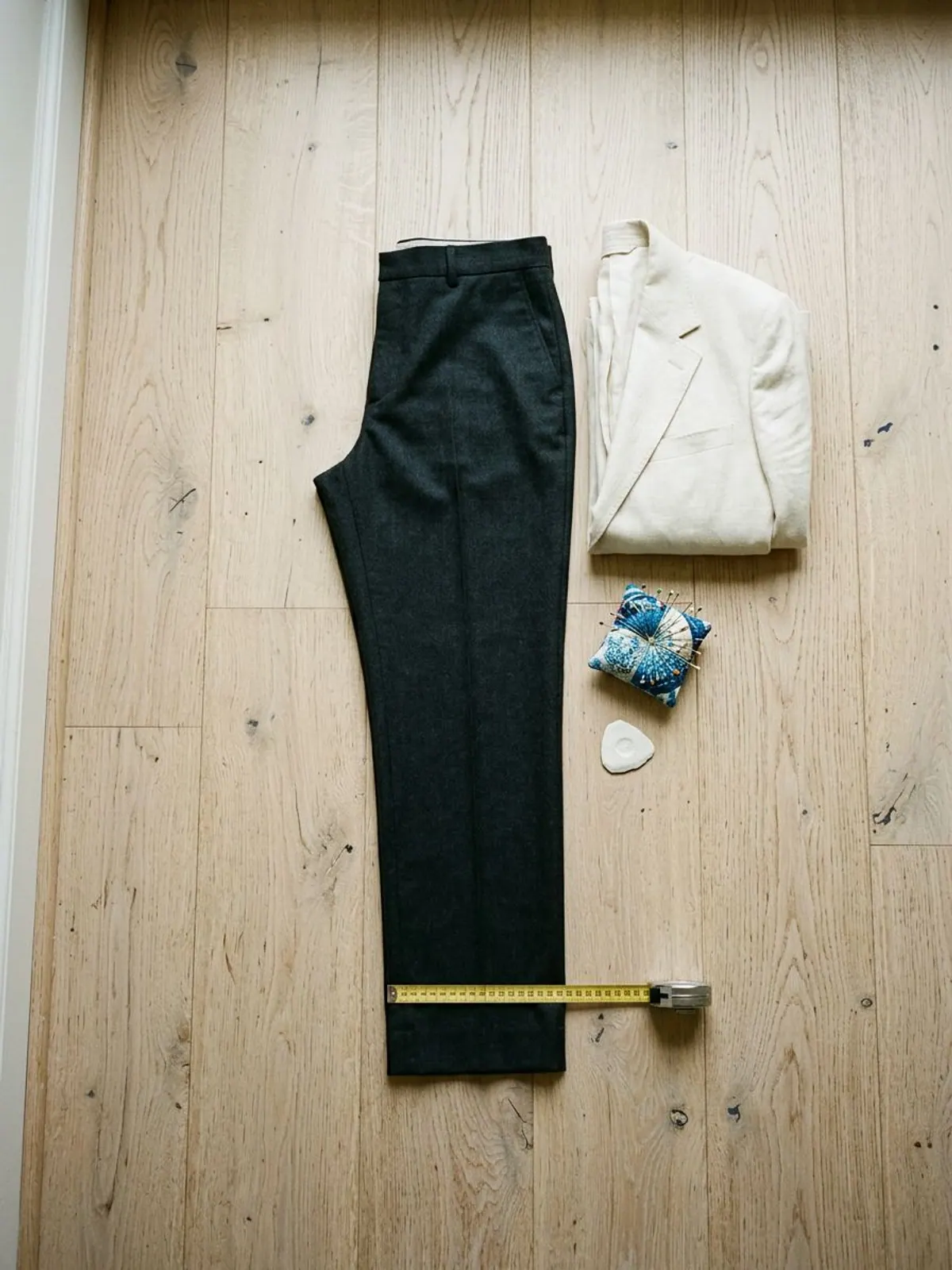
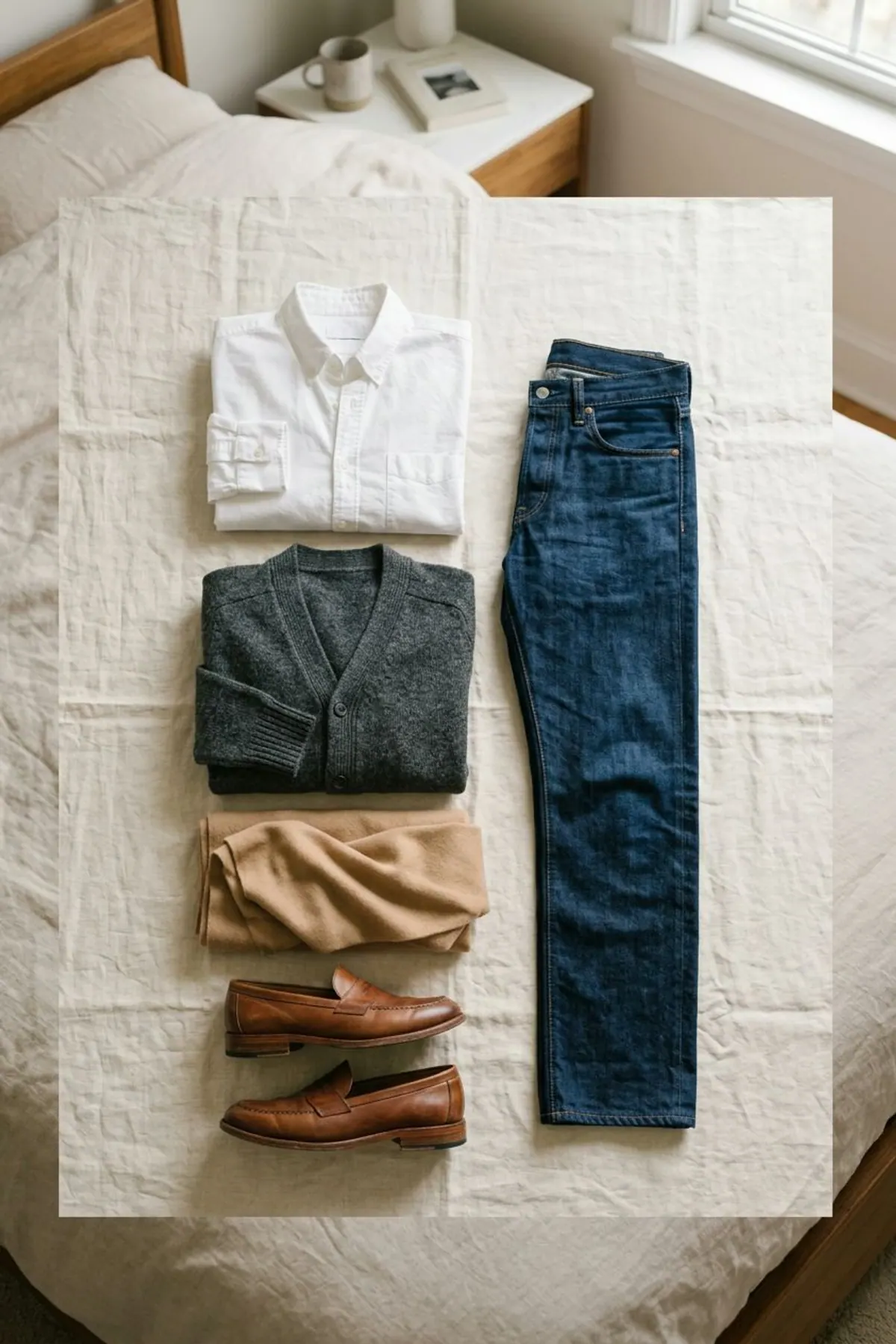
Most gap lists are short and plain: a good-fitting dark trouser, a warm layer in a color you wear daily, a comfortable shoe. For the pieces most wardrobes need, see our wardrobe essentials list. If you are unsure how many pieces make a working closet, read how many pieces a capsule wardrobe should have.
Your Shop Plan for January Sales
Retailers commonly mark down winter stock in January, but dates differ by store, so check each shop's own sale page. A plan means you shop on purpose, with your gap list in hand.
| Share | Amount | Spend it on |
|---|---|---|
| 60% | $120 | The top two gaps, the pieces that make the most outfits |
| 30% | $60 | Replacements for worn-out basics, same piece, better made |
| 10% | $20 | One wish-list item, bought only if it passes the gap test |
| Total | $200 | $120 + $60 + $20 = $200 |
Set your own total, then split it the same way. If a sale piece does not match the color, fabric and price ceiling you wrote down, leave it on the rack.

Once a gap piece arrives, write its first outfit on the same day, using pieces from your keep pile. Our outfit formulas for women over 40 give you ready-made combinations, and the January outfits guide covers cold-weather ones. The Style Vault bundles every Poise & Pearl printable if you want the planners, formulas and checklists together.
Tools That Make the Reset Easier
Reset kit
- Start here
Slim non-slip velvet hangers
Typically $20 to $35
One hanger type calms the rail and shows you what you own.
Check price on Amazon for Slim non-slip velvet hangers -
Handheld garment steamer
Typically $25 to $45
Steam keeps pieces fresh without ironing and refreshes thrifted or tailored items.
Check price on Amazon for Handheld garment steamer -
Fabric shaver
Typically $12 to $25
Removes pilling so a good knit stays in your keep pile.
Check price on Amazon for Fabric shaver -
Tape measure for sewing
Typically $5 to $10
Measure hems and sleeves before you decide to alter.
Check price on Amazon for Tape measure for sewing

Reset Mistakes and Easy Swaps
Do this
- Count and write down before you shop.
- Wear-log for two weeks to see real habits.
- Buy only what passes the gap test.
- Set a total and a price ceiling for each gap.
- Write a first outfit the day a piece arrives.
Not this
- Shopping the sale rack with no list.
- Judging pieces by the hanger instead of by fit.
- Buying a third pair of something you already own.
- Treating a want as a gap.
- Spending the whole amount because a sale ends soon.
Your January Wardrobe Reset Checklist
January reset checklist
Know what you own, know what you are missing, then shop for the gap.
If you want the whole reset on paper, the Closet Reset Workbook gives you the gap list, outfit count and one-in-one-out shopping list pages in one printable. The 5-session closet clean-out plan is the step before it, if your closet is still full.
Want a free printable that turns your keep pile into a small set of outfits? Our capsule wardrobe step-by-step guide shows how, and the checklist below is free.
Frequently asked questions
How do I reset my wardrobe?
Audit what you own, write a gap list of what is missing, then plan your spending before you shop. Start by counting clothes by type and labeling each piece keep, alter, replace or let go.
How do you do a wardrobe audit?
Take out one type of clothing at a time, try on pieces you are unsure about and mark each keep, alter or repair, replace or let go. Write the counts in a notebook so you can see which categories are crowded and which are thin.
How many clothes should a woman over 50 own?
There is no single right number. It depends on your week, your climate and how often you do laundry. Our guide to how many pieces a capsule wardrobe should have shows how to pick a number from your own routine.
What is the difference between a wardrobe reset and a closet clean-out?
A clean-out removes what no longer fits or suits you. A reset counts what is left, finds the gaps and makes a shop plan, so your next purchases fill real needs.
When should I do a January wardrobe reset?
Right after the holidays and before you shop the January sales. A reset done first gives you a gap list to shop from instead of browsing the sale rack.
Save it for later
Pin this to your Capsule Wardrobe board so it's there when you need it.
Save to Pinterest