Key takeaways
- Three style words (one for feel, one for shape, one for finish) beat a quiz label, because each word can say no to a garment.
- A 14-day wear audit shows what you really wear, and you can start tonight by rebuilding the last two weeks from photos and the laundry basket.
- Where words and wear match, that is your style. Where you wear a piece often but it matches no word, upgrade it rather than feel guilty.
- Five uniforms (work, weekend, dinner, travel, home) and a 7-question filter keep new purchases on your own track.
In this post11 sections
- What Is Personal Style After 40?
- Step 1: How Do You Choose Three Style Words?
- Step 2: How Do You Run a 14-Day Wear Audit?
- Step 3: How Do You Compare Your Words With What You Wear?
- Step 4: How Do You Turn Style Words Into Five Uniforms?
- Step 5: What Is the 7-Question Shopping Filter?
- A Worked Example: Dana's Words, Audit and Filter
- Common Mistakes When Finding Your Style After 40
- What If My Style Words and My Wardrobe Do Not Match?
- Put It on Paper: The Personal Style Reset Workbook
- FAQ
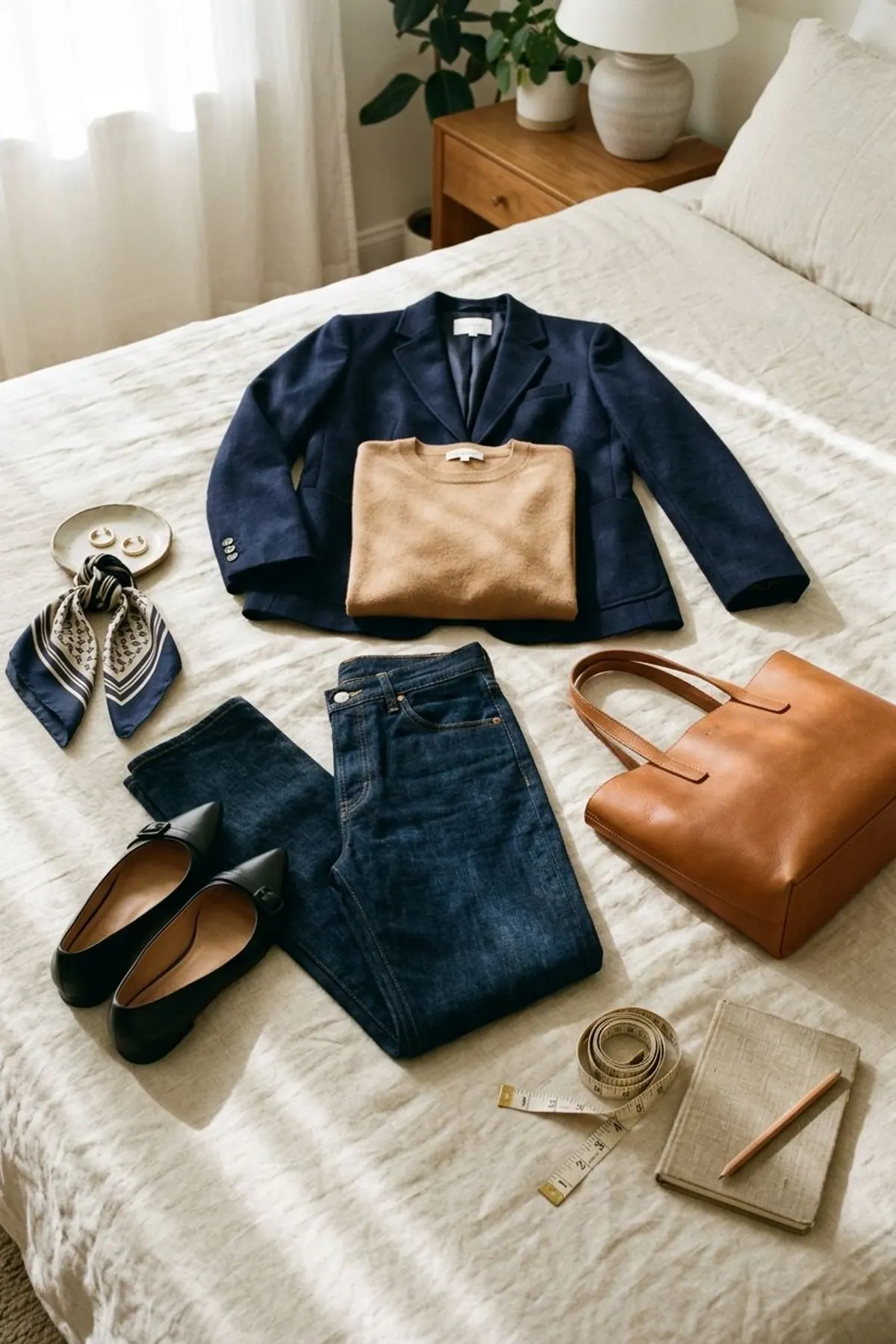
Learning how to find your personal style after 40 is a different job from the one most quizzes describe. A quiz hands you a label such as classic, boho or minimalist. By 40 you already own years of evidence about what you reach for, what you buy and never wear, and what stays on the hanger with the tag on, and the method below uses that evidence instead of a label.
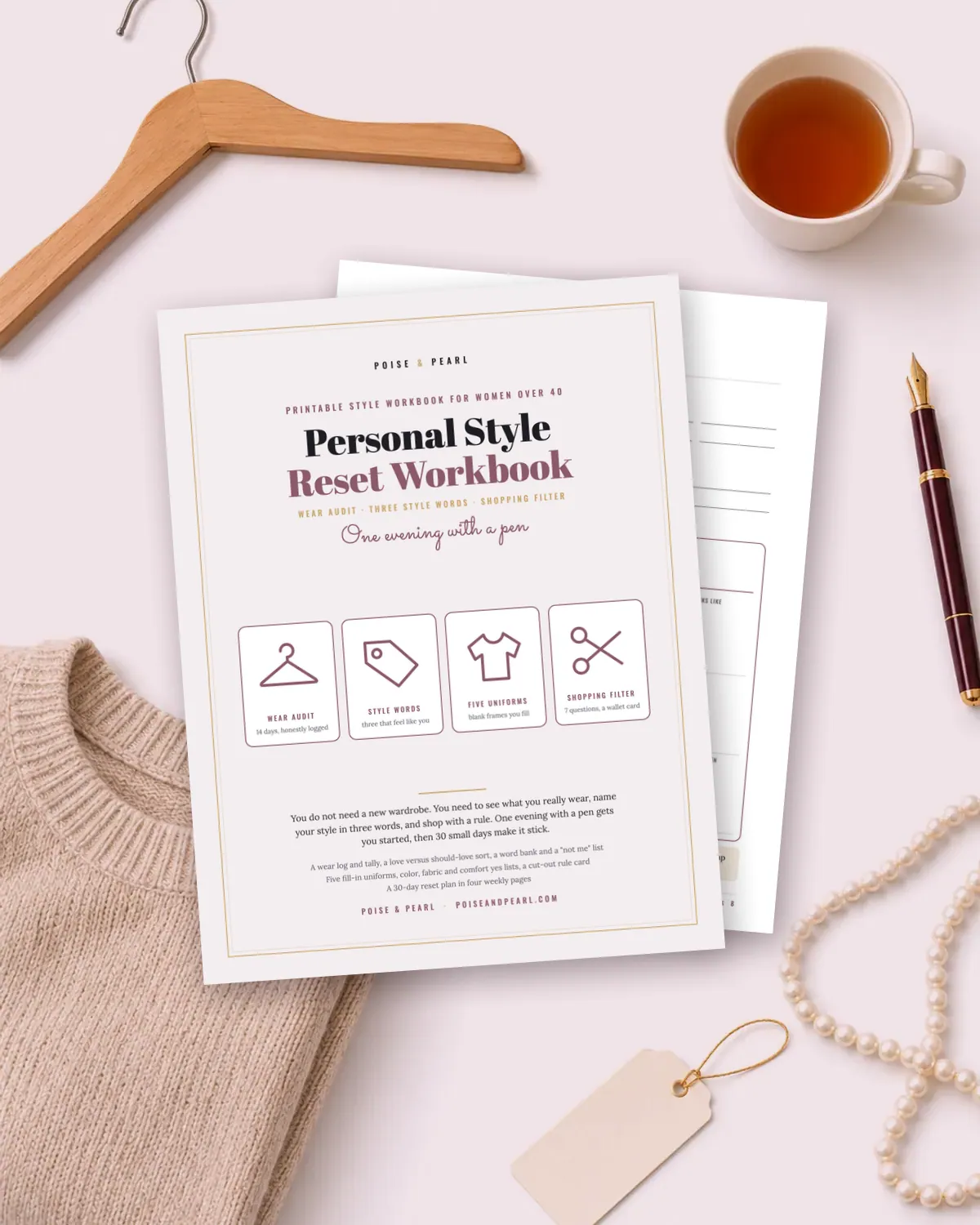
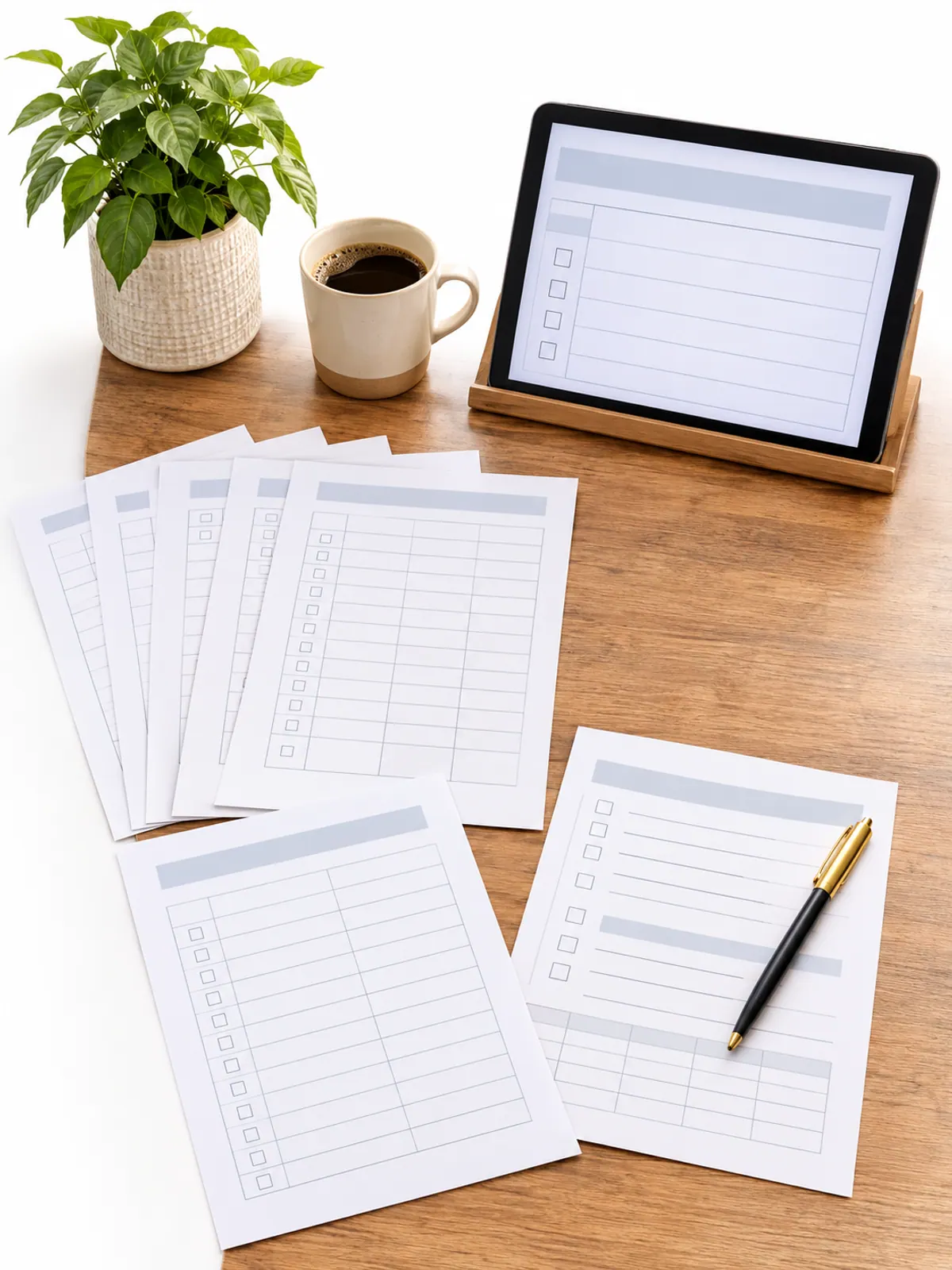
If you would rather work through it on paper, the Personal Style Reset Workbook ($9) gives you the 14-day wear log, a style word bank, five occasion uniform pages and the 7-question shopping filter as printable pages. Everything on this page also works with a notebook and a pen.
What Is Personal Style After 40?
Personal style is the set of choices you repeat without thinking: the shapes, colors, fabrics and details that make a getting-dressed morning short and leave you feeling like yourself. It is not a label and it is not a trend. After 40 it also has to fit a life that has probably changed in work, hair, climate or comfort since you last thought about it.
| Tool | The question it answers | When you use it |
|---|---|---|
| Three style words | What do I want my clothes to say and feel like? | Once tonight, then again each January |
| 14-day wear audit | What do I actually wear, and does it feel like me? | One look back tonight, or two weeks forward |
| 7-question shopping filter | Does this belong in my closet? | Before every purchase, in the shop or online |
Step 1: How Do You Choose Three Style Words?
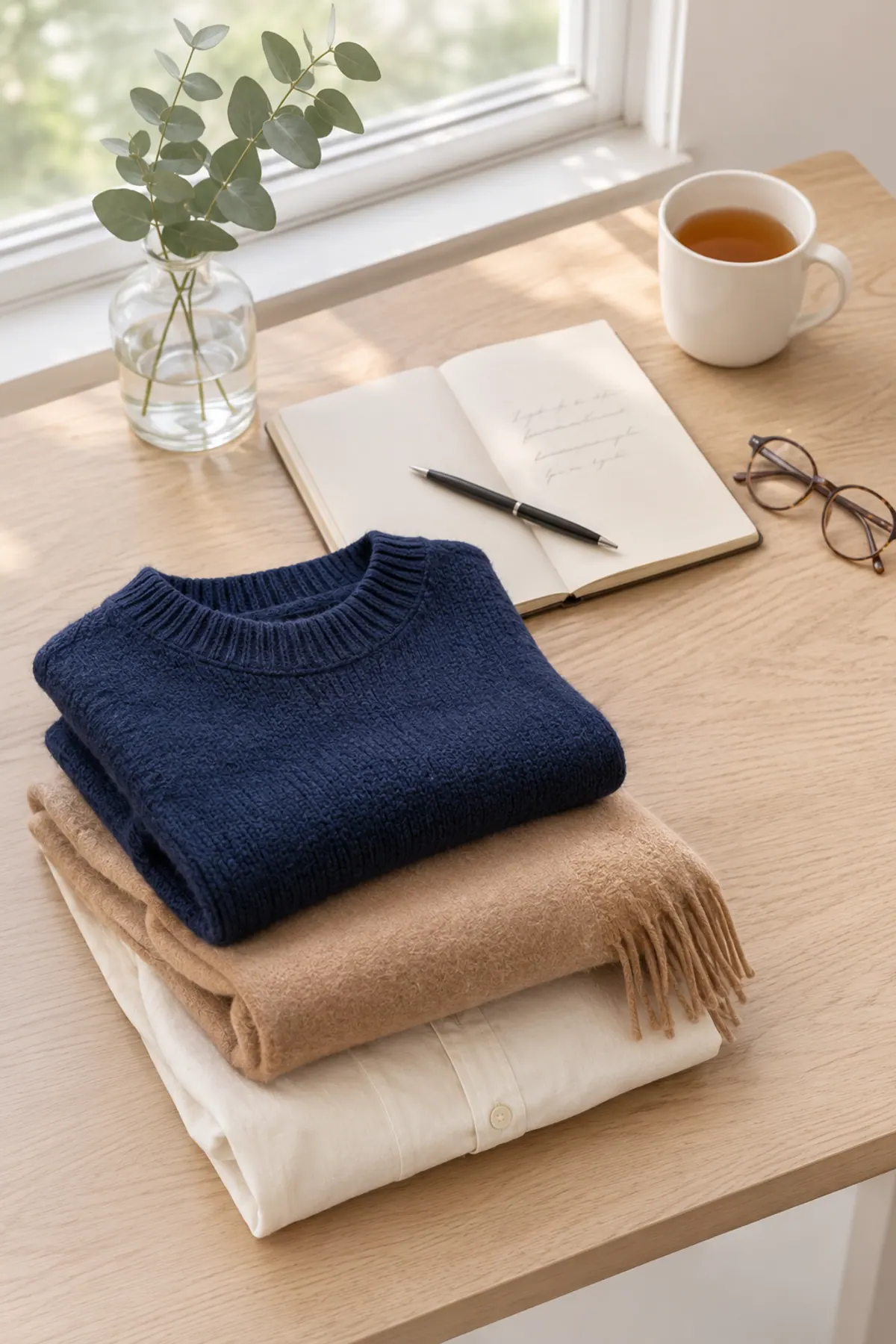
Start with what you already love. Lay out three things you reach for most and ask what they have in common: a soft knit, a straight leg, a clean line, a warm color. Then pick one word from each column of the word bank below, one for how you want to feel, one for shape and one for finish.
| Feel | Shape | Finish |
|---|---|---|
| Calm | Straight | Matte |
| Polished | Soft | Textured |
| Relaxed | Structured | Plain |
| Warm | Fluid | Glossy |
| Crisp | Easy | Layered |
| Bold | Tailored | Detailed |
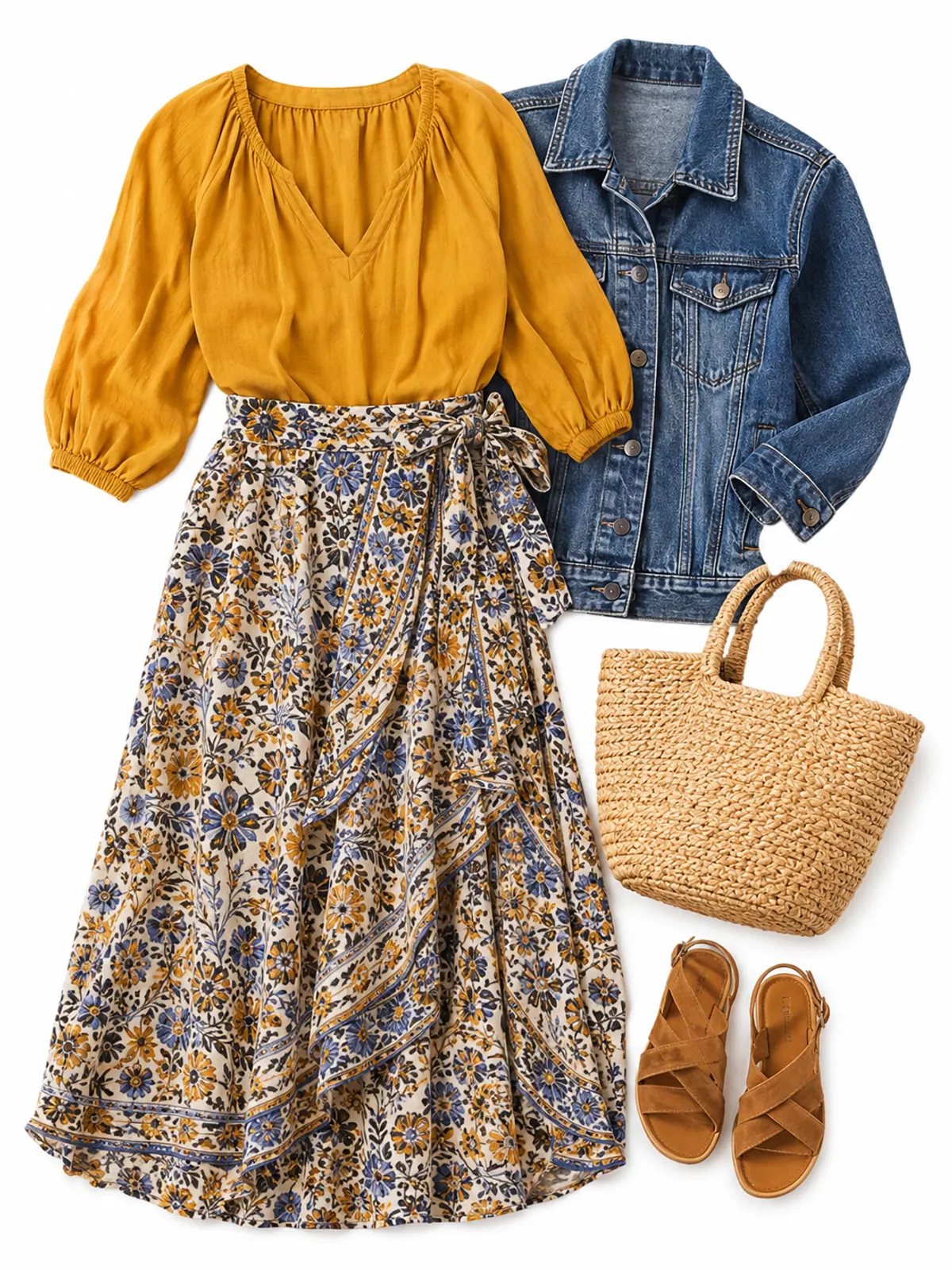
Test every word with one rule: it has to let you say no. If a word such as "nice" or "pretty" would pass every garment in the shop, it is not doing any work. "Clean-lined" turns down a ruffled wrap skirt, and "warm" turns down a stiff gray polyester blazer.
Step 2: How Do You Run a 14-Day Wear Audit?
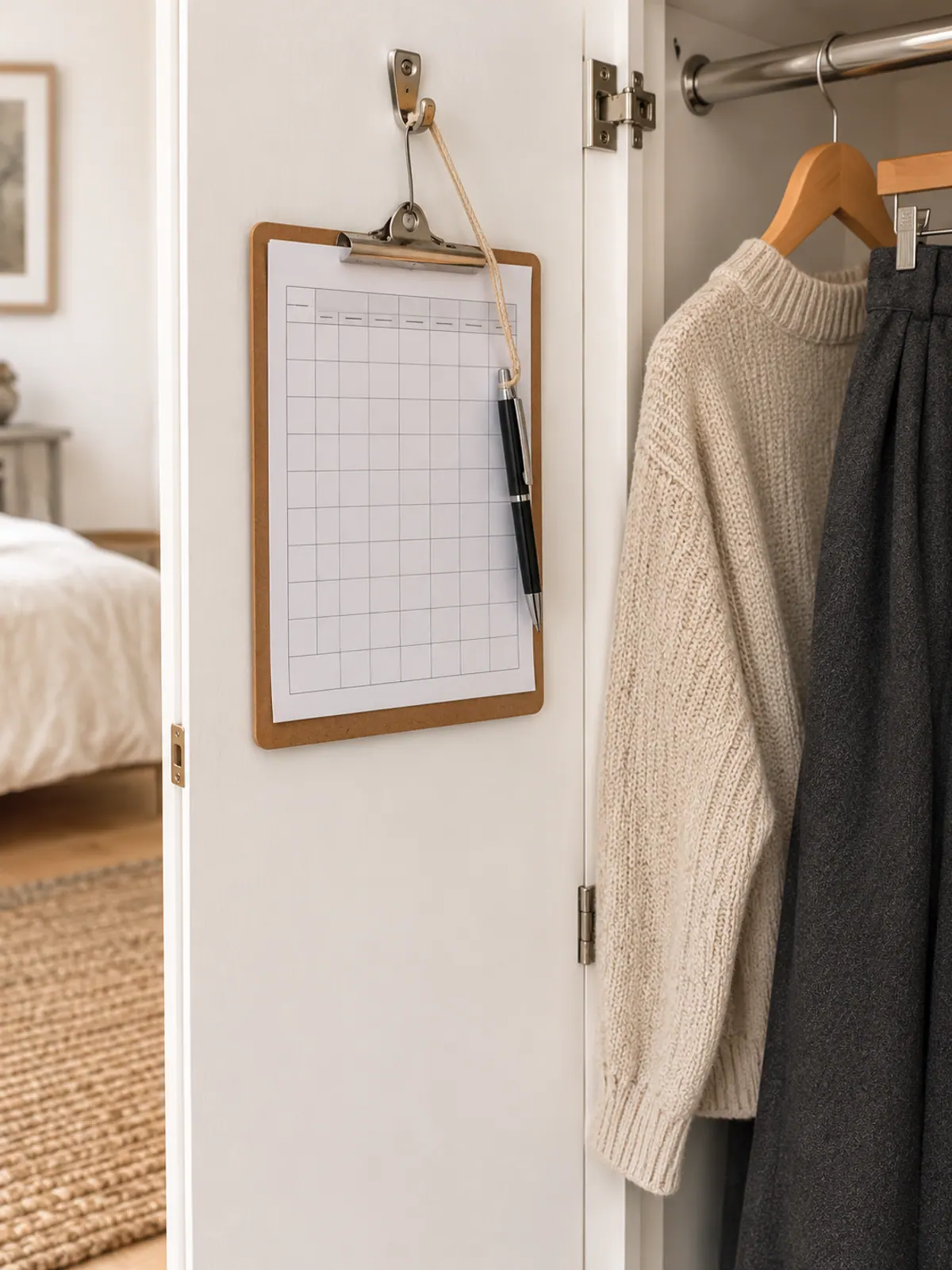
A wear audit is a short log of what you actually put on, with one yes or no: did I feel like myself? You can start tonight by rebuilding the last 14 days from phone photos, your calendar and the laundry basket, or log the next 14 days as you go. Memory is generous to the closet, so use evidence.
-
Step 1: Make a 14-row list
One row per day, with columns for top, bottom, layer or shoes if you want them, and "felt like me?" (yes, no or maybe).
-
Step 2: Log what you wore, not what you meant to wear
Fill it in the same evening. If you changed twice, write the outfit you spent the day in.
-
Step 3: Tally the repeats
At day 14, count how many times each piece appeared. Circle anything worn four or more times.
-
Step 4: Mark the yes pieces
Pieces that got a yes and a repeat are your style evidence. Pieces worn often with a no are comfort you have not yet matched to your words.
Step 3: How Do You Compare Your Words With What You Wear?
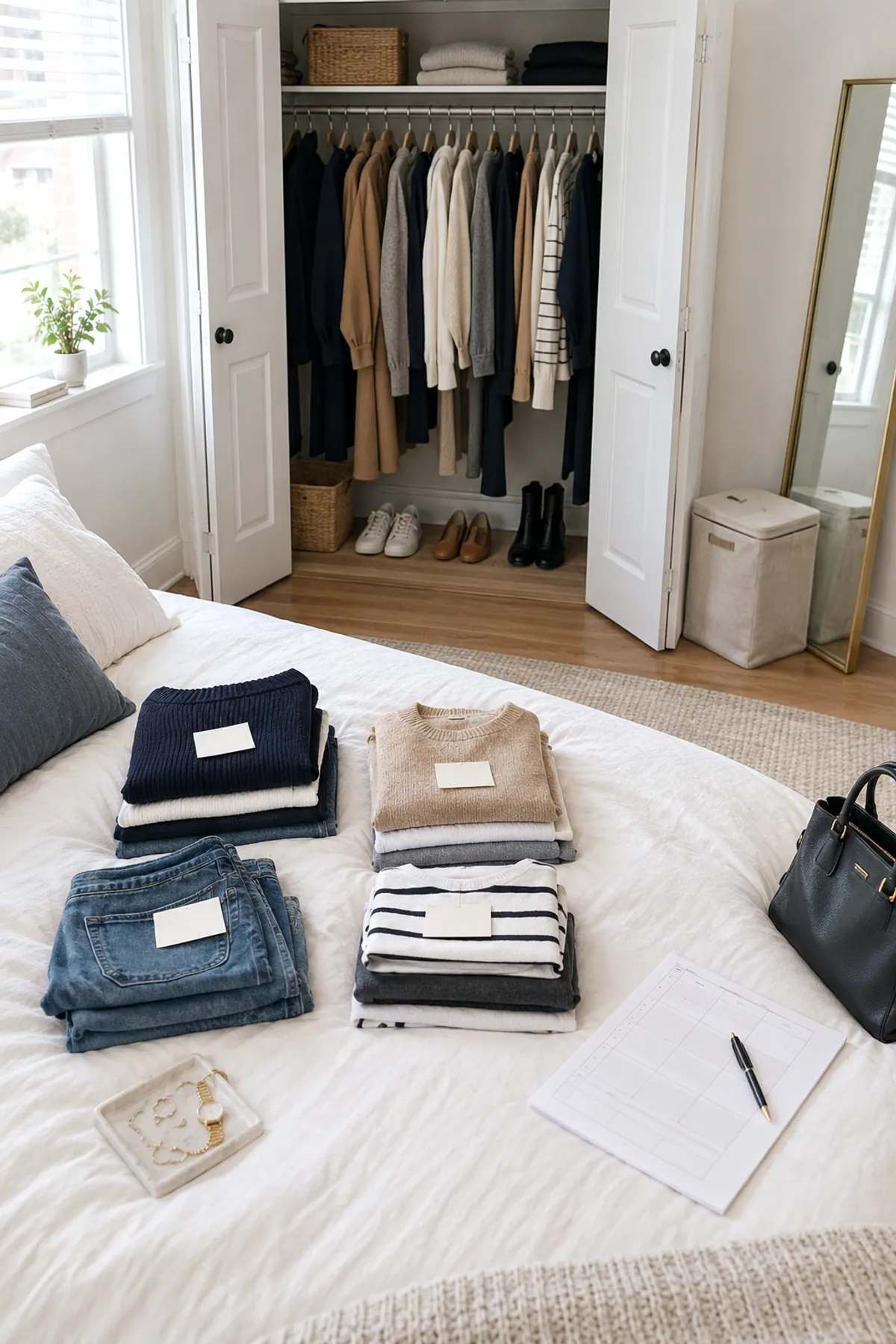
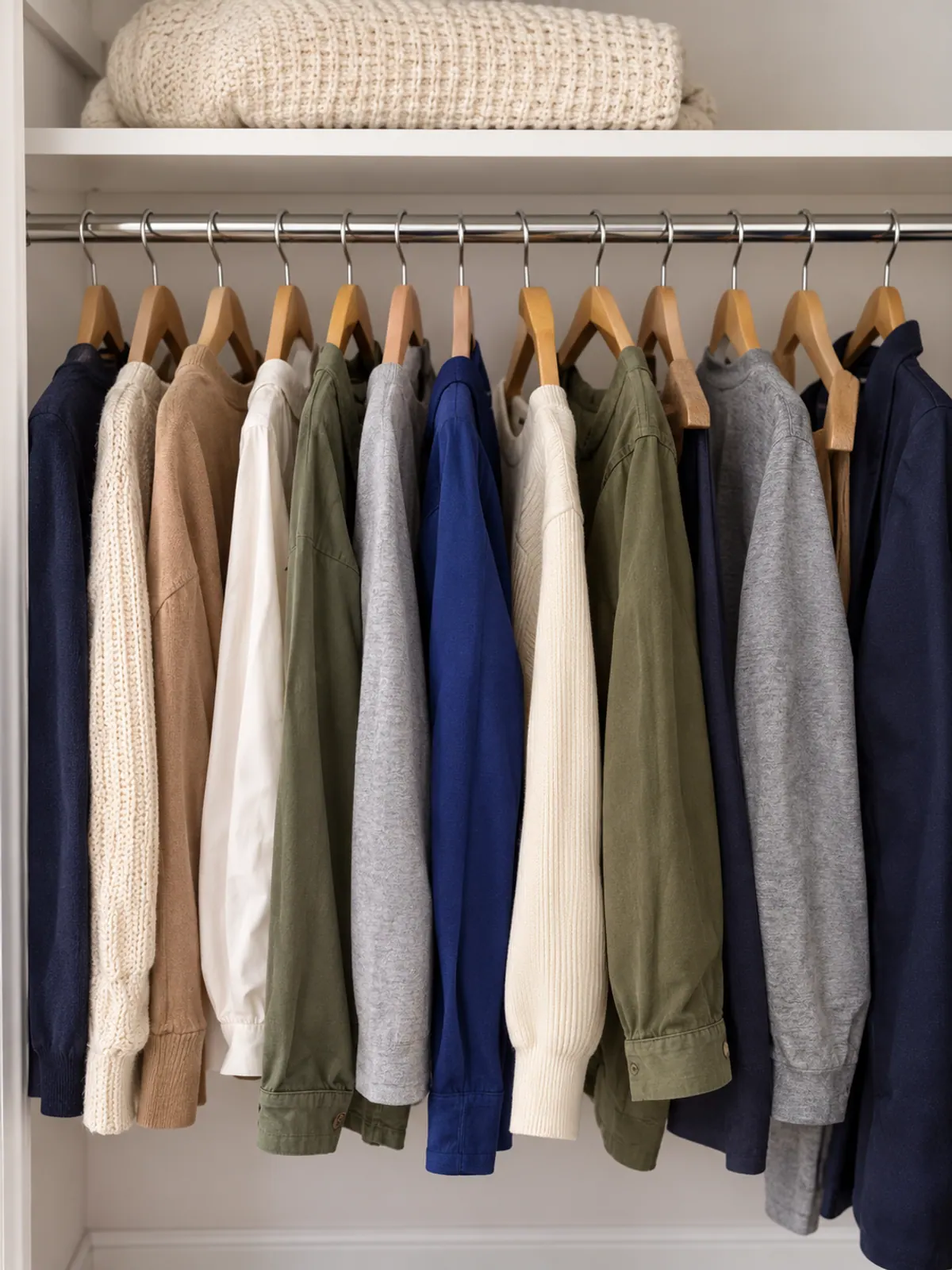
Put the three words beside your 14-day tally. Where a piece matches a word and was worn often, that is your style already working. Where a piece matches nothing and was worn often, it is a comfort piece, so give it a better version rather than a guilty one.
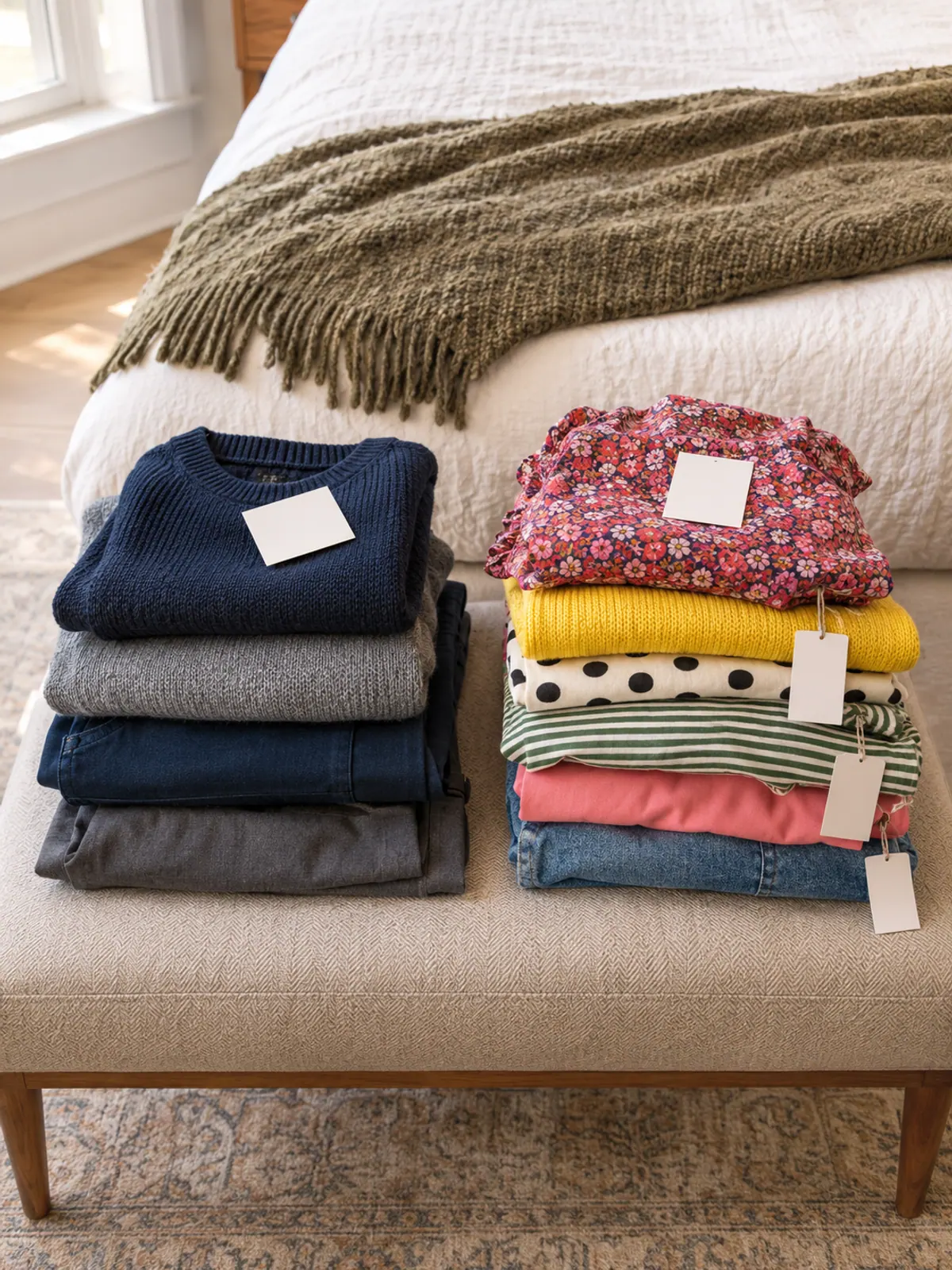
Then make the "not me" list: the pieces and details you bought but never wear. It is a list of facts about your life, not a list of mistakes, and it is the fastest way to see what your words rule out.
The compare-and-sort checklist
Step 4: How Do You Turn Style Words Into Five Uniforms?
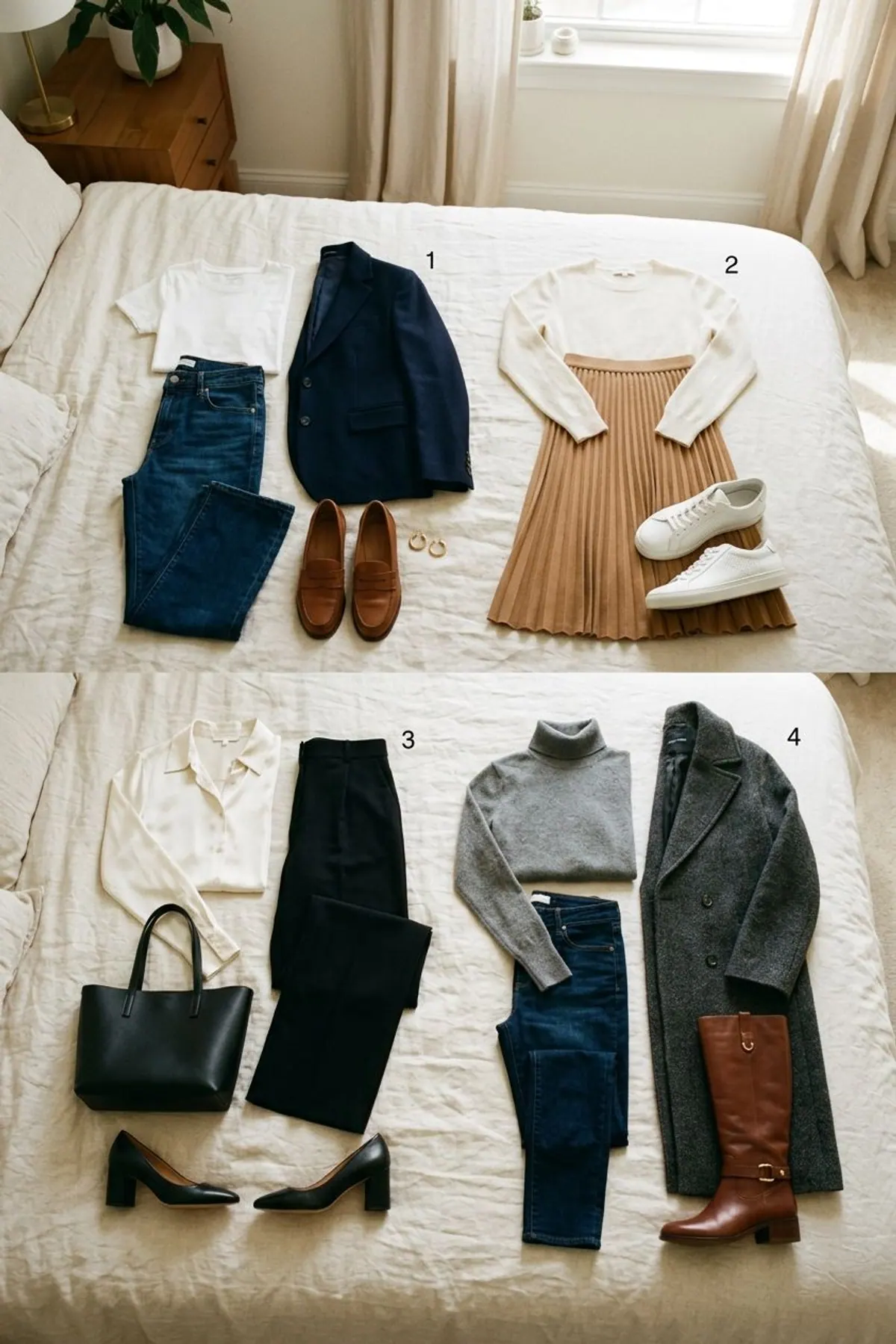
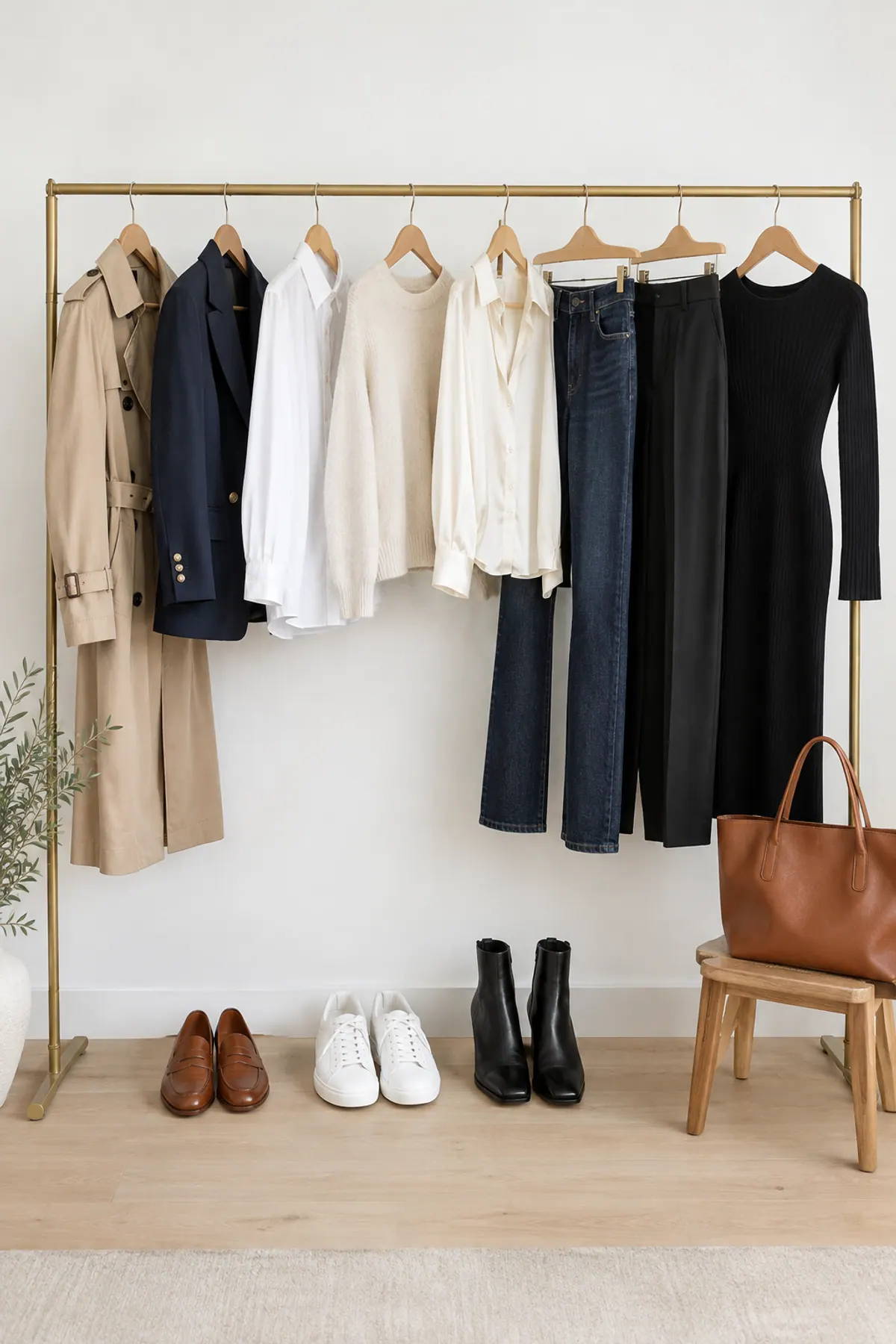
A uniform is one repeatable outfit formula for one kind of day. Five cover most weeks: work, weekend, dinner, travel and home. Each uniform is built from your yes pieces and shows at least one of your three words, so you stop deciding from scratch each morning.
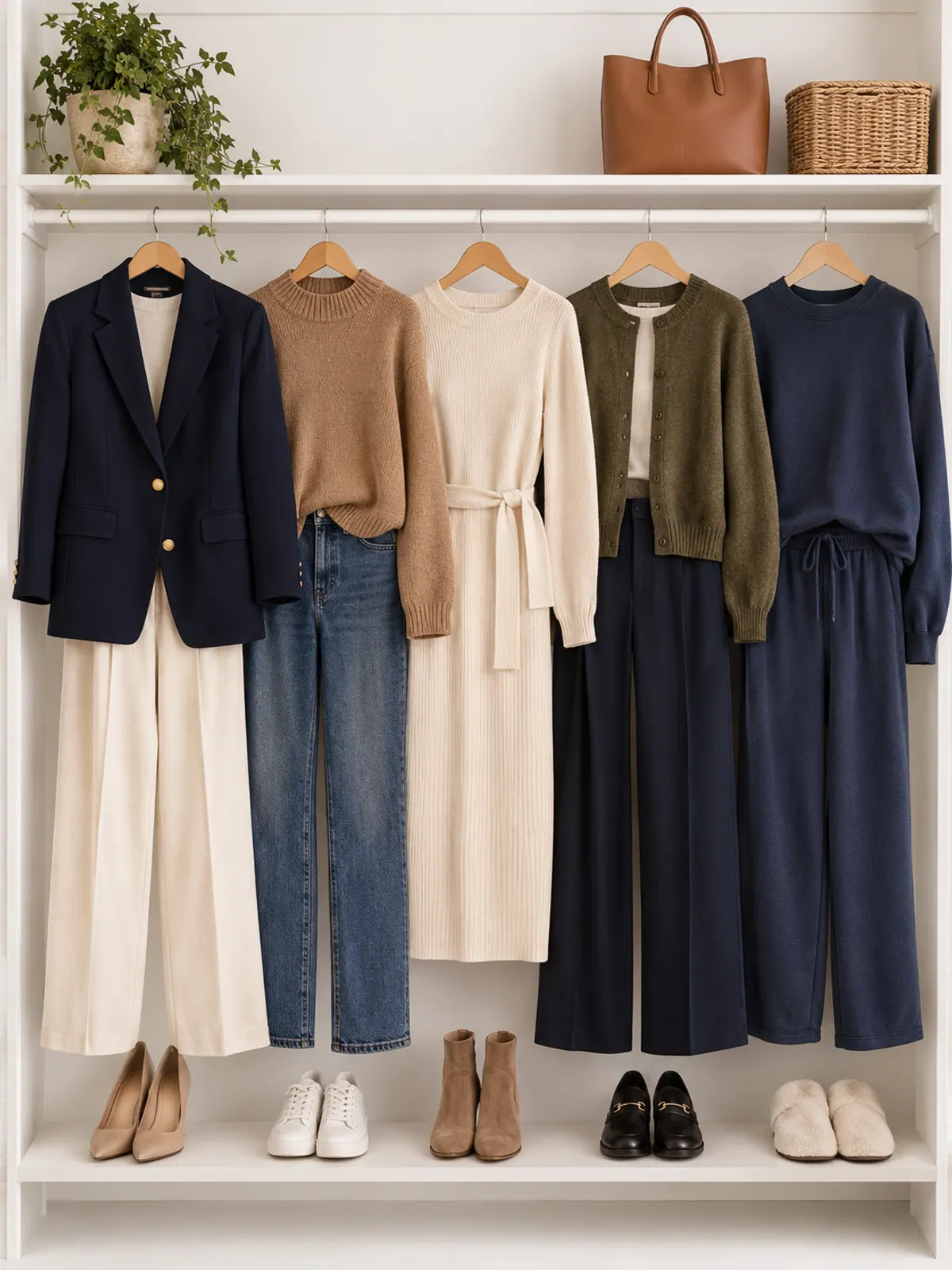
For more formulas to start from, our guide to outfit formulas women over 40 always use lists the combinations that repeat across most wardrobes, and the complete style guide for women over 40 covers what each occasion usually asks for.
Step 5: What Is the 7-Question Shopping Filter?
The filter is seven questions you ask before anything new goes into your closet. A piece has to pass all seven, or it waits. Answer them out loud or on your phone while you are still holding the item.
-
Step 1: Which of my three words does it show?
Name the word. If you cannot, it is not yours.
-
Step 2: Do I own three things it goes with today?
Count them by name, not "probably".
-
Step 3: Which of my five uniforms does it improve or replace?
If none, it is an orphan, and orphans are the usual returns.
-
Step 4: On which day in the next 14 will I wear it?
Pick the actual day. "Someday" is a no.
-
Step 5: Is it comfortable when I sit, reach and carry a bag in it?
Try those three moves in the shop. This is about ease, not about how you look.
-
Step 6: What leaves the closet if this comes in?
One in, one out keeps the closet visible. A duplicate of something you own is a no.
-
Step 7: If I wait 48 hours, do I still want it, and what is the cost per wear?
Divide the price by the number of times you will honestly wear it. A $90 sweater worn 15 times is $6 per wear; worn twice, it is $45.
If your closet is already full, run the filter on what you own as well. Our January wardrobe reset checklist walks through the audit, the gap list and a shop plan, and our capsule wardrobe in seven steps shows how to fill the gaps without starting again.
A Worked Example: Dana's Words, Audit and Filter
Dana is a made-up example, not a reader. She is 52, works in an office three days a week, walks every morning, and owns a closet in navy, olive and cream. Here is how the steps play out for her.
Her three words: calm, clean-lined, warm.
| Piece | Days worn in 14 | Felt like me? |
|---|---|---|
| Navy straight trousers | 5 | Yes |
| Dark straight jeans | 5 | Yes |
| Leggings | 4 | Maybe |
| Olive fine knit | 4 | Yes |
| Cream shirt | 3 | Yes |
| Gray oversized tee | 4 | Maybe |
| Navy cardigan | 3 | Yes |
| Floral wrap skirt | 0 | Not worn |
The sums check out: three bottoms cover all 14 days (5 + 5 + 4), and four tops cover them too (4 + 3 + 4 + 3). Her style is already visible: navy and olive, straight lines, knit texture. The leggings and gray tee are comfort pieces with no word behind them, and the floral wrap skirt goes on the not-me list because a busy print breaks "calm".
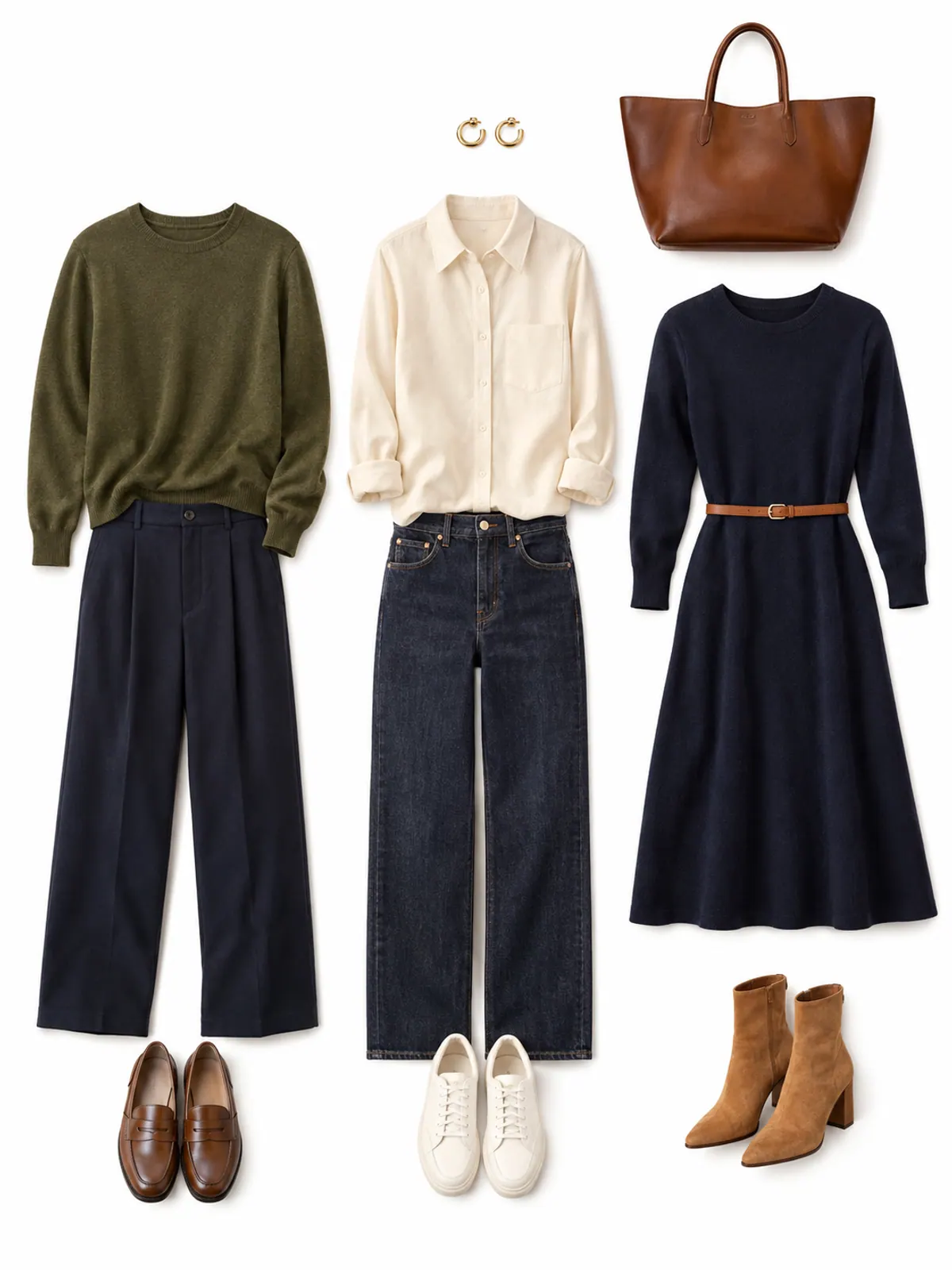
| Occasion | Formula | Word it shows |
|---|---|---|
| Work | Olive knit + navy trousers + loafers | Clean-lined |
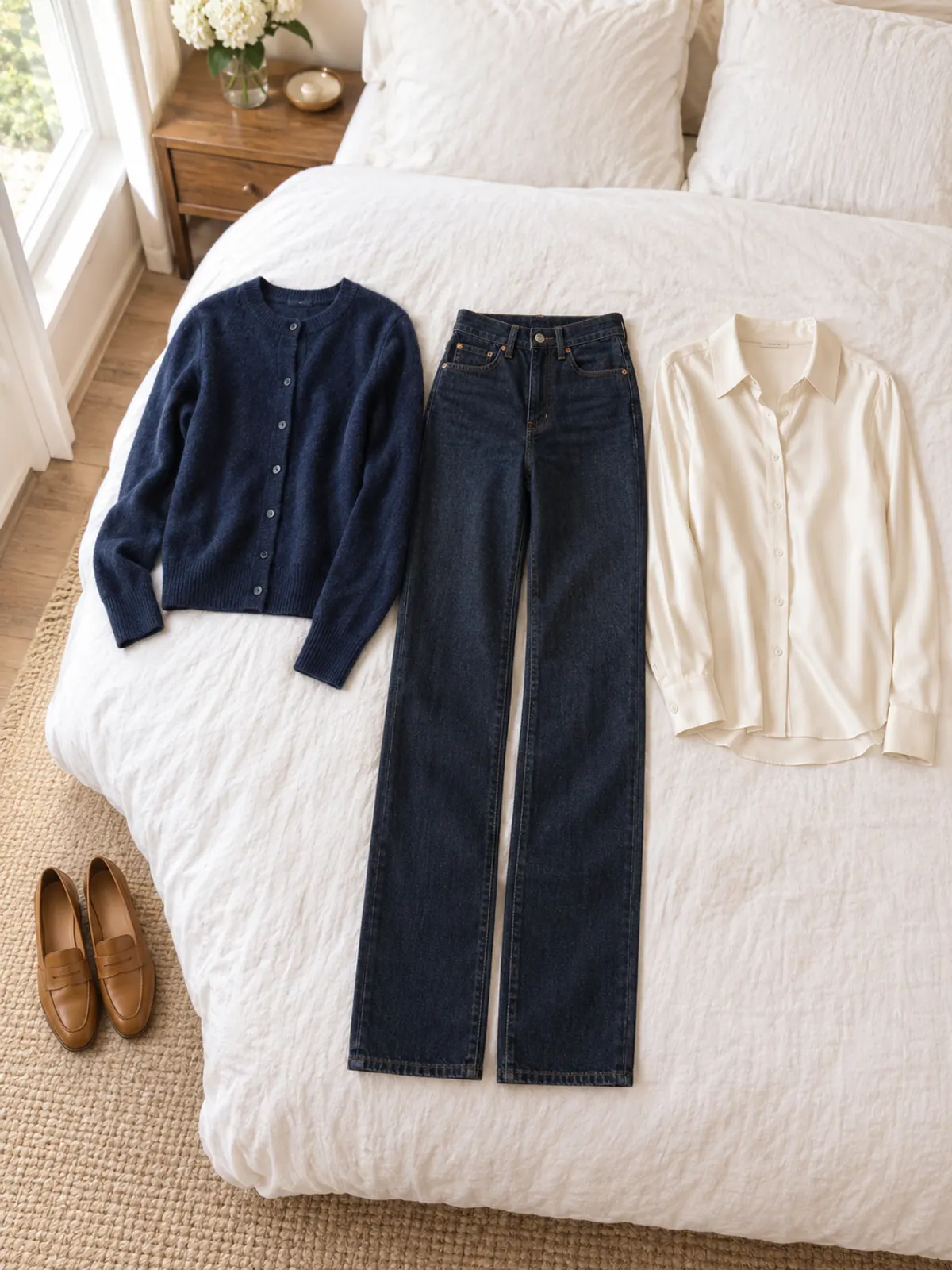
| Weekend | Dark jeans + cream shirt + white sneakers | Calm |
| Dinner | Navy knit dress + camel belt + ankle boots | Warm |
| Travel | Navy cardigan + dark jeans + cream tee + sneakers | Calm |
| Home | Soft knit set in gray or oatmeal | Warm |
Her filter in action: a mustard puff-sleeve blouse on sale fails question 1, since it shows none of her words, and question 3, since it improves none of her uniforms. A fine-knit navy turtleneck passes all seven, and she writes down the day she will wear it. The example is simplified, but the logic is the same for any closet.
Common Mistakes When Finding Your Style After 40
What we like
- Pick words from what you already wear and love.
- Look at a real 14 days, not the closet you think you have.
- Write a not-me list and let it say no for you.
- Keep five uniforms and rotate them.
- Run the 7-question filter before every purchase, including sale items.
Keep in mind
- Copying a quiz label built for a different life.
- Choosing words from a mood board you never wear.
- Buying a whole new wardrobe to match the words.
- Treating comfort pieces as failures.
- Skipping the filter because the item is cheap or on sale.

What If My Style Words and My Wardrobe Do Not Match?
That gap is the plan, not a problem. Change one uniform first, usually the one you wear most, by swapping a single piece toward your words. A closet that moves one outfit at a time stays wearable all week, and our color guide for gray hair is a useful next stop if color is where the gap sits.
Put It on Paper: The Personal Style Reset Workbook
The Personal Style Reset Workbook ($9) is this page as printable sheets: the 14-day wear log, a style word bank, five occasion uniform pages and the 7-question shopping filter, so you can finish the whole reset in one evening plus two weeks of notes.
Frequently asked questions
How do you find your personal style after 40?
Choose three style words from what you already wear and love, run a 14-day wear audit to see what you really reach for, then compare the two. Keep the pieces that match, upgrade the comfort pieces, and use a 7-question filter before every new purchase.
How long does it take to find your personal style?
The three words and a look-back audit take one evening. A forward audit takes 14 days. The shopping filter is a habit you use whenever you buy, so your style keeps sharpening over a season rather than being finished in a day.
How many style words should I have?
Three. Fewer is too vague and more turns into a mood board. Pick one for feel, one for shape and one for finish, and make sure each word can turn a garment down.
Can my style change after 50?
Yes. Style follows your life, so a change in work, hair color, climate or comfort needs is a good reason to redo the words. Run the three steps again each January and adjust one uniform at a time.
What if I do not like anything in my closet?
Start with the not-me list so you know what to avoid, keep the pieces you wore most in the audit, and buy one or two pieces that pass the 7-question filter. Replace one uniform at a time rather than the whole closet.
How do I get out of a style rut?
Change one uniform, not everything. Keep the shape you wear most and swap one piece, such as a different color knit or a new shoe, then check it against your three words and wear it twice before deciding.
Save it for later
Pin this to your Capsule Wardrobe board so it's there when you need it.
Save to Pinterest